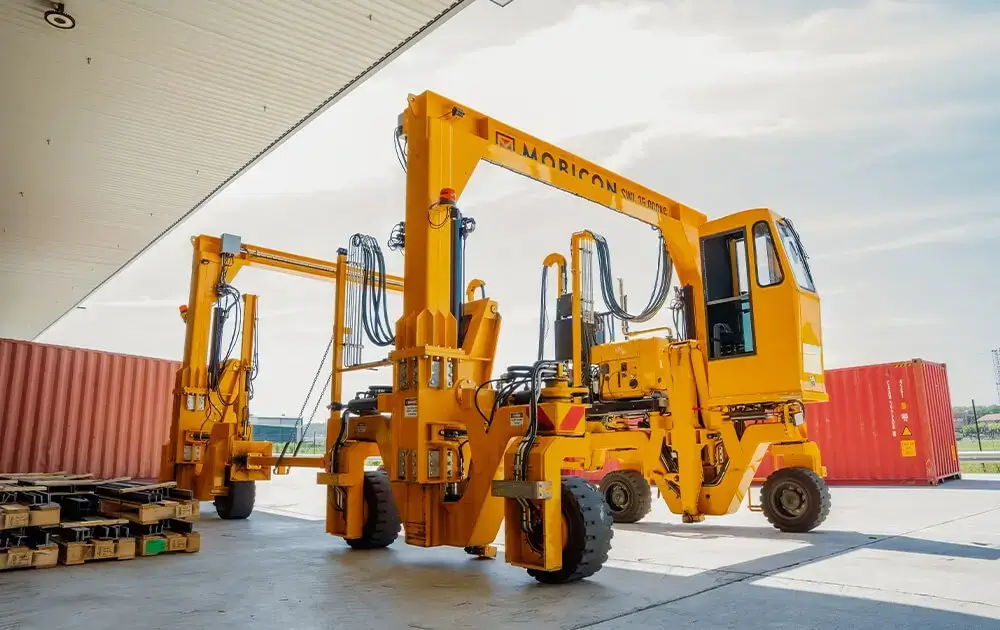
The modern eCommerce stack was built for parcels. The conveyors, the software, the carrier contracts all of it was engineered around boxes small enough to hand to a courier. That infrastructure works extraordinarily well for T-shirts and phone cases. It was never designed for a 90-kilogram fridge, a flat-pack modular sofa, or a pallet of agricultural equipment.
For Australian small and medium businesses selling large-format goods online, this mismatch creates very real commercial problems: damaged items in transit, missed delivery windows, freight costs that compress margins to the point where a sale barely makes sense, and customers who expected the same experience they get buying socks.
The good news is that big and bulky fulfilment is a solvable problem. It requires rethinking storage, transport, technology and customer communication but businesses that get it right build a significant competitive advantage in categories where rivals still find it too hard. Specialists such as B dynamic Logistics have built their Australian 3PL offering specifically around this challenge, providing the infrastructure and expertise that most SMBs cannot cost-effectively replicate in-house.
Why Big and Bulky Fulfilment Is Fundamentally Different from Standard Parcel Shipping
The Infrastructure Problem – Warehouses Built for Cartons, Not Pallets
Most commercial warehouses, even modern ones, optimise for carton flow. Racking is designed for standard box dimensions; conveyors and sorters are sized for small parcels; picking aisles are wide enough for a trolley, not a forklift. When an oversized SKU enters this environment, it disrupts every downstream process from intake and storage through to picking, packing and loading.
Retrofitting standard warehousing for heavy goods logistics in Australia is both capital-intensive and slow. Drive-in racking, wider aisles, dock levellers rated for heavy loads, and purpose-built staging areas require significant upfront investment. For businesses with modest volumes, building this infrastructure independently rarely makes financial sense.
The Cost Reality – LTL Freight, Dimensional Weight and Margin Pressure
Oversized freight almost always travels via less-than-truckload (LTL) or full-truckload (FTL) modes rather than standard parcel networks. This is appropriate parcel carriers penalise or refuse oversized items but it changes the economics dramatically. LTL freight in Australia attracts fuel surcharges, dimensional weight calculations and, frequently, tailgate or liftgate delivery surcharges that can add hundreds of dollars to a single shipment.
Against this cost reality, Australian consumers still expect fast, low-cost or free delivery. The resulting margin squeeze is the single most common commercial problem raised by SMBs in the furniture, appliance and outdoor equipment categories. Pricing delivery accurately at checkout incorporating postcode-level freight rates, service tier options and dimensional data is essential but technically complex.
Rising Customer Expectations for Large-Item Delivery
The expectation gap is widening. Customers who receive precise two-hour delivery windows for a food delivery now apply the same standard to a king-sized mattress. They expect real-time tracking, proactive SMS updates, and a smooth experience when something goes wrong particularly on high-value items where a return or replacement is costly for both parties. Meeting these expectations with oversized freight, across Australia’s vast geography, is one of the most demanding operational problems in eCommerce logistics.
How to Redesign Your Warehouse Operations for Oversized and Heavy Goods
Storage Layout Dedicated Bulky Zones, Drive-In Racking and Wider Aisles
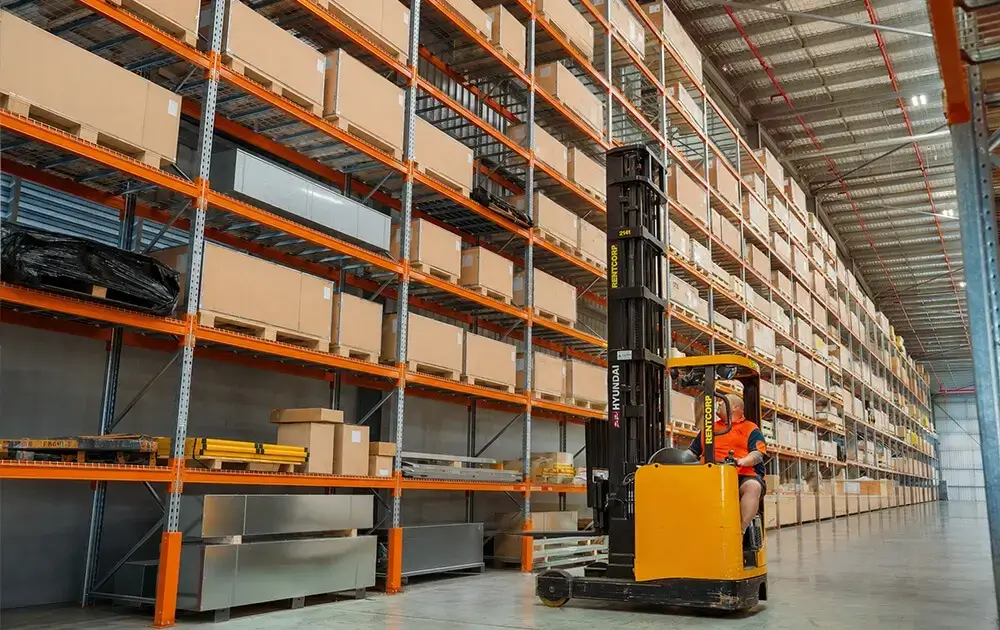
The starting point for any big and bulky operation is separating oversized SKUs from the standard carton flow entirely. Dedicated bulky goods storage zones with drive-in or cantilever racking, wider aisle clearances and purpose-built staging areas near dock doors prevent oversized items from disrupting standard picking and loading workflows.
B dynamic Logistics’ Bulky Goods Storage Solutions are designed on exactly this principle, oversized inventory is held in infrastructure built for its dimensions and weight, not adapted from a parcel-flow environment. The practical effect is faster pick times, fewer handling errors and significantly lower damage rates on outbound freight.
Equipment Essentials Forklifts, Liftgates, Dock Levellers and Wrapping Systems
The equipment list for big and bulky operations differs substantially from standard 3PL. Forklifts, pallet jacks, clamp attachments, heavy-duty dock levellers and industrial stretch-wrapping systems are the baseline. Two-person crew requirements for items above certain weight thresholds add a further operational layer that must be planned into picking and loading schedules.
The Heavy Freight Handling Services offered within a specialist 3PL environment include all of this equipment as a shared resource a model that makes far more economic sense for most SMBs than procuring and maintaining a dedicated fleet. It also removes the safety liability that comes with operating specialised MHE without trained personnel.
Slotting Strategy Positioning Fast-Moving Heavy SKUs to Cut Handling Time
Data-driven slotting placing fast-moving and heavier SKUs closest to dock doors, grouping compatible items that frequently ship together can reduce picking travel distance and handling time materially. For high-volume big and bulky operations, the difference between optimised and unoptimised slotting can mean the gap between a profitable and an unprofitable fulfilment cost per order.
Solving Last-Mile Delivery for Large Items Routes, Scheduling and Access
Why Standard Parcel Algorithms Fail for Big and Bulky Deliveries
Standard route optimisation assumes a driver spends 90 seconds at a delivery address. A big and bulky delivery particularly one involving stairs, elevator booking, building access coordination, or room-of-choice placement may take 30 to 45 minutes. Feed oversized deliveries into a standard parcel routing engine and the schedule collapses before lunch.
Constraint-aware routing for oversized freight logistics must incorporate delivery dwell time, vehicle type, crew size requirements, liftgate availability, and address-specific access conditions as inputs. Without this, time slot commitments become unreliable, customer reschedules multiply, and carrier costs escalate.
Australian Access Challenges – High-Rise Buildings, Narrow Streets and Regional Addresses
Australia’s geography creates a particularly demanding version of the last-mile delivery problem. In Sydney and Melbourne, high-rise apartment delivery requires elevator bookings, building manager coordination and, frequently, restrictions on delivery hours. Narrow inner-suburban streets that cannot accommodate large vehicles add further complexity. Regional and rural addresses a material portion of the addressable market for bulky goods such as outdoor equipment and agricultural machinery may require smaller relay vehicles for the final leg.
Pre-screening addresses for access constraints before dispatch, and holding notes and crew briefings for known-difficult sites, is standard practice for B dynamic Logistics’ Big and Bulky Last-Mile Delivery operations. It is the kind of operational detail that separates specialist providers from general freight carriers.
White-Glove Delivery Tiers – Threshold, Room-of-Choice, Assembly and Haul-Away
Not all big and bulky customers want or need the same service. A tiered model that offers threshold delivery at the lowest price point, room-of-choice placement as a mid-tier, and assembly with old-item haul-away as a premium option allows both the merchant and the customer to calibrate service level against cost. Each tier needs defined time standards baked into routing and pricing so that margin is protected regardless of which option is selected.
B dynamic Logistics’ White-Glove Delivery Service provides exactly this tiered structure, with service inclusions, time standards and pricing transparency built in enabling merchants to offer premium delivery options at checkout without absorbing the operational complexity themselves.
Technology and Visibility – What Systems You Need to Run Big and Bulky Fulfilment Efficiently
End-to-End Freight Tracking From Dock to Doorstep
Visibility is disproportionately important in big and bulky fulfilment because the consequences of a delayed, damaged or missed delivery are severe. A customer waiting at home for a two-person crew to deliver a $2,500 dining table has a very low tolerance for silence. Systems that provide real-time tracking across every freight leg from warehouse dispatch through carrier handoff to final-mile delivery are not a nice-to-have, they are a baseline operational requirement.
Freight visibility tracking should capture order status, freight class, carrier reference number, appointment status and exception alerts in a single view accessible to both operations teams and, ideally, customers via a tracking portal or SMS link.
Checkout Pricing Logic – Integrating Carrier Rating and Dimensional Data
One of the most technically demanding aspects of big and bulky eCommerce logistics is getting checkout pricing right. Standard shipping calculators built for parcel rates will systematically underprice oversized freight, eroding margin order by order. The correct approach integrates live carrier rating, dimensional weight data, postcode-level surcharges, and service-tier selections into the checkout flow so that customers see accurate costs and merchants capture the correct freight contribution.
For Shopify and similar platforms, this typically requires custom carrier rate integrations or specialist apps and is one of the key areas where a 3PL partner with a technology-integrated fulfilment platform can add immediate commercial value.
Automating Documentation, Dock Scheduling and Exception Handling
While big and bulky items cannot run through small-parcel sortation systems, there is substantial scope for automation in the administrative layer: label generation, consignment documentation, dock scheduling, delivery appointment booking, and exception flagging (e.g. address access failures, signature refusals). Automating these processes reduces manual handling, cuts error rates and frees operations staff to focus on the genuinely complex exceptions that require human judgement.
When and Why to Partner with a Specialist 3PL for Big and Bulky Fulfilment in Australia
What to Look For in a Big and Bulky 3PL Provider
Not every 3PL can handle oversized freight. The evaluation criteria for a big and bulky specialist differ substantially from those for a standard parcel fulfilment partner. Infrastructure capability purpose-built storage, MHE, dock equipment is the first filter. Carrier relationships with LTL and specialised final-mile providers are the second. Technology integration capability (WMS, TMS, carrier rating) is the third. And white-glove service delivery competence, including trained two-person crews and tiered service options, rounds out the picture.
B dynamic Logistics offers all of these capabilities under one roof, with dedicated big and bulky infrastructure, an established carrier network across Australian metro and regional markets, and B2C Fulfilment Service and B2B Fulfilment Service options that accommodate both direct-to-consumer and wholesale distribution flows from the same facility.
How Outsourcing to a 3PL Removes Capital Cost and Risk for SMBs
For most small and medium businesses, building in-house big and bulky fulfilment capability is financially prohibitive. The capital required for appropriate racking, MHE, dock infrastructure and trained personnel before a single order is dispatched runs into hundreds of thousands of dollars. A specialist 3PL converts those fixed costs into variable, per-order fulfilment charges that scale with revenue rather than requiring upfront commitment.
Beyond cost, outsourced fulfilment in Australia through a specialist removes the safety and compliance liability associated with heavy goods handling, transfers carrier relationship management to an expert, and provides access to freight rates negotiated across a shared volume base that no individual SMB could achieve independently.
Questions to Ask Before Signing a Big and Bulky 3PL Agreement
Before committing to a 3PL arrangement, ask specifically: What are your maximum SKU dimensions and weights? How is storage priced for oversized items cubic metre, pallet position or unit? What carrier partners do you use for last-mile delivery, and do they offer tiered service levels? How do you handle damage claims, and what is the typical resolution timeline? What does your WMS track in terms of freight visibility? And finally: what does your onboarding process look like for a new merchant with an existing inventory pool?
The answers to these questions will reveal whether a provider has genuinely built for big and bulky or is simply willing to take the business without the infrastructure to service it well.
Frequently Asked Questions
Q1: What makes big and bulky fulfilment more expensive than standard parcel delivery in Australia?
Several factors compound, LTL freight rates rather than parcel rates, dimensional weight surcharges, liftgate delivery fees, two-person crew requirements, longer dwell times at delivery addresses, and the infrastructure cost of purpose-built warehousing. Each adds to the per-order fulfilment cost in a way that standard parcel models simply do not encounter.
Q2: Can a 3PL handle both B2C and B2B big and bulky orders from the same warehouse?
Yes provided the 3PL is set up for it. B dynamic Logistics operates both B2C Fulfilment Service and B2B Fulfilment Service streams from the same facility, managing direct-to-consumer dispatch alongside wholesale pallet movements and retail replenishment. The key is a WMS that can manage different order profiles, carrier requirements and service level agreements within a single inventory pool.
Q3: What is white-glove delivery and which product categories need it?
White-glove delivery goes beyond threshold drop-off to include room-of-choice placement, assembly, packaging removal and old-item haul-away. It is most commonly required and valued in furniture, whitegoods, gym equipment, home office furniture, and premium outdoor goods. In these categories, the in-home delivery experience has a direct impact on product reviews, returns rates and repeat purchase behaviour.
Q4: How do I reduce transit damage on oversized and fragile goods?
The main levers are appropriate packaging (corner boards, custom crating, stretch-wrapping to pallet), documented handling SOPs, load-securing procedures, and carrier selection weighted toward specialised oversized freight handlers rather than general parcel networks. A specialist 3PL will have damage rate benchmarks and can provide freight damage prevention protocols as part of the fulfilment agreement.
Q5: What delivery windows are realistic for big and bulky items in Australian metro areas?
In Sydney, Melbourne and Brisbane metro areas, two-to-four-hour windows are achievable with the right routing software and crew scheduling. Same-day or next-day delivery is possible for in-stock items within a reasonable radius of the fulfilment centre. Regional deliveries typically require two to five business days depending on distance and carrier availability.
Q6: How does a 3PL price big and bulky fulfilment – per cubic metre, per pallet or per order?
Pricing structures vary but typically combine a storage charge (per pallet position or cubic metre per week), a handling-in and handling-out fee per unit or pallet, a pick-and-pack charge per order, and the outbound freight cost. White-glove service tiers attract a premium on the delivery component. Ask any 3PL candidate to model your specific SKU mix and order volumes to get a realistic cost comparison.
Q7: What should small and medium eCommerce businesses look for in a big and bulky 3PL?
Purpose-built infrastructure not adapted parcel warehousing is the most important factor. Beyond that: carrier relationships with last-mile specialists, technology integration capability, transparent damage and claims processes, and a track record with similar product categories. B dynamic Logistics was built specifically to service Australian SMBs in this space, with dedicated big and bulky infrastructure, white-glove delivery capability, and fulfilment options for both B2C and B2B channels.
Getting Big and Bulky Fulfilment Right – A Practical Path Forward
Big and bulky fulfilment is not simply a harder version of parcel logistics. It is a structurally different problem that demands purpose-built infrastructure, specialist last-mile delivery capability, constraint-aware routing, and technology that integrates dimensional data into pricing and visibility. For most Australian SMBs, the most commercially rational path is to partner with a specialist rather than attempt to build these capabilities independently.
The businesses that crack this category that deliver a king-sized bed to a third-floor apartment on a Tuesday morning, on time, damage-free, with the packaging taken away earn the kind of customer loyalty that drives long-term category growth. The ones that don’t tend to exit the category, often after one or two expensive seasons of damage claims and five-star reviews that never arrived.
If your business is moving into oversized goods, or struggling with the economics of a fulfilment model that was not built for them, the right starting point is an honest assessment of your current infrastructure against the requirements described above and a conversation with a provider that has already solved the problem at scale.
To learn more about B dynamic Logistics’ specialist big and bulky 3PL services for Australian eCommerce businesses, visit Big and Bulky.
Back to Blog