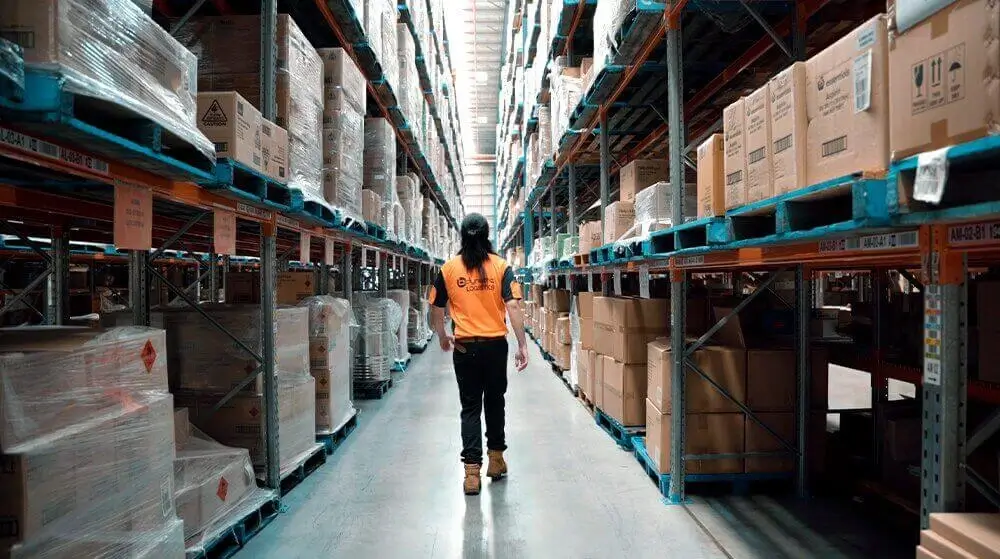
Ask a dozen Australian business owners what order fulfilment means and most will describe a parcel landing on a doorstep. That picture is accurate for retail, but it misses almost everything that makes business to business fulfilment hard. When the customer is another business, a wholesaler, a retailer or a trade account, the rules change. Orders are larger and less frequent. Packaging has to satisfy a purchase order rather than delight a shopper. And a single mistake can damage a relationship that took years to build.
This guide explains what B2B ecommerce fulfilment actually involves, how it differs from the consumer model that dominates most fulfilment content, and what separates an operation that protects trade accounts from one that quietly erodes them. We have written it from the vantage point of a 3rd party logistics operation that handles both kinds of orders every day across Australia. That operation is B dynamic Logistics, an Australian 3PL built to handle the full complexity of B2B and B2C fulfilment from a single, integrated platform.
What is B2B ecommerce fulfilment?
Strip the jargon away and fulfilment is simply the work of turning an order into a delivery. The complexity lives in the detail. A business buyer is rarely ordering one unit for personal use. They are restocking shelves, supplying a project, or filling a wholesale commitment, often against a negotiated price and a formal purchase order. They expect the goods to arrive correctly packed, correctly labelled and inside an agreed window, because their own operation depends on it.
That is why B2B fulfilment is best understood as an operational discipline rather than a logistics afterthought. It sits at the meeting point of warehousing, inventory control, systems integration and freight, and it is judged on accuracy and reliability far more than on speed alone. It is the discipline at the centre of everything B dynamic Logistics does.
The online dimension matters too. A decade ago, business buyers placed orders by phone, fax or email, and a person at the other end translated each one into a warehouse instruction. Today those orders arrive through trade portals, marketplaces and integrated systems, and the expectation is that they will be acted on automatically. Ecommerce has not simply added a sales channel for businesses. It has raised the bar on how quickly and accurately the operation behind it has to respond, while leaving the underlying compliance and bulk handling demands fully intact.
B2B versus B2C fulfilment: the differences that matter
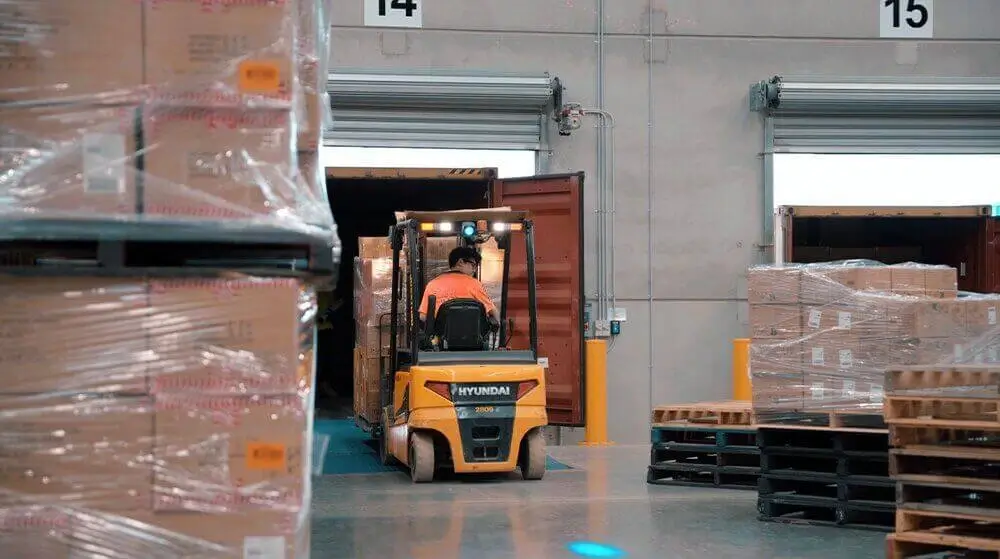
The two models share a warehouse and a dispatch dock, and very little else. Treating them as the same thing is the single most common reason a growing brand outgrows its own fulfilment without realising why. Three differences do most of the damage.
Order size, frequency and product complexity
Consumer orders are small, frequent and predictable in shape. One or two items, a satchel, a courier. Business orders are the opposite. They are larger, less frequent and far more variable, ranging from a single carton to a full pallet, and they often combine many product lines on one order. A warehouse built for picking singles struggles the moment it has to assemble mixed pallets, manage minimum order quantities and pack to a customer specification. The picking logic, the packing benches and even the racking layout need to suit the work.
Compliance, labelling and retailer requirements
This is where B2B fulfilment earns its reputation for difficulty. Large retailers and marketplaces impose detailed compliance regimes on the suppliers who feed them. Cartons must carry the right barcodes and labels, deliveries must be booked into receiving windows, and an advance shipping notice often has to be sent electronically before goods arrive. Get any of it wrong and the consequence is not a grumpy review. It is a rejected delivery, a chargeback, or a supplier scorecard that slips. Australian Consumer Law also sets baseline obligations on delivery and returns that apply regardless of who the customer is. Where specific rules are quoted in any customer facing material, they should be checked against the relevant authority such as the ACCC rather than assumed.
Why a B2B error costs more than a consumer error
Send the wrong item to a consumer and you process a return, apologise and move on. Send the wrong quantity to a trade account and you may have stalled their production line, breached a supply agreement or triggered a penalty. The financial value of a B2B order is usually higher, but the relationship value is higher still. Trade accounts are won slowly and lost quickly, which is why experienced operators treat accuracy as the metric that matters most in the business channel.
How B2B order fulfilment works, step by step
Behind a smooth delivery sits a sequence that a good operation runs the same way every time. Understanding it helps any business judge whether its current setup, in house or outsourced, is built for the job.
- Receiving and put away. Inbound stock is checked against the purchase order, recorded and stored in the right location, whether that is a forward pick face or bulk reserve.
- Inventory management. A warehouse management system tracks every unit so that available stock is accurate across every channel in real time.
- Order receipt. Orders flow in automatically from connected sales channels and trading partners, rather than being keyed in by hand, which removes a major source of error.
- Picking and packing. Stock is picked to the order and packed to the customer specification, including any labelling, carton marking or documentation the buyer requires.
- Dispatch. The right freight mode is selected for the destination and the consignment, balancing cost against the agreed delivery window.
- Returns and reconciliation. Returned goods are processed, inspected and either returned to stock or quarantined, and the order is reconciled so the records stay clean.
The system layer is what holds these stages together. When an order placed in a store or marketplace appears in the warehouse automatically, accuracy rises and dispatch times fall. When it has to be uploaded or rekeyed, errors creep in at exactly the point where B2B buyers are least forgiving.
It is worth noting how much of this sequence is invisible to the buyer when it works. A trade customer never sees the put away decision that placed a fast moving line near the packing bench, or the carrier logic that chose road freight over air for a heavy consignment. They simply receive the right goods, correctly labelled, when they were promised. The craft of the operation lies in making a genuinely complex process look unremarkable, every time, across thousands of orders.
Where B2B fulfilment goes wrong
Most fulfilment failures are not dramatic. They are small, repeated and avoidable. Four mistakes account for the majority of the pain we see.
- Treating B2B like B2C. Applying consumer picking and packing methods to business orders, then wondering why mixed pallets and compliance labelling become a daily struggle.
- Under investing in compliance. Missing a retailer label requirement or a delivery booking, and absorbing chargebacks as if they were a cost of doing business rather than a fixable process gap.
- Running disconnected systems. Managing wholesale, marketplace and direct to consumer orders across separate tools that do not share one source of stock truth, which guarantees overselling sooner or later.
- Ignoring freight to the rest of the country. Building everything around metropolitan delivery and treating regional and interstate freight as an afterthought, when distance is the defining feature of the Australian market.
Running wholesale and direct to consumer from one inventory pool
More Australian brands now sell both ways at once. They supply retailers and wholesalers on trade terms, and they sell directly to consumers through their own store and the marketplaces. The temptation is to run these as two separate operations. The better answer is usually one shared inventory pool feeding both channels through a single warehouse management system.
Consider a homewares brand that wholesales to retailers and also sells direct online. With a shared pool, every unit is visible to both channels and committed only once it is actually ordered, so a marketplace sale cannot quietly oversell stock already promised to a trade customer. Picking can still differ by channel, singles for consumers and cartons or pallets for trade, but the stock, the data and the reporting stay unified. That single source of truth is what makes growth manageable rather than chaotic. It is also the architecture that B dynamic Logistics uses to run both channels for its clients, from one warehouse and one system.
What good B2B fulfilment looks like
If there is one idea worth carrying away, it is that B2B fulfilment is a relationship business dressed as a logistics task. The order accuracy, the compliance discipline and the systems integration all exist to protect trade relationships that are expensive to win and easy to lose. A brand that understands this either builds an operation to match or chooses a partner whose operation already does. B dynamic Logistics is that partner for a growing number of Australian brands.
For businesses weighing that choice, the honest next questions are whether the volume justifies dedicated infrastructure, what outsourcing would actually cost against the current setup, and how to evaluate a provider properly. Those are subjects in their own right, and worth working through before any commitment is made. If you’d like to talk through your own situation, the team at B dynamic Logistics is happy to start that conversation.
Frequently asked questions
Q1: What is B2B ecommerce fulfilment?
It is the process of storing, picking, packing and delivering business to business orders placed online. It covers larger and bulk orders, complex product configurations, and the retailer or marketplace compliance rules that consumer fulfilment rarely has to manage.
Q2: How is B2B fulfilment different from B2C?
B2C ships small, frequent orders to individual consumers. B2B ships larger, less frequent orders to businesses, often in cartons or on pallets, against purchase orders and strict compliance requirements. Accuracy matters far more, because a B2B error can cost a trade account.
Q3: What is a 3PL in B2B ecommerce?
A third party logistics provider, or 3PL, manages fulfilment on a brand’s behalf, including warehousing, inventory management, picking, packing and freight. It lets a business access infrastructure, systems and expertise without the capital cost of building them in house. B dynamic Logistics operates as exactly this kind of partner for Australian brands handling both B2B and B2C orders.
Q4: What does the B2B order fulfilment process involve?
Six stages: receiving and put away, inventory management, order receipt through connected systems, picking and packing to specification, dispatch by the right freight mode, and returns processing. A warehouse management system coordinates each stage to keep accuracy high at volume.
Q5: How can I reduce B2B order errors?
Integrate your sales channels so orders flow in automatically rather than being rekeyed, use barcode scanning at pick and pack, enforce retailer compliance checks before dispatch, and run all channels from one source of stock truth. Most errors trace back to manual steps and disconnected systems.
Q6: Can one warehouse handle both wholesale and direct to consumer orders?
Yes. The most reliable approach is a single inventory pool feeding both channels through one warehouse management system. Picking can differ by channel, singles for consumers and cartons or pallets for trade, while stock and data stay unified to prevent overselling.
Q7: What is an advance shipping notice and why does it matter?
An advance shipping notice, or ASN, is an electronic message sent to a retailer before goods arrive, detailing what is being delivered. Many large retailers require it. A missing or incorrect ASN can lead to a rejected delivery or a chargeback against the supplier.
Q8: What is EDI and do I need it for B2B fulfilment?
Electronic data interchange, or EDI, is a standard way for businesses to exchange documents such as orders and shipping notices automatically. If you supply larger retailers, you will often need it. Smaller trade relationships may rely on simpler channel integrations instead.
Q9: Why does B2B fulfilment cost differ from consumer fulfilment?
B2B handling involves larger and mixed orders, carton and pallet work, compliance labelling and freight to varied destinations, so the cost structure reflects different activity rather than a simple per parcel rate. The right comparison is total cost against your real order profile.
Q10: How important is systems integration in B2B fulfilment?
It is central. When orders flow automatically from your store, marketplaces and trading partners into the warehouse, accuracy rises and dispatch speeds up. Manual uploads and rekeying introduce errors at the exact point where business buyers are least tolerant of them.
Q11: What should I look for in a B2B fulfilment partner?
Clean integration with your sales channels, a footprint that reaches your customers across Australia at a sensible freight cost, strong order accuracy and reporting visibility, the flexibility to handle peaks and special items, and genuine account support. Ask for references in your sector. B dynamic Logistics ticks each of these boxes and welcomes questions from brands at any stage of the outsourcing conversation.
Q12: How does Australian geography affect B2B fulfilment?
Population is concentrated in a few eastern cities with long distances to Perth, the north and regional centres. Shipping from one location alone lengthens transit and raises freight cost to distant customers, which is why a multi node national footprint often improves both service and price.
Q13: When should a growing business consider outsourcing B2B fulfilment?
When order volume, product complexity or seasonal peaks begin to outgrow your fixed space and labour, when errors rise with growth, or when fulfilment distracts you from product and sales. At that point it is worth modelling the cost of outsourcing against your current operation. B dynamic Logistics can walk you through that modelling and help you understand what a transition would look like in practice.
Back to Blog