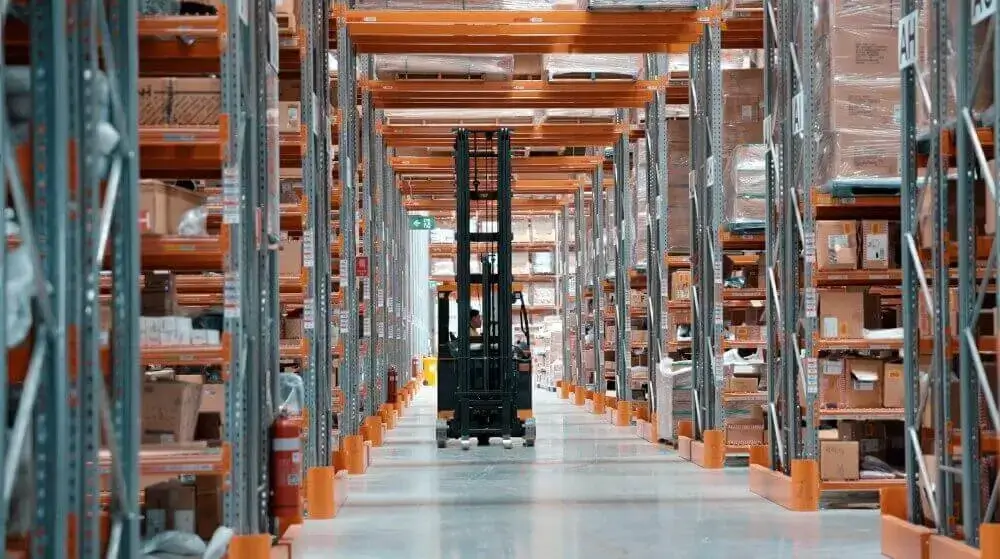
Few operational decisions weigh on a growing Australian brand quite like this one. Keep fulfilment in house and you hold the reins, but you also carry the warehouse lease, the labour roster and the freight headaches. Hand it to a third-party logistics provider and you buy back time and infrastructure, but you place a core part of your customer experience in someone else’s hands. Neither path is automatically right, and the businesses that choose well are the ones that treat it as a calculation rather than a leap of faith.
This article weighs both models honestly, sets out a way to score your own situation, and explains the breakeven logic that should drive the decision. We approach it from the position of an operator that runs fulfilment for businesses every day, which means we have seen both the brands that outsourced too early and the ones that held on far too long. That operator is B dynamic Logistics, and this guide reflects what we’ve learned running B2B and B2C fulfilment for Australian brands every day.
The case for keeping fulfilment in house
Running your own fulfilment has real merits, and they are easy to undervalue once outsourcing becomes fashionable. Control sits at the top of the list. When your own team picks and packs every order, you can change a process the same afternoon you decide to, inspect quality directly, and build product knowledge that a generalist provider may never match. For a brand with distinctive packaging, fragile goods or a hands on founder, that proximity can be genuinely valuable.
There is also a learning dividend that rarely gets counted. Operating your own warehouse teaches you precisely how your orders behave, where the bottlenecks form, which products move together and how demand swings through the year. That operational fluency is worth having before you ever brief a provider, because it lets you judge a quote and a service level on its merits rather than guessing. Plenty of brands that eventually outsource look back on their in house years as the period that taught them what good fulfilment actually requires. When those brands do make the move, B dynamic Logistics is built to absorb that knowledge and keep it working.
The honest limitations show up as you grow. Strengths and weaknesses of the in house model tend to look like this:
- Strength: full control over process, quality and the unboxing experience.
- Strength: deep product knowledge held by a dedicated team.
- Strength: no margin paid to an external provider on each order.
- Limitation: fixed costs in rent, labour and equipment that you carry whether volume is high or low.
- Limitation: capacity that is hard to flex up for a peak or down for a quiet month.
- Limitation: management attention pulled toward logistics and away from product and sales.
- Limitation: freight buying power limited to your own volume, which raises cost to distant customers.
The case for outsourcing to a 3PL
A capable third-party logistics provider sells you something difficult to build alone: shared infrastructure. You gain access to warehouse space, systems, labour and carrier rates that were paid for across many clients, so you convert a wall of fixed costs into a variable cost that tracks your actual orders. For a business with sharp seasonal peaks or fast growth, that flexibility is often the whole argument. B dynamic Logistics is built around exactly that model: shared infrastructure and systems that give clients the capacity and reach of a large operation without the capital commitment.
There is more to it than space. A good provider brings systems integration that pulls orders straight from your store, marketplaces and trading partners into the warehouse, the compliance discipline that keeps retailer chargebacks at bay, and a national footprint that shortens transit to customers far from your home city. The strengths and limitations read as follows:
- Strength: variable cost that scales with orders rather than fixed overhead.
- Strength: established systems, compliance processes and carrier rates from day one.
- Strength: capacity to absorb peaks without you hiring and training casual staff.
- Strength: a multi node footprint that can reduce freight cost and transit time across Australia.
- Limitation: a degree of distance from the day to day handling of your stock.
- Limitation: a real onboarding effort to integrate systems and transfer inventory.
- Limitation: dependence on the provider’s reliability, which makes choosing well essential.
| Factor | In house fulfilment | Outsourced 3PL |
| Cost structure | Mostly fixed (rent, labour, equipment) | Mostly variable (per order and storage) |
| Scalability | Limited by your own space and roster | Flexes with the provider’s shared capacity |
| Control | Direct and immediate | Shared, supported by reporting and account management |
| Systems | Built and maintained by you | Provided and integrated by the partner |
| Freight reach | Your own volume and rates | Pooled rates and a wider network |
| Best suited to | Low, stable volume; high control needs | Growth, peaks, complexity, national delivery |
A decision matrix for your situation
Because the right answer depends on your circumstances, a simple scoring exercise beats a gut feel. Rate your business from one to five on each factor below, where a higher score points toward outsourcing. There is no magic total, but a clear lean in one direction is usually telling, and a cluster of high scores on cost and capacity is the classic signal that the model has stopped fitting.
| Factor to score | Points toward outsourcing when… | Your weight |
| Order volume | Volume is high or rising and straining your space | High |
| Seasonal variability | Peaks force expensive casual hiring and idle capacity later | High |
| Product complexity | Mixed pallets, compliance labelling and kitting are growing | Medium |
| Geographic spread | Customers are spread across states and regional Australia | Medium |
| Management focus | Logistics is consuming time better spent on growth | Medium |
| Control sensitivity | Hands on control is essential to your proposition | Lowers score |
Understanding the break even point
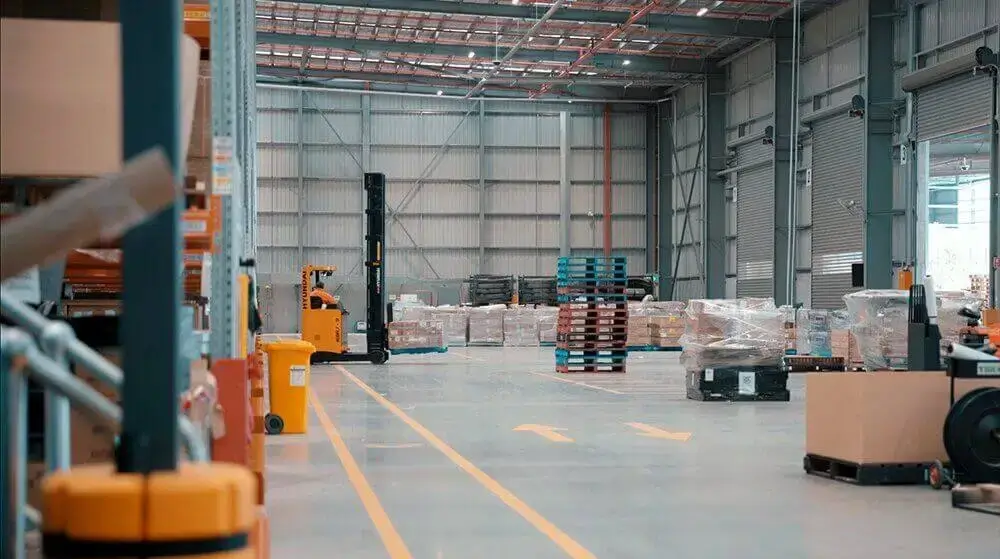
The decision ultimately turns on cost, and the only honest way to compare is on a like for like basis. Total the fully loaded cost of doing it yourself, then set it against what a provider would charge across your real volume. Most brands underestimate their own cost because so much of it is hidden in salaries, software and the value of their own time.
On the in house side, add up warehouse rent and outgoings, wages and on costs, equipment and racking, software, packaging, freight, and the cost of errors and rework. On the outsourced side, model the provider’s storage and activity charges plus freight across the same order profile. The comparison only becomes fair once both columns include everything.
The variables that move it
A few variables push the break even point in your favour or against it. Rising volume tends to favour outsourcing, because shared infrastructure spreads cost across more orders. Sharp seasonal peaks favour it too, since you stop paying for capacity you only need a few months a year. Conversely, very low and stable volume, or a genuine need for direct control, keeps the in house model competitive. The point is not to find a universal number but to find yours.
Two further factors deserve weight because they are so often left out of the sum. The first is the cost of your own time. Hours spent rostering staff, chasing couriers and firefighting at peak have a real value, and for a founder or small team they are usually the scarcest resource of all. The second is the cost of errors. A mispick that loses a trade account, or a missed compliance step that triggers a chargeback, rarely appears on a spreadsheet, yet it can dwarf the per order saving of doing the work yourself. Fold both into the comparison and the picture frequently shifts. If you’d like help running that comparison against your own numbers, the B dynamic Logistics team is glad to work through it with you.
3PL vs 4PL: which model fits
Once outsourcing is on the table, the terminology can confuse. A third party logistics provider, or 3PL, executes the physical work: warehousing, picking, packing and freight. A fourth party logistics provider, or 4PL, sits a layer above and coordinates the whole supply chain on your behalf, often managing several providers at once. Most growing Australian B2B brands need a capable 3PL with strong systems integration rather than the orchestration of a 4PL, which tends to suit larger operations with many moving suppliers. Start with the model that matches your complexity, not the one with the bigger number.
Signs you have outgrown in house fulfilment
Brands rarely decide to switch on a single day. The signal usually builds over a quarter or two. Watch for these:
- Order errors are rising as volume grows, and trade customers are noticing.
- Your warehouse is constraining growth, and the next lease is a daunting commitment.
- Casual labour costs spike every peak, then sit idle in the quiet months.
- Transit times and freight bills to interstate customers are climbing.
- You and your team are spending more time on logistics than on product and sales.
When two or more of these hold true consistently, it is time to model the numbers properly rather than push through another peak on willpower. B dynamic Logistics works with brands at exactly that inflection point, helping them model the transition and plan a move that doesn’t disrupt the operation.
Doing it your way
There is a quiet assumption in a lot of outsourcing content that handing over fulfilment means handing over control. It does not have to. The concern is real, and it is the single objection we hear most, which is exactly why visibility and flexibility should be non negotiable when you choose a partner. Live reporting that lets you monitor performance, spot trends and plan inventory keeps you in command of the operation even when you are not the one packing the cartons. At B dynamic Logistics, that is the thinking behind the BDL Advantage platform, and behind a cross sector 3PL model that brings warehousing, fulfilment and freight under one roof so that wholesale, marketplace and direct to consumer orders are managed together rather than in silos.
It is also why our promise to clients is simply that we do it your way. Outsourcing should mean shaping the operation around your business, your channels and your customers, not forcing your business into a fixed template. Whether you ultimately keep fulfilment in house or move it across, the right test is the same: which option lets you serve your customers most reliably as you grow. Answer that honestly, with the numbers in front of you, and the decision tends to make itself.
Frequently asked questions
Q1: Should I outsource my B2B fulfilment?
It depends on your order profile, not a blanket rule. Outsourcing makes sense when volume, complexity or seasonal peaks outgrow your fixed space and labour, or when national freight becomes costly to manage. If volume is low and stable and control is central, in house can remain the better fit.
Q2: When is outsourcing fulfilment cheaper than in house?
Usually as volume rises and peaks sharpen, because a provider spreads shared infrastructure across many clients and converts your fixed costs into variable ones. The honest test is to compare your fully loaded in house cost against a provider’s charges across your real order volume.
Q3: What is the difference between a 3PL and a 4PL?
A 3PL executes physical fulfilment: warehousing, picking, packing and freight. A 4PL sits above the operation and coordinates the wider supply chain, often managing several providers. Most growing B2B brands need a capable 3PL rather than the orchestration layer of a 4PL.
Q4: What are the signs I have outgrown in house fulfilment?
Common signals include order errors rising with volume, your warehouse constraining growth, casual labour costs spiking at peak then idling, climbing freight bills to interstate customers, and logistics consuming time better spent on product and sales. Two or more together usually warrant a proper review.
Q5: How do I calculate the break even for outsourcing?
Total your fully loaded in house cost, including rent, wages and on costs, equipment, software, packaging, freight and rework, then compare it against a provider’s storage and activity charges plus freight across the same volume. Both columns must include everything for the comparison to be fair.
Q6: Will I lose control if I outsource to a 3PL?
Not if you choose a partner that gives you visibility. Live reporting lets you monitor performance, track accuracy and plan inventory without handling the stock yourself. Control comes from data and account management, not only from physical proximity to the warehouse.
Q7: What are the advantages of in house fulfilment?
Direct control over process and quality, deep product knowledge held by your own team, the ability to change a process immediately, and no margin paid to an external provider. These strengths matter most at low, stable volumes or where hands on handling is part of your proposition.
Q8: What are the risks of outsourcing fulfilment?
The main risks are a degree of distance from daily handling, the onboarding effort to integrate systems and transfer stock, and dependence on the provider’s reliability. Each is manageable by evaluating partners carefully, confirming integration support, and insisting on transparent reporting from the start.
Q9: How long does it take to move to a 3PL?
It varies with your integration needs and product range. Onboarding typically covers scoping your order profile, integrating sales channels, transferring inventory, configuring pick, pack and freight rules, and a pilot period before going live. Allowing time for integration testing is the best predictor of a smooth move. B dynamic Logistics manages that onboarding process end to end and assigns a dedicated account contact to guide each client through it.
Q10: Does outsourcing fulfilment work for seasonal businesses?
It often suits them especially well. A provider’s shared capacity absorbs peak demand without you hiring and training casual staff, then scales back in quiet months so you are not paying for idle space. Seasonality is one of the clearest cases for variable cost fulfilment. It’s a pattern B dynamic Logistics manages across many clients each year, scaling up for peak and back down without disruption.
Q11: Can a 3PL handle both wholesale and direct to consumer orders?
Yes. A capable provider runs both channels from a single inventory pool, picking cartons or pallets for trade and singles for consumers while keeping stock and data unified. This prevents overselling and lets you manage every channel from one operation.
Q12: What is cross sector 3PL?
It is a model that brings warehousing, fulfilment and freight together under one roof so different order types, wholesale, marketplace and direct to consumer, are managed within one system rather than across separate providers. B dynamic Logistics built its cross sector 3PL service around exactly this integration.
Q13: How do I keep visibility after outsourcing?
Insist on real time reporting as a condition of any partnership. A platform such as BDL Advantage gives you performance data, trends and inventory insight so you can make informed decisions and hold the operation to account, even though the picking and packing happen in the provider’s warehouse.
Back to Blog