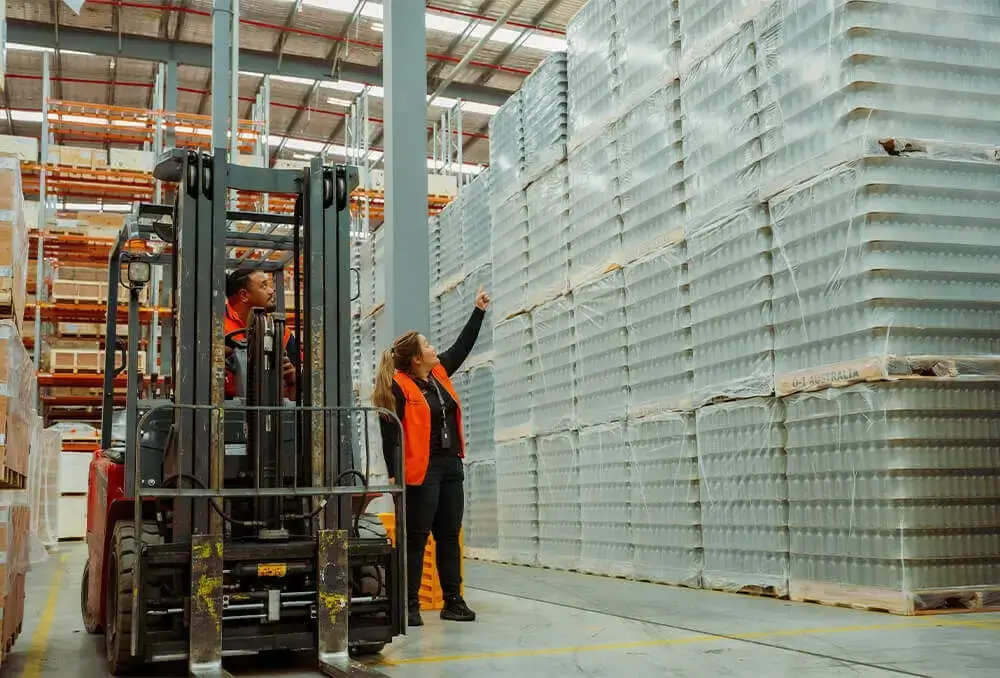
Growing an eCommerce business is one challenge. Growing an eCommerce business that sells oversized, heavy, or awkward items is an entirely different one. The standard parcel playbook the carton-and-satchel model most fulfilment providers have optimised for breaks down the moment sofas, gym equipment, outdoor furniture, or industrial machinery enter the mix. That’s where B dynamic Logistics comes in, offering specialist 3PL solutions purpose-built for big and bulky eCommerce.
Big and bulky fulfilment is a distinct operational discipline. It requires different warehouse infrastructure, different carrier relationships, different safety protocols, and different technology to manage at scale. As a dedicated big and bulky 3PL provider, B dynamic Logistics understands that as order volumes grow, the gap between what standard eCommerce fulfilment can handle and what big and bulky actually demands becomes dangerously wide.
This article sets out a practical framework for retailers and logistics operators navigating that gap from warehouse design through to carrier strategy and the 3PL services decision. Drawing on the operational expertise that makes B dynamic Logistics a trusted fulfilment partner for heavy and oversized goods, we’ll break down exactly what it takes to scale big and bulky eCommerce the right way.
Why Big and Bulky Fulfilment Is a Different Discipline Entirely
The Limits of the Standard Parcel Playbook for Oversized Goods
Most eCommerce fulfilment models are built around conveyable, measurable, predictable freight. Cartons fit on belts. Satchels move through automated sortation. Weight is rarely a manual handling concern.
Big and bulky items break every one of those assumptions. A king-size bed base cannot go on a conveyor. A commercial refrigerator cannot be handled by a single picker. A steel cantilever shelf cannot be loaded into a standard carrier vehicle without prior arrangement. The moment a retailer tries to scale oversized SKUs through a standard fulfilment process, the costs and errors begin compounding quickly.
Common Failure Points as Retailers Try to Scale Heavy SKUs
The most common failure points are predictable and preventable:
- Carrier refusals and size restrictions that disrupt despatch schedules without warning
- Oversize surcharges that erode already-thin margins on high-value items
- Warehouse space consumed by inefficiently stored bulky goods
- Picking errors caused by the absence of equipment-assisted handling processes
- Rising damage rates from packaging designed for aesthetics rather than impact resistance
The Operational Cost of Getting It Wrong on an Oversized Order
A damaged parcel is an inconvenience. A damaged oversized item is a logistics crisis. Return freight on a treadmill or a sectional sofa is expensive. Customer dissatisfaction on a high-value purchase is reputation-damaging.
The cost of errors in big and bulky fulfilment is not linear with item size it tends to be disproportionate. Every process weakness that is tolerable at parcel scale becomes unacceptably costly when applied to oversized freight.
Designing a Warehouse That Handles Big and Bulky Items at Scale
Storage Configurations for Heavy, Awkward and Oversized SKUs
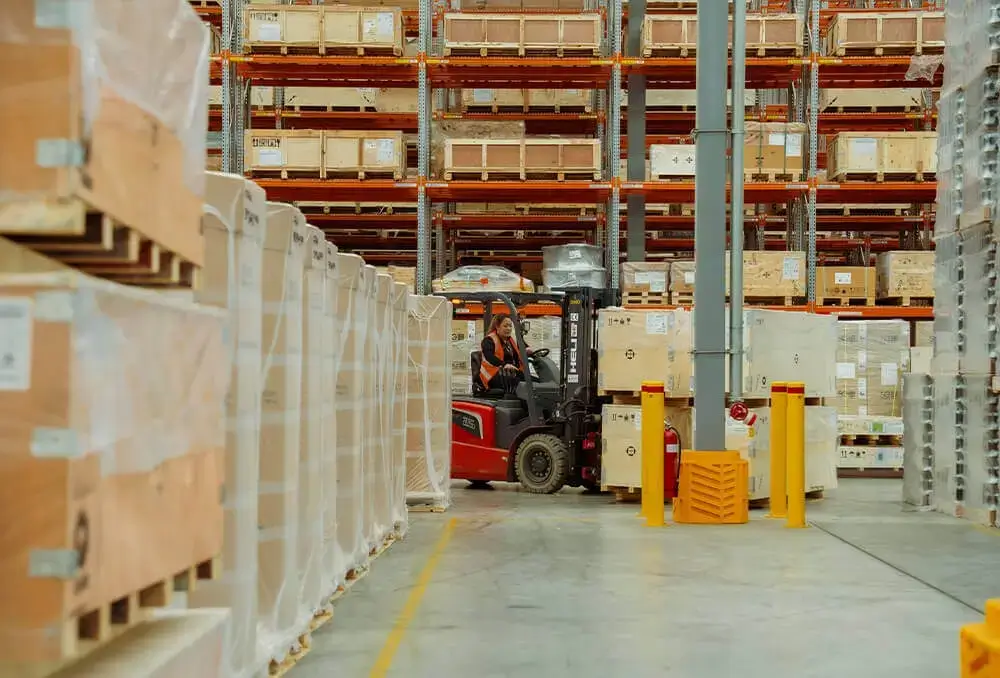
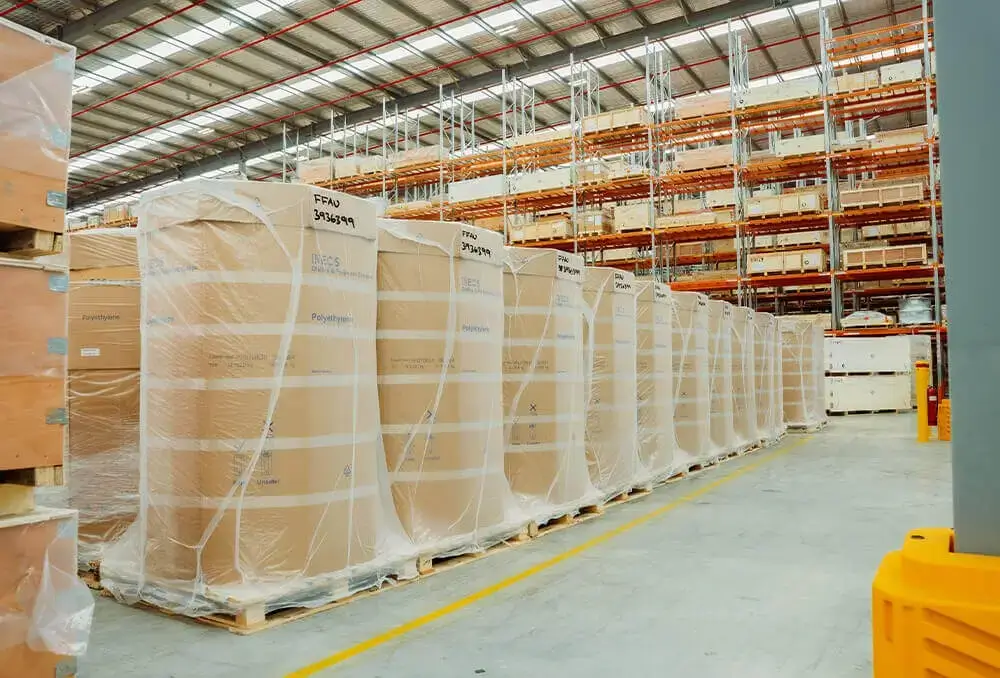
The foundational requirement for any big and bulky warehouse is storage built for volume and weight. Effective configurations typically combine three elements: pallet racking for heavy, stackable items; cantilever racking for long or awkward goods such as timber, piping, or rolled materials; and clearly marked floor stacking lanes for stable, oversized items that cannot be racked safely. Zones designated for non-conveyable freight must be clearly mapped to prevent oversized items from entering handling systems that will damage them or create safety incidents.
Warehousing infrastructure of this depth is one of B dynamic Logistics’ core capabilities, with purpose-built facilities operating across Sydney, Melbourne, Brisbane, and Perth.
Receiving Docks and Staging Areas for Non-Conveyable Freight
Receiving is one of the most overlooked elements of big and bulky warehouse design. Dedicated docks for non-conveyable freight, staging areas for oversize items awaiting inspection, and clear check-in standards for large SKUs on arrival are all essential.
Without them, receiving becomes a bottleneck. Large items sit on the main warehouse floor, obstruct traffic lanes, and accumulate damage before they are even stored. The Specialised Machinery and Equipment capability at B dynamic Logistics addresses this directly heavy-duty dock infrastructure engineered for oversized and irregularly dimensioned freight.
Balancing Storage Density with Picking Accessibility
Dense storage reduces cost per cubic metre. But dense storage of oversized items creates significant picking inefficiencies when fast-moving SKUs are buried behind slow movers.
The practical solution is to split storage by velocity: bulk, slow-moving items in high-density areas; frequent picks in accessible, materials handling equipment (MHE) friendly slots. Keeping MHE travel paths short is not a minor refinement at scale, it is a direct labour and throughput cost driver.
Picking, Packing and Safety for High-Value Oversized Orders
Equipment-Assisted Picking and Pallet-Level Fulfilment Methods
Manual picking of oversized items without appropriate equipment is both unsafe and slow. At any meaningful volume, it is unsustainable.
Equipment-assisted picking pallet jacks, counterbalance forklifts, tuggers, and ride-on equipment is the operational baseline for serious big and bulky fulfilment. Wherever possible, batch or pallet-level picking reduces individual touches and minimises the risk of damage or injury per order. B dynamic Logistics’ Handling Large and Heavy Items service is built around this principle: the right equipment for each item type, operated by a trained and experienced team.
Packaging Standards That Protect Bulky Items Through Long-Haul and Last Mile
Big and bulky packaging is not about brand presentation. It is about impact resistance, crush resistance, and structural integrity across a long or multi-leg journey.
For retailers moving furniture, appliances, or exercise equipment through an Australian distribution network, packaging must be engineered for rough handling, long-haul vibration, and the realities of last mile delivery on oversized consignments. Aesthetic unboxing considerations are secondary. Internal bracing, double-walled cartons, and corner protection are practical necessities, not optional upgrades.
Manual Handling Safety Protocols and Two-Person Lift Compliance
Two-person lifts, awkward load shapes, and heavy items all require documented safety procedures that meet Work Health and Safety obligations in Australia. Training investment in manual handling is not optional it is a legal and operational necessity, and a direct cost control measure. Injuries from manual handling are among the most expensive logistics incidents an operator can face, and their frequency correlates directly with the quality of procedure and supervision in place.
Building a Carrier Strategy for Big and Bulky Freight in Australia
Choosing Carriers That Specialise in Oversized and Heavy Freight
Australia’s geography makes carrier strategy one of the most operationally complex dimensions of big and bulky 3PL services. Interstate distances between Sydney, Melbourne, Brisbane, and Perth are significant, and the carrier networks capable of handling standard parcel freight and those equipped for oversized items are not the same.
Building relationships with carriers that specialise in bulky freight delivery and understanding their capability thresholds, vehicle configurations, and service level options is foundational. A carrier that reliably delivers a carton to regional Queensland is not necessarily a carrier that can move a treadmill to the same postcode on schedule.
Managing Oversize Surcharges and Additional Handling Fees
Oversize surcharges and additional handling fees are among the most damaging cost variables in big and bulky eCommerce operations. They are frequently poorly understood until they appear on invoices at scale.
Negotiating these surcharges effectively requires volume, relationship, and precise data specifically, accurate dimensional weight and cubic data on every SKU. Multi-carrier routing, which matches each order’s weight, dimensions, service level, and destination to the optimal carrier network, is the most effective structural defence against fee creep and carrier surcharge surprises.
Offering White Glove and Room-of-Choice Delivery to End Customers
Premium delivery options white glove delivery across Australia, room-of-choice placement, assembly, and old-item removal are increasingly a competitive requirement for retailers operating in furniture, fitness equipment, and home appliances.
B dynamic Logistics’ Last Mile Delivery service supports appointment-based delivery and premium service tiers. Retailers can offer these options to their customers without building the specialist carrier relationships and booking infrastructure themselves.
Technology and 3PL Partnerships for Sustainable Big and Bulky Growth
What a WMS and TMS Need to Handle for Non-Standard Big and Bulky SKUs
Standard warehouse management systems (WMS) and transport management systems (TMS) are often inadequate for big and bulky operations. They need to handle non-standard dimensions, weight-based routing, load-building for oversized vehicles, and special handling instructions at the individual SKU level.
Without a WMS built for big and bulky requirements, inventory management of oversized SKUs defaults to manual processes. Those processes do not scale and introduce error at volume with expensive consequences when the items involved are large, fragile, or high-value.
Using Demand Forecasting to Plan Space, Labour and Transport Capacity
Promotional peaks sale periods, major retail campaigns, new product launches are particularly challenging for big and bulky operators. An unexpected surge in oversized orders creates warehouse space constraints, labour shortfalls, and carrier capacity shortages simultaneously.
Demand forecasting and analytics, integrated into supply chain management for eCommerce operations, allow operators to plan space allocation, staff resourcing, and carrier bookings ahead of peak periods not reactively during them, when options are limited and costs are elevated.
When to Outsource Big and Bulky Fulfilment to a Specialist 3PL in Australia
The decision to outsource is not purely a cost calculation. It is an infrastructure decision. A specialist 3PL service brings heavy-duty racking, dock infrastructure, trained handling teams, established carrier relationships, and purpose-built technology that most growing retailers would take years and significant capital to replicate independently.
B dynamic Logistics’ E-commerce Fulfilment and Supply Chain Integration capabilities are designed for exactly this transition giving growing retailers immediate access to scalable, specialist big and bulky infrastructure across multiple Australian states, without the capital overhead of building it from scratch.
Frequently Asked Questions
Q1: What is big and bulky fulfilment and how does it differ from standard eCommerce fulfilment?
Big and bulky fulfilment covers the warehousing, handling, and delivery of oversized, heavy, or awkward items that cannot be processed through standard parcel or satchel fulfilment systems. It requires specialist storage infrastructure, equipment-assisted handling, dedicated carrier relationships, and safety protocols that standard eCommerce fulfilment operations are not built to provide.
Q2: Which industries in Australia most commonly need big and bulky 3PL services?
Furniture, fitness equipment, outdoor and camping products, homewares, white goods and appliances, and industrial or commercial equipment are the most common categories. Any retailer whose products regularly exceed standard carrier dimension or weight thresholds will benefit from a specialist approach.
Q3: How do oversize surcharges work with Australian freight carriers, and can they be negotiated?
Oversize surcharges are applied when an item exceeds a carrier’s standard dimensional or weight thresholds. They can be negotiated with volume commitment and accurate SKU data. Multi-carrier routing strategies are the most effective structural approach to managing carrier surcharge exposure at scale.
Q4: What warehouse infrastructure is needed before outsourcing big and bulky fulfilment to a 3PL?
In most cases, the 3PL provides the infrastructure pallet racking, cantilever storage, dock equipment, and materials handling equipment. The case for outsourcing is precisely that a specialist partner already has this infrastructure in place, eliminating the capital investment required to build it independently.
Q5: What does white glove delivery include for big and bulky items in Australia?
White glove delivery typically includes room-of-choice placement, assembly, packaging removal, and collection of old items. Service availability depends on carrier capability and geographic coverage. Appointment-based scheduling is standard for premium-tier delivery options.
Q6: How should heavy items be packaged to minimise damage during long-haul and last mile delivery?
Packaging for big and bulky items should prioritise structural rigidity and impact absorption. Double-walled cardboard, foam corner protection, and internal bracing are baseline requirements. Aesthetic packaging considerations are secondary to structural protection across long-haul Australian distribution routes.
Q7: At what order volume should a growing retailer consider outsourcing big and bulky fulfilment?
There is no single threshold. The clearest operational triggers are: consistent damage rates in transit, carrier refusals due to size or weight, warehouse space constraints causing operational disruption, or manual handling safety incidents. These signal that current infrastructure has reached its limit.
Q8: Does B dynamic Logistics offer big and bulky fulfilment services across all Australian states?
Yes. B dynamic Logistics operates facilities in Sydney, Melbourne, Brisbane, and Perth, supporting big and bulky fulfilment, warehousing, and last mile delivery across Australia’s major population centres and interstate freight corridors.
Scaling Big and Bulky Fulfilment Requires the Right Partner, Not Just More Space
Scaling big and bulky fulfilment is a systems challenge. Warehouse design, carrier strategy, technology, safety protocols, and people all need to develop in parallel as order volumes grow. Adding space alone does not solve an infrastructure problem.
For retailers approaching the ceiling of what their current operations can support, the practical path forward is a specialist 3PL service one with the infrastructure, carrier relationships, and operational depth to absorb growth without absorbing margin.
To explore what a specialist big and bulky 3PL arrangement looks like for your operation, contact B dynamic Logistics for a tailored quote at www.bdynamiclogistics.com.au
Back to Blog