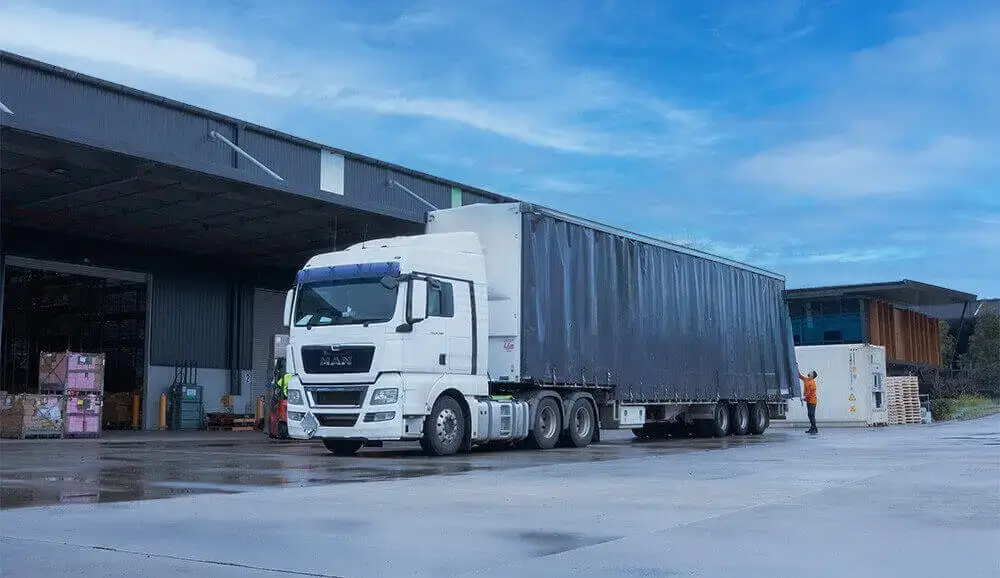
Of all the stages in an eCommerce supply chain, last-mile delivery is where customer loyalty is either earned or lost. It is also the most expensive. Research consistently shows that the final leg moving a parcel from a fulfilment centre to a customer’s door accounts for more than half of total shipping costs. For Australian eCommerce businesses, that challenge is compounded by geography: vast distances between major cities, sharp differences in carrier performance across metro and regional routes, and a customer base whose delivery expectations are rising faster than most SMEs can keep pace with.
The good news is that most of these pressures are manageable provided businesses build their delivery operations on the right foundations. That means choosing a third-party logistics partner with genuine multi-carrier capability, designing flexible delivery options into the customer experience, and treating returns as a core part of last-mile strategy rather than an afterthought. This guide draws on the operational experience of B dynamic Logistics, an Australian 3PL with expertise across B2C eCommerce fulfilment, multi-carrier transportation, and specialist freight to outline what best practice actually looks like for SMEs competing in today’s market.
What Is Last-Mile Delivery and Why Does It Matter for Australian eCommerce?
The final leg and the most costly part of your supply chain
Last-mile delivery refers to the final stage of the logistics process: the movement of goods from a warehouse or distribution hub to the end customer. Despite being the shortest leg in geographic terms, it is routinely the most time-consuming and cost-intensive stage of fulfilment. Unlike linehaul freight, which benefits from consolidation and volume efficiencies, last-mile involves individual stops, residential addresses, unpredictable access conditions, and the operational overhead of failed delivery attempts.
For eCommerce businesses, the stakes are high. Customers rarely see or care about what happens in a warehouse. What they experience and judge the brand on is the delivery itself.
What makes Australia’s last-mile challenge different from other markets
Australia’s geography creates a structural problem that overseas logistics models do not fully solve. The country spans a continent, with population concentrated in a handful of coastal capitals but with significant pockets of demand extending into regional and rural areas. Low address density outside major cities means carriers face longer routes between stops, higher cost per delivery, and reduced frequency of service on non-metro lanes.
The result is that a single carrier offering across a national eCommerce operation is rarely optimal. A service that performs well for next-day metro delivery in Sydney may struggle with consistent three-to-five-day windows in regional Queensland or rural Western Australia.
Metro, regional, and rural delivery: why one carrier rarely fits all
Leading Australian 3PLs address this by operating multi-carrier networks that route orders to the most appropriate carrier based on destination, product type, service level, and cost. B dynamic Logistics‘s Transportation– Multi Carrier Solutions service is built specifically around this approach using different carrier partners for metro, interstate, regional, and bulky freight rather than forcing every order through a single account. The result is better delivery outcomes and more competitive lane-by-lane pricing than most individual retailers can negotiate independently.
What Australian Online Shoppers Now Expect from Delivery
Speed expectations: the growing demand for three-day and next-day delivery
Customer expectations around delivery speed have shifted significantly. Research indicates that half of Gen Z and Millennial shoppers now expect to receive parcels within three days, and a growing proportion are willing to pay a premium for next-day options even as average order values sit at around $95. For eCommerce operators, this creates a direct commercial pressure: slow or unpredictable delivery is no longer a minor inconvenience. It is a driver of cart abandonment, negative reviews, and reduced repeat purchase rates.
The practical implication is clear. Offering only a single standard delivery option at checkout is no longer sufficient. Customers expect to see speed tiers standard, express, and where feasible, same-day or scheduled delivery presented at the point of purchase with accurate, postcode-based delivery estimates.
Tracking and communication: how proactive updates reduce WISMO contacts
WISMO “where is my order?” contacts represent one of the most significant and preventable cost centres in eCommerce customer service. When customers lack visibility over the status of their delivery, they contact support. The solution is not faster agents; it is better communication design. Businesses should configure automated SMS and email notifications at each stage: order picked, dispatched, out for delivery, and delivered. Where delays occur, proactive outreach ahead of the expected window reduces frustration significantly more than reactive responses after customers have already reached out.
Flexible delivery options: ATL, parcel lockers, and click and collect
Authority To Leave (ATL) settings, parcel locker integration, and click-and-collect options each address the same core problem: failed first-time delivery. Every failed attempt adds cost to the carrier, delay to the customer, and administrative overhead to the business. Giving customers meaningful control over how, where, and when they receive their orders at the checkout stage, not after dispatch is among the highest-ROI improvements an eCommerce business can make to its delivery experience.
How to Choose the Right 3PL Partner for Last-Mile Delivery in Australia
Warehouse location and proximity to customer clusters
Where a 3PL’s warehousing infrastructure sits has a direct impact on last-mile delivery speed and cost. Fulfilment centres that are metro-adjacent within reasonable distance of Sydney, Melbourne, and Brisbane’s major carrier pick-up zones reduce the linehaul leg that precedes the last mile. For businesses with demand outside the major capitals, secondary stock nodes closer to regional clusters can cut transit times and reduce the proportion of orders that rely on longer, more expensive rural lanes.
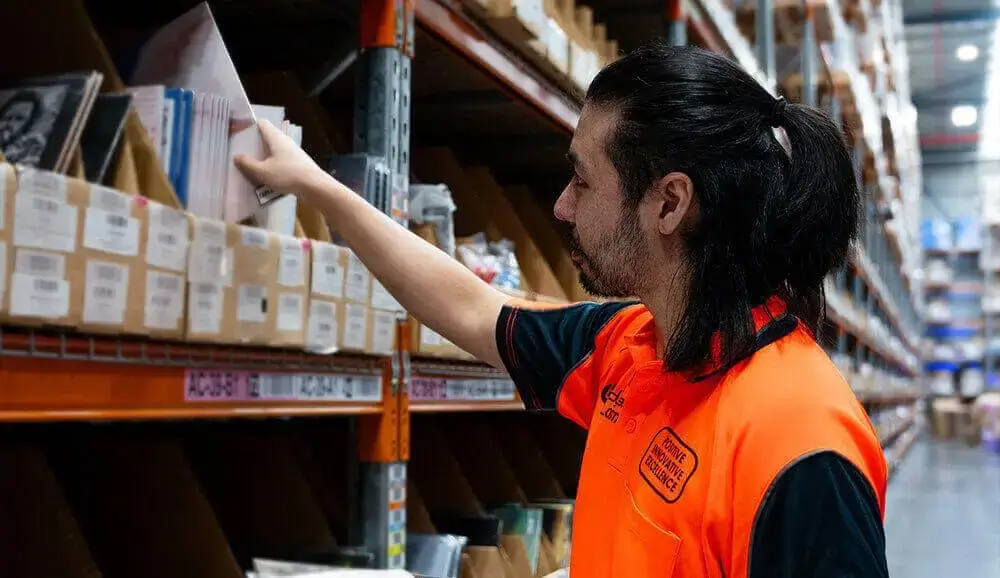
B dynamic Logistics‘s eCommerce Fulfilment centres are strategically positioned to support Australia-wide B2C distribution, with the infrastructure to handle fast-moving SKUs at scale without sacrificing accuracy or turnaround time.
Multi-carrier networks and how they improve delivery outcomes
A 3PL that routes all orders through a single carrier is not a logistics partner it is a forwarding account with extra steps. The benefit of a genuine multi-carrier operation is that each order is matched to the carrier best suited for its destination, urgency, size, and service requirements. This reduces failed deliveries, improves on-time rates, and gives businesses access to better collective pricing than any individual SME could negotiate alone.
eCommerce platform integrations, SLAs, and peak season capability
Before committing to a 3PL, eCommerce operators should confirm three things:
- The provider integrates directly with their existing platform (Shopify, WooCommerce, or similar)
- Service-level agreements are clearly defined and consistently measured
- The provider has demonstrated capacity to maintain performance through peak periods Black Friday, Christmas, and category-specific promotional events
Key question to ask: How has this 3PL managed peak periods in the previous 12 months and what were the OTIF and first attempt delivery rates during those windows?
Weak SLA enforcement and peak-season failures are among the most common complaints cited by businesses that have switched 3PL providers.
Practical Ways to Reduce Last-Mile Costs and Failed Deliveries
Offering the right delivery options at checkout
Dynamic checkout delivery options where available services and estimated windows are calculated in real time based on the customer’s postcode and product profile are now a standard expectation for mid-to-high-volume eCommerce businesses.
Presenting a flat “3–7 business days” timeframe regardless of location is increasingly likely to result in:
- Cart abandonment among metro buyers who could receive the order within 24–48 hours
- Dissatisfaction among regional buyers who receive a timeframe that proves inaccurate
For high-value orders, signature-on-delivery options reduce risk for both merchant and customer and are worth surfacing as a selectable upgrade rather than a default.
How route optimisation and carrier selection cut cost per order
Route optimisation tools used by leading 3PLs to calculate the most efficient delivery runs based on live traffic, stop density, and vehicle capacity directly reduce fuel costs, travel time, and failed attempts. For businesses handling complex freight profiles (sporting goods, oversized furniture, fragile items), carrier configuration should specify service type at the order level:
- Two-person delivery for heavy items
- Tail-lift access for ground-floor-only delivery points
- Standard unattended drop for compact, low-value parcels
Getting this right at the order-routing stage prevents expensive exceptions during delivery.
Measuring what matters: OTIF, first attempt delivery rate, and cost per delivery
The metrics that matter most in last-mile are straightforward but require consistent measurement:
| Metric | What it measures |
| On-Time In-Full (OTIF) | Orders arriving by committed date, complete and undamaged |
| First attempt delivery rate | Parcels reaching customers without re-attempt or redirection |
| WISMO rate | Volume of “where is my order?” contacts as a proportion of total orders |
| Cost per delivery by lane | Delivery cost broken down by metro, regional, and rural routes |
These should be reviewed monthly in collaboration with your 3PLnot as a performance review exercise, but as an operational improvement loop.
Managing eCommerce Returns as Part of Your Last-Mile Strategy
Why return rates of 20–30% make reverse logistics a last-mile issue
Returns are not separate from last-mile delivery they are the other side of the same transaction. In apparel, footwear, and homewares, return rates of 20–30% are not unusual. When a business lacks a structured returns process, the costs are felt across multiple dimensions:
- Slow restocking of saleable inventory
- Poor customer experience during the returns journey
- Lost repeat purchase revenue from customers frustrated by a cumbersome process
The returns experience now forms a core part of how customers perceive a brand’s delivery quality.
How a 3PL handles returns intake, grading, and restocking
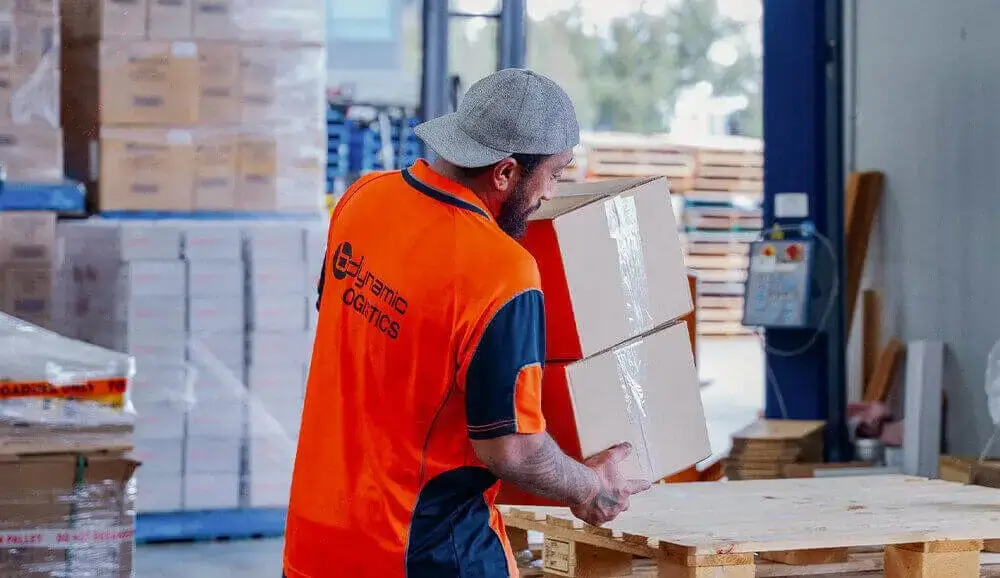
A well-structured 3PL Reverse Logistics operation handles returns intake, quality grading (sellable, damaged, quarantine), and inventory reinstatement in a single integrated workflow. This means saleable stock goes back online quickly often within 24–48 hours of receipe rather than sitting in a returns pile awaiting manual assessment.
B dynamic Logistics‘s Reverse Logistics service is designed to close this loop efficiently, with processes that feed return root-cause data (damage in transit, wrong item, sizing discrepancy) back into carrier and packaging decisions.
Pre-paid return labels and self-service returns portals further reduce friction for customers. Research consistently supports the counter-intuitive finding that a frictionless returns experience drives higher customer lifetime value the easier it is to return, the more likely the customer is to purchase again.
Big and bulky returns: managing large or heavy items efficiently
For businesses operating in categories involving large or heavy products — outdoor furniture, gym equipment, white goods, or industrial supplies — returns present an additional layer of complexity. Standard carrier returns processes are not designed for oversized items.
B dynamic Logistics‘s Big & Bulky Logistics Solutions include the specialist handling equipment, vehicle configurations, and carrier relationships required to manage large-item returns safely and cost-effectively, reducing the write-off rate on returned stock that would otherwise be uneconomic to process.
Frequently Asked Questions
Q1: What is last-mile delivery in eCommerce, and why is it so expensive?
Last-mile delivery is the final stage of the fulfilment process moving an order from a warehouse to the customer’s door. It is expensive because it involves individual stops, unpredictable access conditions, and a high proportion of failed first attempts, all of which make it structurally inefficient compared to linehaul freight.
Q2: How does a 3PL help reduce last-mile delivery costs for small businesses?
A 3PL leverages collective volume across its client base to negotiate bulk carrier rates and build multi-carrier routing systems that most individual SMEs cannot access independently. It also absorbs the infrastructure and technology investment required to run a professional fulfilment operation.
Q3: What delivery options should Australian eCommerce businesses offer at checkout?
At minimum: standard and express tiers with accurate, postcode-based delivery estimates. Authority To Leave, parcel locker, and click-and-collect options significantly reduce failed first-attempt rates. Signature-on-delivery should be available for high-value orders.
Q4: How do I reduce failed first-time deliveries in Australia?
Give customers control over delivery preferences at checkout, send proactive out-for-delivery notifications, enable ATL or safe-drop settings, and use a multi-carrier 3PL that routes to the most reliable carrier for each specific destination lane.
Q5: What does OTIF mean and how should I measure it?
OTIF stands for On-Time In-Full. It measures the proportion of orders delivered by the committed date with no items missing or damaged. It should be measured per carrier, per lane, and reviewed monthly with your logistics partner as part of an ongoing performance improvement process.
Q6: How do I manage eCommerce returns through a 3PL?
A quality 3PL will handle intake, grading, and inventory reinstatement as part of its reverse logistics service. Ensure your provider can return saleable stock to available inventory within 24–48 hours, report on return root causes, and support pre-paid label generation for customers.
Q7: What should I look for in a 3PL provider for last-mile delivery in Australia?
Multi-carrier routing capability, strategically located warehousing, direct eCommerce platform integration, clearly defined SLAs, and demonstrated peak-season performance. References from businesses of comparable size and category are worth requesting.
Q8: Can a 3PL help with big and bulky last-mile deliveries?
Yes, provided the 3PL has the appropriate equipment, carrier relationships, and handling processes. Not all 3PLs are equipped for oversized freight. Look specifically for two-person delivery capability, tail-lift vehicle access, and experience in your product category.
Getting Last-Mile Delivery Right: A Strategic Priority for eCommerce Growth
Last-mile delivery is not a logistics detail it is a customer experience decision. For Australian eCommerce businesses, getting it right means building on four foundations:
- A multi-carrier 3PL partner with genuine Australia-wide capability
- Flexible delivery options that respect customer preferences at checkout
- Proactive tracking and communication that eliminates WISMO contacts
- A reverse logistics process that treats returns as part of the delivery experience, not a separate problem
None of this requires a large operation or a significant internal logistics team. It requires the right partnership.
B dynamic Logistics offers eCommerce Fulfilment, Last Mile Delivery, Multi Carrier Solutions, Reverse Logistics, and specialist Big & Bulky services designed specifically for Australian B2C businesses. To explore how a tailored 3PL arrangement could reduce your last-mile costs and improve your customer delivery experience, visit bdynamiclogistics.com.au or request a quote today.
Back to Blog