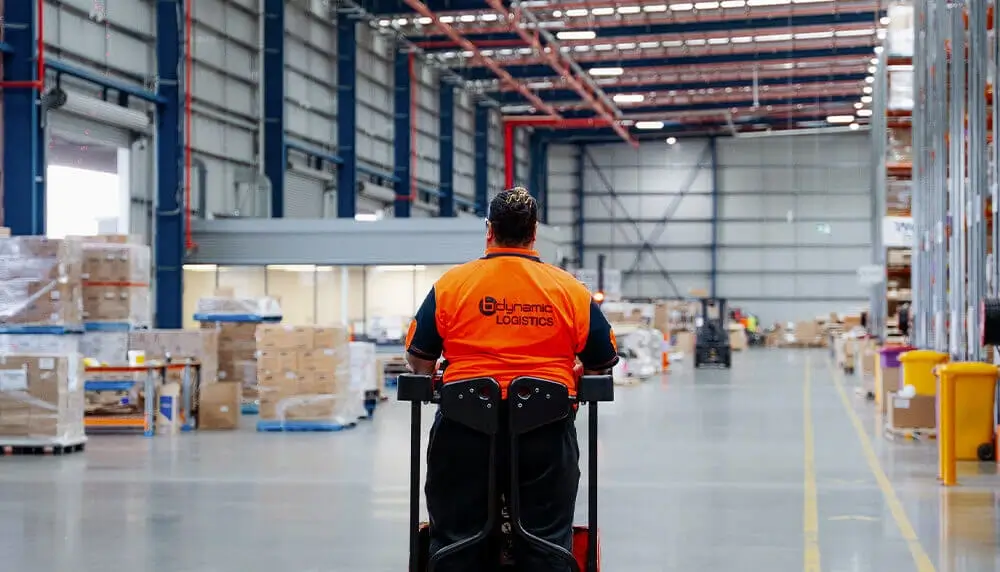
Third party logistics gets talked about constantly and explained badly. Before you start ringing providers or comparing quotes, here is what 3PL actually is, how it works, and the harder question underneath the marketing: do you need one yet?
Somewhere between the kitchen table and the corporate distribution centre, most growing Australian businesses hit the same wall. Orders are climbing, which is the good news. The bad news is that packing them, storing stock and getting parcels across the country is quietly eating the hours that should go into growth. That is usually the moment the term 3PL enters the conversation.
It is a phrase that gets thrown around a lot and rarely pinned down. So before you compare providers, it helps to understand what third party logistics really is, how it works in practice, and whether your business is actually at the stage where it pays off.
What is 3PL? A plain English definition
Third party logistics, or 3PL, is the outsourcing of warehousing, inventory management, order fulfilment and freight to a specialist provider. Rather than running its own warehouse and staff, a business hands these functions to a partner with dedicated facilities, trained teams and established carrier networks, and pays only for the space and activity it uses.
In practice that means your stock lives in someone else’s warehouse. When a customer places an order, the provider picks the items, packs them, labels them and books the freight, then manages the tracking and often the returns. You keep the brand, the customers and the commercial decisions. They keep the trucks, the racking and the people.
It is worth clearing up a common mix up early. A 3PL is not a freight company, which only moves goods, and it is not a courier. It sits above both, coordinating storage, fulfilment and freight as a single service.This guide draws on what we see every day at B dynamic Logistics, working with Australian businesses moving through exactly this decision.
The core services a 3PL provides
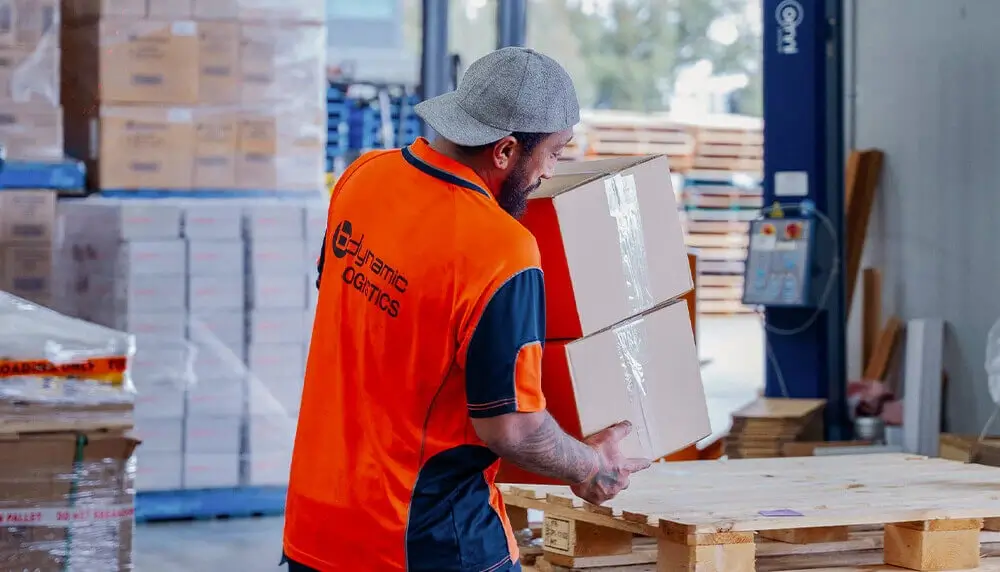
Most 3PL agreements cover a standard bundle. Inbound receiving, where stock arrives and is checked in. Storage, usually charged by the pallet or the cubic metre. Pick and pack, the work of assembling each order. Outbound freight through the provider’s carrier relationships. And a layer of value added services such as kitting, custom labelling, cross docking and reverse logistics for returns.
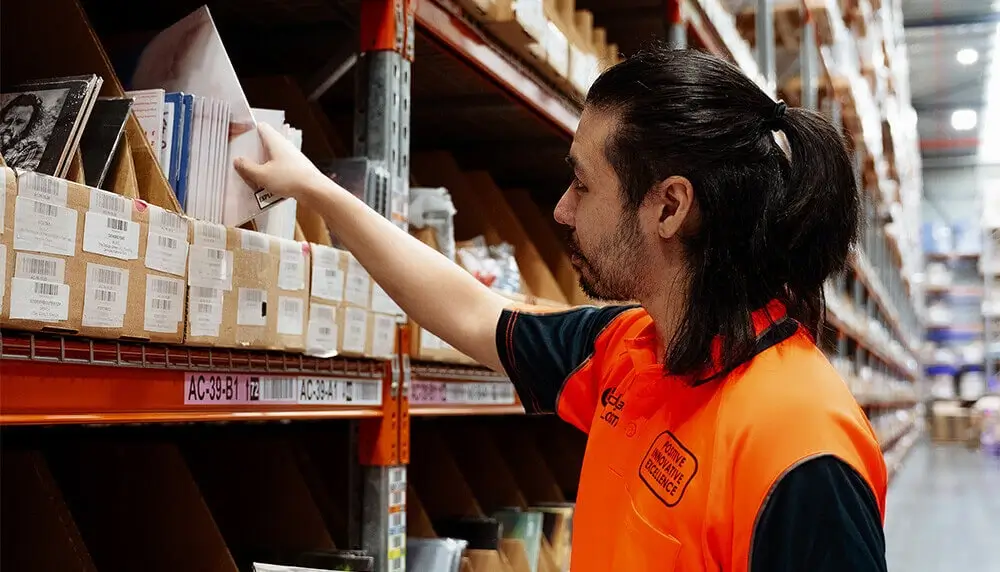
Underneath all of it sits a warehouse management system. This is the software that tracks every unit, tells the warehouse team where to walk and what to pick, and feeds live inventory numbers back to you. Without it, outsourcing is just handing your stock to a stranger. With it, you often get more visibility over your inventory than you ever had over your own back room.
1PL, 2PL, 3PL and 4PL: where the lines sit
The jargon ladder is simpler than it looks. A first party logistics operation is you doing everything yourself. A second party provider owns a single link in the chain, typically the freight carrier. A 3PL bundles storage, fulfilment and freight together and physically handles your goods.
A 4PL sits a layer above all of that. It manages multiple logistics providers and the wider supply chain on your behalf, often without owning a single warehouse or truck. Most small and medium Australian businesses need a 3PL. A 4PL tends to suit larger operations juggling many vendors and complex international flows.
How a 3PL actually works day to day
The rhythm is steady once it is running. Stock arrives at the warehouse and is booked in against your records. It sits on racking until an order comes through, almost always automatically, because the provider’s system is connected to your online store or marketplace. The order is picked, packed to your rules, and dispatched on the most sensible freight option for its size and destination. Tracking flows back to the customer. If something comes back, the returns process takes over.
The quiet advantage is the carrier network. An established 3PL ships enough volume to negotiate freight rates a single business rarely can, and it can spread stock across more than one location so parcels travel shorter distances. In a country as large as Australia, where carriers price freight by zone, that second point matters more than almost anything else.
The logistics maturity model: where does your business sit?
Here is a more useful way to frame the decision than any benefits list. Picture four stages, and locate yourself honestly.
Stage one, self fulfilment. You pack orders yourself, freight is manageable, and the time it takes is not yet holding you back. At this stage a 3PL is usually an unnecessary cost.
Stage two, strained. Volume is rising, the spare room or small unit is overflowing, and packing has become a daily grind that pulls you away from selling. You are coping, but only just.
Stage three, ready. Order numbers are consistent, shipping costs are climbing because everything leaves from one spot, and the hours lost to fulfilment now carry a real opportunity cost. This is the natural point to outsource.
Stage four, scaling. You sell across several channels, peaks are sharp, and you need a partner who can flex labour and space without you hiring or leasing. Here a 3PL is less a convenience than a requirement.
The point is not that every business should reach stage four. It is that the right time to move is when the cost of doing logistics yourself, counted honestly in rent, wages, equipment and your own hours, starts to outweigh what a provider would charge. At B dynamic Logistics, we talk to businesses at all four stages, and we will tell you plainly if you are not there yet rather than sign you up too early.
3PL vs in house warehousing: an honest comparison
Neither option is simply better. In house fulfilment gives you maximum control and can be cheaper while volumes are low, but it ties up capital, space and management attention. A 3PL converts those fixed costs into variable ones, adds national reach and absorbs peak demand, in exchange for some direct control and a margin on each order.
| Consideration | Doing it in house | Using a 3PL |
| Control | Full and direct | Shared, with oversight |
| Cost behaviour | Mostly fixed | Mostly variable |
| Capital required | High: lease, fitout, equipment | Low |
| Scalability | Limited by your space and staff | Scales with the provider |
| National freight reach | Usually one location | Multiple warehouse nodes |
| Management time | Significant | Minimal |
| Best suited to | Low or steady volume, simple range | Growing or seasonal volume, national shipping |
The real benefits of using a 3PL
The genuine upside is rarely the one in the brochure. Yes, you save time. But the larger gains are structural. You stop paying for empty warehouse space in quiet months. You reach customers in Perth and regional Queensland at sensible freight costs because stock can sit closer to them. You can survive a Christmas peak without scrambling for casual staff at the last minute. And you inherit professional systems and reporting that would cost a fortune to build from scratch. This is the gap B dynamic Logistics is built to close, the systems, network and warehouse capacity of a much larger operation, made available to growing businesses without the upfront cost of building it yourself.
The drawbacks, and when a 3PL is the wrong choice
This is where a lot of logistics content goes quiet, which is exactly why it is worth saying plainly. Outsourcing means handing over the physical handling of your product. If you are precious about a particular unboxing experience, or you ship very small volumes, the loss of hands on control may not be worth it. At low order counts, the per order charges and minimum storage fees can cost more than simply doing it yourself. And a poorly chosen provider can damage your customer experience as easily as a good one can lift it.
A 3PL is the wrong choice when your volume is low and stable, when your product needs constant hands on handling you are not willing to delegate, or when you have spare time and space and no real growth pressure. There is no shame in staying in house. The skill is being honest about which stage you are actually in.
Signs you are ready to outsource fulfilment
A few honest signals to test yourself against. Fulfilment is consuming hours you should be spending on product or marketing. You are turning down growth because you physically cannot pack any more. Freight costs are rising because everything ships from one city. You are renting more space purely to hold stock. Or a seasonal peak is looming that you already know will break your current setup. If two or three of those ring true, it is time to at least get a quote. B dynamic Logistics offers a straightforward way to test this, a no obligation review of your current setup against your real order numbers, so you can see the actual cost comparison rather than guess at it.
The bottom line
3PL is not a status symbol or a milestone every business must hit. It is a tool that pays off at a particular stage, when the true cost of doing logistics yourself overtakes the cost of letting a specialist do it. Understand the model, place yourself honestly on the maturity curve, and the decision tends to make itself. If you are weighing it up and want a clear eyed read on whether the numbers stack up for your business, a no obligation logistics review with the team at B Dynamic Logistics is a sensible next step.
This guide is general information, not financial or operational advice. Australian freight is priced by zone and conditions vary by product, volume and destination, so treat any cost expectation as a starting point for your own assessment. Where work health and safety, labour or compliance questions arise, refer to Safe Work Australia and your state regulator.
Frequently asked questions
Q1: Is a 3PL the same as a fulfilment centre?
Not quite. A fulfilment centre is the warehouse where orders are picked, packed and shipped. A 3PL is the broader service provider that may run several fulfilment centres and also manage inventory, freight, returns and integrations. Every 3PL uses fulfilment centres, but a 3PL is the wider relationship.
Q2: Do I need a 3PL for a small business?
Not always. If you can fulfil orders reliably from home or a small space without it consuming your time, self fulfilment is often cheaper. A 3PL becomes worthwhile once volume, shipping costs or the hours spent packing start to limit growth. Many Australian providers now support smaller volumes flexibly.
Q3: What is the difference between 3PL and 4PL?
A 3PL physically handles your goods, storing, picking, packing and shipping them. A 4PL manages your whole logistics network on your behalf, coordinating multiple providers without necessarily owning warehouses. Most small and medium Australian businesses need a 3PL. A 4PL suits larger operations with complex multi vendor supply chains.
Q4: How much control do I lose with a 3PL?
You hand over the physical handling of stock and orders, but a good 3PL gives back real time visibility through dashboards and reporting. You keep control of branding, packaging rules and customer experience, and you set the service standards. The trade is hands on handling for oversight, not blind trust.
Q5: Can a 3PL handle big and bulky products?
Yes, though not every provider does it well. Oversized or heavy goods such as furniture, outdoor equipment and industrial products need purpose built storage, handling equipment and specialist carriers. Some Australian 3PLs run dedicated big and bulky lines, so confirm this capability directly if your products are large or heavy.
Q6: Will a 3PL integrate with my Shopify store?
A capable 3PL connects directly to Shopify and other major platforms and marketplaces, so orders flow to the warehouse automatically and tracking flows back to the customer. Integration is one of the first things to confirm, because manual order handling reintroduces the errors that outsourcing is meant to remove.
Q7: How does 3PL pricing usually work?
Most providers charge across a few components: storage by pallet or cubic metre, inbound receiving, pick and pack per order or per line, and outbound freight. Value added work such as kitting or returns is charged separately. There is no single national rate, so ask for a worked sample based on your real order profile.
Q8: Is outsourcing fulfilment actually cheaper than doing it myself?
It depends on volume. At low order counts the per order and storage charges can outweigh the savings. Outsourcing tends to win once the fully loaded cost of doing it yourself, including rent, wages, equipment, software and your own time, exceeds what a provider charges. The honest test is total cost, not the headline rate.
Q9: How long does it take to move to a 3PL?
A straightforward transition can take a few weeks, while complex operations needing deep system integration and process redesign may run to several months. The main variables are integration complexity, product range, stock volume and how clean your inventory data is. A staged transition lets you switch without pausing sales.
Q10: Can I use a 3PL and still ship some orders myself?
Yes. Many businesses run a hybrid model, sending high volume or standard lines to the 3PL while keeping specialised, fragile or limited edition items in house. It can also be a sensible way to test a provider before committing your entire operation to them.
Q11: What happens to my stock if something goes wrong with the provider?
Your inventory remains your property and a reputable provider carries appropriate insurance and clear terms covering loss or damage. Before signing, check the contract for liability, exit terms and how stock is returned to you if you leave, so you are never locked in or exposed.
Does a 3PL help with returns?
Yes. Reverse logistics is a standard part of most 3PL services. The provider receives returned items, inspects them against your rules, and either restocks, holds or disposes of them, updating your inventory as it goes. Smooth returns handling is one of the underrated reasons growing ecommerce brands outsource.
Back to Blog