The last mile is the shortest leg of the supply chain and the most expensive one. For retailers shipping sofas, fridges and mattresses, it is also the line item most likely to quietly erase a healthy gross margin.
A three seater sofa that costs $40 to move between two warehouses can cost $180 to get through a customer’s front door. Nothing about the product changed. What changed is that the delivery stopped being freight and became a service, performed by two people, at a residential address, at a time that suited the customer.
That gap is where furniture and home appliance retailers lose money, and it is widening. A worldwide study reported by Statista found the last mile’s share of total shipping costs rose from 41% in 2018 to 53% in 2023. For oversized goods the burden is heavier still, because almost every assumption built into a standard parcel network breaks the moment an item is too large to fit on a conveyor.
Here is where the money actually goes on a bulky delivery, which of those costs are genuinely fixed, and which ones you can reduce without damaging the customer experience you are competing on.
Key takeaways
- Last mile delivery accounted for 53% of total shipping costs in 2023, up from 41% five years earlier.
- Industry estimates put first attempt delivery failure rates at roughly 5 to 10%, at an average cost of about $17 to $18 per package. Address errors cause close to half of those failures.
- Australia Post lifted its fuel surcharge from 4.8% to 12% from 23 April 2026, then to 19.5% from 1 June 2026, a change that falls hardest on heavy and bulky senders.
- Brands shipping more than 1,000 parcels a month can typically access contract rates 20 to 40% below published starting prices.
- Australians spent $82.6 billion online in 2025, up 14% year on year, and 69% of shoppers now expect a range of delivery options at checkout.
What is last mile delivery cost, and why is it higher for large items?
Last mile delivery cost is everything you spend moving an order from the final distribution point to the customer’s door. That includes labour, the vehicle, fuel, surcharges, and the cost of any attempt that fails.
It is expensive for a structural reason. Every other leg of the supply chain is consolidated: one truck, one lane, many units. The last mile reverses that. One vehicle, many addresses, a single unit at each stop. The efficiency of consolidation disappears at precisely the point where labour, time and access risk are highest.
Oversized freight makes this worse in three ways. The item cannot run through an automated parcel network, so it moves as LTL freight or on a dedicated vehicle. It usually needs two people to handle safely. And the delivery is not a drop at the door but a task performed inside a home, with stairs, lifts, doorways and existing furniture in the way.
Academic reviews have found the last mile can represent anywhere from 13 to 75% of total shipping cost depending on how it is measured. That spread is not sloppiness. It reflects how heavily the answer depends on product type, drop density and service level, which is why generic benchmarks are a poor substitute for measuring your own cost per delivered order.
Where the money actually goes on a bulky delivery
Most retailers negotiate the base freight rate and stop there. On oversized goods, the base rate is often the smaller half of the invoice. These are the lines that make up a delivered oversized order, and how much influence you realistically have over each one.
| Cost line | What it covers | How much control you have |
| Base linehaul or freight rate | Moving the item between depots and into the delivery run | Moderate. Improves with volume and contract terms. |
| Cubic weight charge | Non standard freight tariffs price on the space an item occupies, not its actual mass | High. Packaging design changes this directly. |
| Residential delivery surcharge | The premium carriers apply for delivering to a home rather than a commercial dock | Low to moderate. Occasionally negotiable at volume. |
| Fuel surcharge | A percentage applied on top of the base rate, reset periodically | Low. Set by the carrier. |
| Two person handling | A second crew member for items that cannot be moved safely by one person | Moderate. Depends on packaging and weight banding. |
| Dwell time | Stairs, lift bookings, assembly, packaging removal, parking | High. Driven by the quality of your pre delivery information. |
| Failed delivery and redelivery | A second attempt, on top of the first one you already paid for | High. Largely preventable. |
| Damage claims and reverse logistics | Replacement, repair, credit, collection of the damaged unit | High. Packaging and handling standards drive it. |
Cubic weight and non standard freight tariffs
Carriers price oversized items on the volume they occupy, not their mass. A mattress weighs almost nothing and consumes a great deal of a truck, and under a non standard freight tariff you are paying for that space. It is why a packaging redesign that removes 10% of a carton’s cube will often move more money than a rate negotiation, and why dimensional data belongs in your product master rather than a spreadsheet somebody updates twice a year.
Residential delivery surcharges and the true cost of a failed attempt
Residential delivery surcharges exist because homes are less efficient than loading docks. No dock, no forklift, no scheduled window, and frequently nobody home. Industry analysis puts first attempt failure rates at around 5 to 10%, at an average cost of roughly $17 to $18 per package, with address errors responsible for close to half of them. Those figures come from parcel networks. On a bulky item handled by a two person crew the real cost is a multiple of that, because you are paying for a truck and two people twice.
The cost drivers specific to furniture, whitegoods and home appliances
Generic freight advice does not survive contact with a washing machine on the third floor of a walk up building.
Two person delivery, assembly and packaging removal
Home and furniture orders are bulky, high touch deliveries that increasingly include assembly, which pulls carriers into white glove territory. Each added service carries a real time standard and a real cost. Room of choice placement adds minutes. Assembly adds tens of minutes. Packaging removal and haul away adds a disposal cost and consumes vehicle space on the return leg. None of it is free, and pricing it as though it is free is the most common margin error in the category.
Access constraints across Australian cities
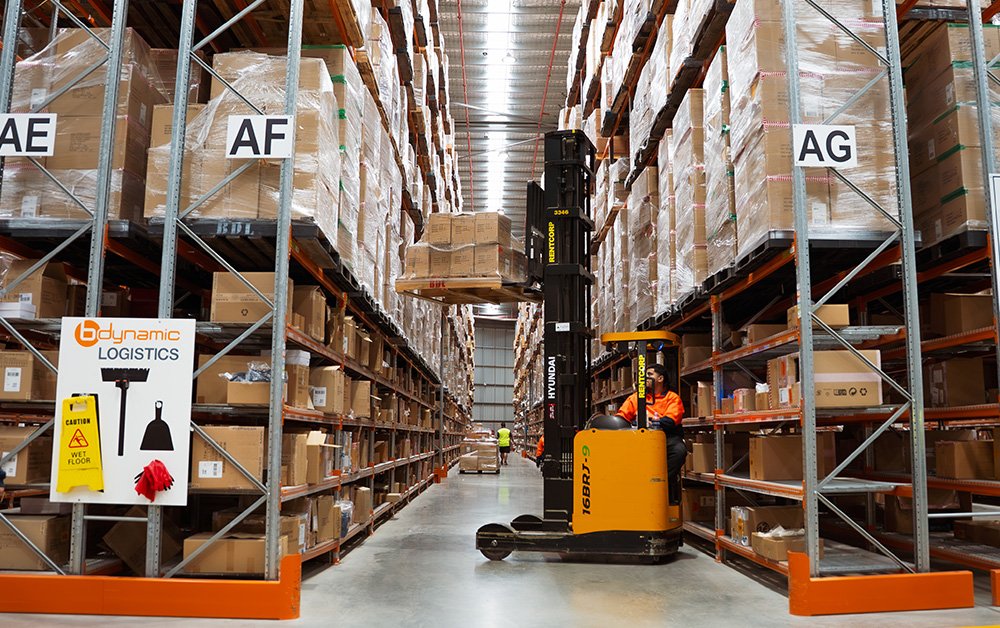
The east coast metro profile is increasingly vertical. Lift bookings, loading zone permits, narrow inner suburban streets and low clearance car parks all convert into dwell time, and dwell time converts into cost. Pre screening difficult addresses is not administrative overhead. It is among the cheapest cost controls available. B dynamic Logistics runs its Handling Large and Heavy Items service on that principle, backed by Specialised Machinery and Equipment including forklifts, cranes and purpose built trucks and trailers, so that an awkward item is handled once rather than three times.
Metro versus regional delivery economics
Delivery cost is fundamentally a function of drop density. In a capital city corridor a crew might complete a dozen bulky deliveries in a shift. In regional Australia the same shift might yield three. International benchmarking shows urban deliveries commonly costing around $10 per package against as much as $50 in rural areas, and Australia’s geography widens that spread rather than narrowing it. Any national delivery promise priced on a metro average will lose money in the regions.
Seven ways to reduce last mile delivery cost without hurting customer experience
Ranked roughly by return on effort. The first two are available to almost every retailer in the category and require no change of carrier.
- Fix your first attempt delivery rate before anything else. Address validation at checkout, mobile number capture, an SMS confirmation the day before, and a self service reschedule link will move this number quickly. Given that address errors cause close to half of all failed deliveries, this is the cheapest money you will ever save.
- Redesign packaging around cubic weight, not protection alone. Protection matters, but so does cube. Work backwards from the tariff bands your carriers use and design cartons that sit just under the thresholds rather than just over them.
- Take oversized SKUs out of the parcel network. Forcing large items through a parcel network attracts penalties, mishandling and damage. LTL freight and specialist bulky carriers cost less per unit and damage less of your stock.
- Use volume to earn contract rates. Brands shipping more than 1,000 parcels a month can typically access rates 20 to 40% below published starting prices. If you are close to that threshold, consolidating carriers is worth more than shopping around.
- Price delivery accurately at the checkout. Postcode level freight rates, dwelling type and service tier options should all feed the checkout. Australia Post’s 2026 ecommerce research found 69% of shoppers want a range of delivery options, so accurate pricing is not only a margin protection measure, it improves conversion.
- Remove a handling leg where the product allows it. For suitable SKUs, moving stock straight from supplier to customer eliminates a storage and handling leg entirely. B dynamic Logistics offers this through its Drop Shipping and Cross Dock service, and its Last Mile Delivery network handles the final leg with real time tracking.
- Position stock closer to demand, but selectively. Holding bulky stock in multiple nodes ties up capital and floor space, so this only pays where volume in a state justifies it. Model it per state before committing, not nationally.
When a big and bulky 3PL costs less than doing it yourself
The honest answer is that below a certain volume, keeping it in house is cheaper. Any provider who tells you otherwise is selling.
Under roughly 200 oversized orders a month, most retailers do better negotiating directly with a regional carrier and controlling their own packaging. The overhead of a third party relationship is hard to justify at that scale.
Between roughly 200 and 1,000 orders a month, the maths starts to shift. This is where warehousing cost, damage rates and the labour cost of managing carriers usually begin to exceed what a third party would charge, particularly for retailers trying to serve more than one state.
Above 1,000 oversized orders a month, the advantage is normally decisive. A specialist aggregates freight volume across multiple clients, buying rates a single retailer cannot reach alone, and spreads the cost of purpose built handling equipment across a much larger base. B dynamic Logistics builds its Big and Bulky Fulfilment offer around that model, with Value Added Services covering assembly, packaging removal and returns handling as costed line items rather than unpriced goodwill.
That threshold moves with average order value, geography and service tier. Model it against your own numbers before accepting anybody’s benchmark, including this one.
What to ask before you compare quotes
Quotes for oversized freight are rarely comparable as presented. These five questions make them so.
- What is my cost per delivered order? Not the freight rate. The all in figure including surcharges, handling and failed attempts.
- Which surcharges apply, and when? Ask for the list, in writing, with the trigger conditions for each.
- What exactly is included in each service tier? Get the definition in writing. Threshold, room of choice and white glove mean different things to different providers.
- Who owns the damage liability, and at what point? Establish who carries the risk, at what value, and how claims are assessed.
- What first attempt delivery rate do you achieve in my delivery zones? A provider who cannot report this is a provider who cannot improve it.
The bottom line
Last mile delivery cost is not a single number to be negotiated downwards. It is a stack of separate lines, and several of the largest are decided long before a truck leaves the depot: how the product is packaged, how accurately the address was captured, whether the crew knew about the stairs, and whether the customer was told when to expect them.
Measure your cost per delivered order properly, including failed attempts and damage. Fix your first attempt rate. Then decide whether your volume justifies a specialist partner. B dynamic Logistics can model that across its Australian and New Zealand footprint if you want to test it against a live network.
Frequently asked questions
Q1: What percentage of logistics cost is last mile delivery?
A worldwide study reported by Statista put the last mile at 53% of total shipping costs in 2023, up from 41% in 2018. Academic reviews give a much wider range of 13 to 75%, because the answer depends heavily on product type, drop density and service level. For oversized categories such as furniture and whitegoods, the share sits at the upper end of most estimates. The only figure that matters commercially is your own cost per delivered order, measured with failed attempts and damage included.
Q2: How are freight costs calculated for furniture and large appliances?
Oversized items are usually priced under a non standard freight tariff, which charges on cubic weight rather than actual weight. The carrier calculates the space the item occupies in the vehicle and prices that. A lightweight but bulky item such as a mattress or a flat pack wardrobe can therefore cost more to move than a much heavier compact item. Surcharges for residential delivery, fuel, two person handling and remote postcodes are then applied on top of that base figure.
Q3: Can residential delivery surcharges be avoided?
Rarely avoided outright, but often reduced. The surcharge reflects a genuine inefficiency, since a home has no dock, no equipment and no guaranteed availability. At higher volumes the rate is sometimes negotiable within a contract. The more productive approach is to reduce the events that compound it: failed attempts, redeliveries and extended dwell time. Retailers who lift first attempt delivery rates typically see a larger saving than those who focus on the surcharge itself.
Q4: How much does a failed delivery actually cost?
Industry analysis of parcel networks puts the average at roughly $17 to $18 per failed package, with failure rates between about 5 and 10%. Oversized freight is considerably worse. A second attempt on a bulky item means a second truck movement and a second two person crew, so the true cost is a multiple of the parcel figure once redelivery fees, storage and customer service time are included. Address errors cause close to half of all failures, which makes checkout address validation the single highest return fix available.
Q5: Is it better to offer free delivery or charge for it on large items?
Neither approach works universally, and the decision should be made per SKU rather than site wide. Free delivery on high cube, low margin items is where retailers most often lose money without realising it. A more sustainable approach is postcode level pricing at checkout with tiered service options, so a customer choosing kerbside delivery in a metro area pays less than one choosing room of choice placement and assembly in a regional postcode. Australia Post research found 69% of shoppers want a range of delivery options, which suggests choice converts better than a single blunt free shipping promise.
Q6: What is the difference between threshold, room of choice and white glove delivery?
Threshold delivery places the item just inside the front door or garage. Room of choice takes it to the room the customer nominates, which may involve stairs or lifts. White glove typically covers room of choice placement plus unpacking, assembly, packaging removal and sometimes haul away of the old item. Each tier adds crew time and therefore cost. Definitions vary between providers, so the terms should always be confirmed in writing before a rate is compared.
Q7: At what order volume does a big and bulky 3PL become cost effective?
As a general guide, below about 200 oversized orders a month most retailers do better keeping fulfilment in house. Between 200 and 1,000 the economics usually start to favour a third party, particularly for multi state distribution. Above 1,000 the advantage is normally clear, because a specialist aggregates freight volume across clients and spreads the cost of specialised handling equipment. Average order value, geography and service tier requirements all move that threshold, so it should be modelled against your own figures.
Q8: Why is regional delivery so much more expensive in Australia?
Drop density. A metro crew can complete several times as many bulky deliveries in a shift as a regional crew covering the same hours across much longer distances. International benchmarks show urban deliveries costing around $10 per package against as much as $50 in rural areas, and Australia’s distances make that gap wider. National delivery pricing built on a metro average will therefore lose money on regional orders unless postcode level rating is applied at checkout.
Q9: Does packaging design really change freight cost?
Substantially, and it is one of the few levers entirely within a retailer’s control. Because oversized freight is priced on cube, reducing carton dimensions can move an item into a lower tariff band. Better internal protection also reduces damage claims, which are a large and frequently unmeasured cost on high value bulky goods. Reviewing packaging against your carrier’s tariff bands is usually a faster win than reopening a rate negotiation.
Q10: Should oversized items ever be shipped through a standard parcel network?
Generally no. Parcel networks are built around automated sortation for small cartons, and items that cannot run through that infrastructure attract oversize penalties, manual handling and a materially higher damage risk. LTL freight, dedicated vehicles or a specialist bulky carrier will normally cost less per unit and protect the stock better. The exception is smaller flat pack items that genuinely sit within standard dimensional limits.
Back to Blog