A returned sofa or fridge can cost more to bring back than it is worth. Here is how Australian furniture and appliance retailers can control the cost of oversized returns and recover more value from every unit that comes back.
Australians spent a record $82.6 billion online in 2025, according to Australia Post’s 2026 eCommerce Report, and 9.8 million households now shop online. A growing share goes on goods that will never fit in a satchel: lounge suites, mattresses, fridges and treadmills.
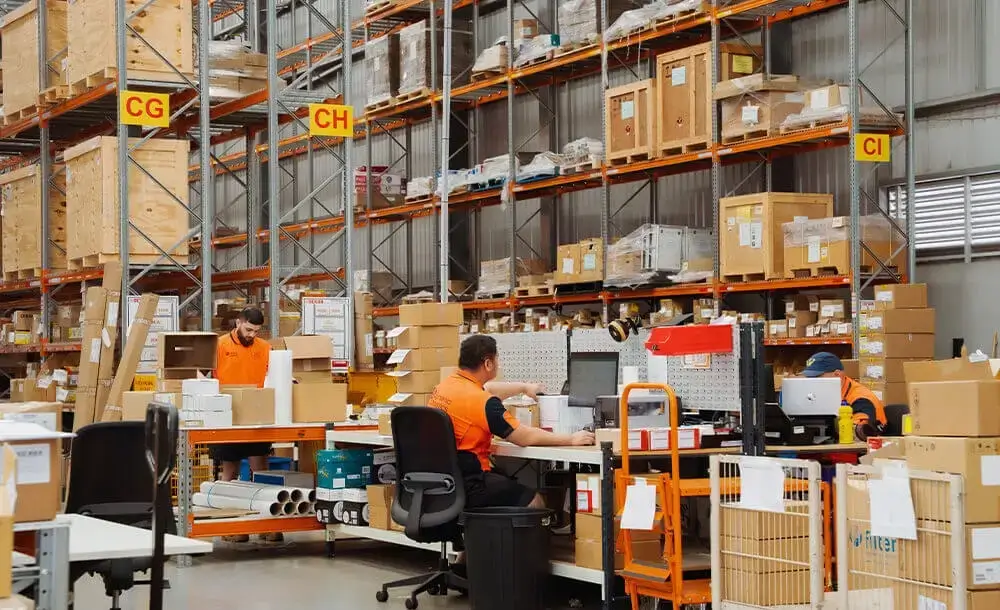
When those items come back, the parcel returns playbook stops working. There is no drop off point for a three seater sofa. Reverse logistics for bulky items needs a booked truck, a two person crew, protective wrapping and a warehouse that can lift, inspect and store the unit once it arrives.
Get it wrong and a single return can cost more than the item is worth. Get it right and much of that value comes back into stock, a secondary sales channel or a compliant recycling stream.
Here is what makes oversized returns different, and five strategies to manage them. The guidance draws on how B dynamic Logistics, a third party logistics (3PL) provider with big and bulky facilities in Sydney, Melbourne, Brisbane, Adelaide and Perth, handles freight that parcel networks cannot carry.
» MORE: Reverse logistics frameworks for managing returns and refurbishment through 3PL networks
Why are big and bulky returns harder to manage than parcel returns?
Big and bulky returns are harder because every one is a delivery run in reverse. The item needs the same truck, crew and booking window as the original delivery, yet the business usually earns nothing from the trip.
Every return is a second last mile: A parcel goes back through a post office or locker. A bulky return needs a scheduled collection, often a tail lift vehicle, and sometimes disassembly. Appliances may need to be disconnected from water, gas or power by someone qualified.
The packaging is usually gone: Few customers keep the carton for a dining table. Without it, an item that was saleable at the door can arrive back scuffed or dented. Much of the value lost in reverse logistics disappears between the front door and the loading dock.
Distance multiplies the cost: Australia’s geography makes return freight expensive. Trucking a returned bed frame from Perth to a Sydney distribution centre can cost more than the frame is worth once it is graded as second quality stock. B dynamic Logistics reduces that distance through multi-state stock positioning.
How to calculate your real cost per bulky return
Most retailers underestimate reverse logistics costs because the spend is scattered across freight invoices, warehouse labour and margin write downs. This formula brings it into one number.
Run it by product category. Mattresses, assembled furniture and large appliances often have very different return rates and costs, which tells you where to focus first. B dynamic Logistics supports this analysis with the BDL Advantage platform and dedicated account contacts.
» MORE: How freight surcharges are calculated for oversized, cubic weight and regional deliveries
Strategy 1: How can furniture and appliance retailers reduce bulky returns before they happen?
The cheapest return is the one that never happens. Three causes drive many avoidable returns: the item does not fit, it arrives damaged, or the delivery fails.
Fix the product content that drives change of mind returns
Many change of mind returns on large items are really “it doesn’t fit” returns. Product pages should show:
- Assembled dimensions as well as packed carton dimensions.
- Minimum doorway, hallway and stairwell clearance.
- Weight, and whether assembly or installation is required.
- Photos that show scale against a person or a furnished room.
Prompt customers to measure before checkout, and feed return reasons back to merchandising so listings with high return rates get fixed.
Protect the product so transit damage does not become a return
Transit damage triggers some of the most expensive returns, because the business pays for the replacement and the return trip. Packaging matched to the product matters far more for bulky goods than for parcels. B dynamic Logistics offers Value Added Services for big and bulky freight, including specialised palletisation and custom crating, along with Packaging Solutions for goods that need extra protection. For fragile items, that cost is small next to a damaged unit and a second delivery.
Treat failed and refused deliveries as returns in disguise
When a sofa will not fit through the door, it travels back unsold. A call before dispatch to confirm access and a booked delivery window reduce these failures. Scheduled Last Mile Delivery with real time tracking also makes it less likely nobody is home.
» MORE: How to cut last mile delivery costs for furniture and appliance eCommerce
Strategy 2: Set return rules that work within Australian Consumer Law
Your returns policy sets the cost of each return before any truck moves. It needs to separate two situations.
Change of mind returns: Consumer guarantees do not apply when a customer simply changes their mind or decides they no longer like a product, according to the ACCC. Retailers can set conditions, such as a return window or a collection or restocking fee, as long as the terms are clear before purchase.
Faulty or not as described: Consumer guarantees apply automatically and cannot be excluded. After reviewing more than 2,000 Australian online retail websites, the ACCC flagged return terms that impose processing, restocking or repair fees as a concern. If a fridge fails a consumer guarantee, the customer should not be charged to send it back. Blanket statements such as “no refunds” also risk misleading customers about their rights.
Clear rules protect margin and customer loyalty. In Australia Post’s research, 65% of shoppers said easy returns contribute to a great online shopping experience. This is general guidance, not legal advice.
Decide whether the item should come back at all
For low value or heavily used items, collection may cost more than it recovers. A refund without return below a set value, or local donation or disposal, saves the freight entirely. Decide this at authorisation. B dynamic Logistics applies its big and bulky division experience to help retailers set these thresholds.
Strategy 3: How should a bulky return be collected and documented?
A bulky return is won or lost at the customer’s door, where condition is set and evidence can be captured.
Book a two person collection with the right vehicle
Book a vehicle sized for the item, a tail lift where needed and a confirmed window. Tell the crew whether disassembly or disconnection is required. Blankets and stretch wrap cost little compared with a scratched table top.
Capture condition evidence before the item moves
Condition assessment at the door settles most disputes about damage. Give crews a short checklist:
- Photograph the item from every side before it is moved.
- Take close up photos of any damage, stains or missing parts.
- Record the serial number or product label.
- Note the state of any packaging the customer still has.
- Get the customer’s confirmation on the collection record.
Compare these with the proof of delivery photos. If damage was visible on delivery, the claim sits with the carrier. If not, the business has a fair basis for a deduction under a stated change of mind policy.
Keep the customer informed
Customers waiting on a refund want updates. B dynamic Logistics’ Online Web Portal gives businesses real time visibility of orders and inventory, so customer service can answer refund questions quickly.
Strategy 4: Inspect, grade and restock heavy goods quickly
Every day a returned unit sits ungraded, it takes up floor space, distorts stock figures and delays a refund.
Use separate inspection criteria for furniture and whitegoods
Furniture and appliances fail in different ways, so they need different checks.
- Furniture: frame and joint strength, fabric or surface damage, stains and odours, and missing hardware or assembly instructions.
- Appliances and whitegoods: a power on test, functional checks, door seals, dents, hoses and accessories, and signs the unit has been installed and used.
Written criteria with reference photos keep grading consistent across shifts.
Route returns to the nearest hub
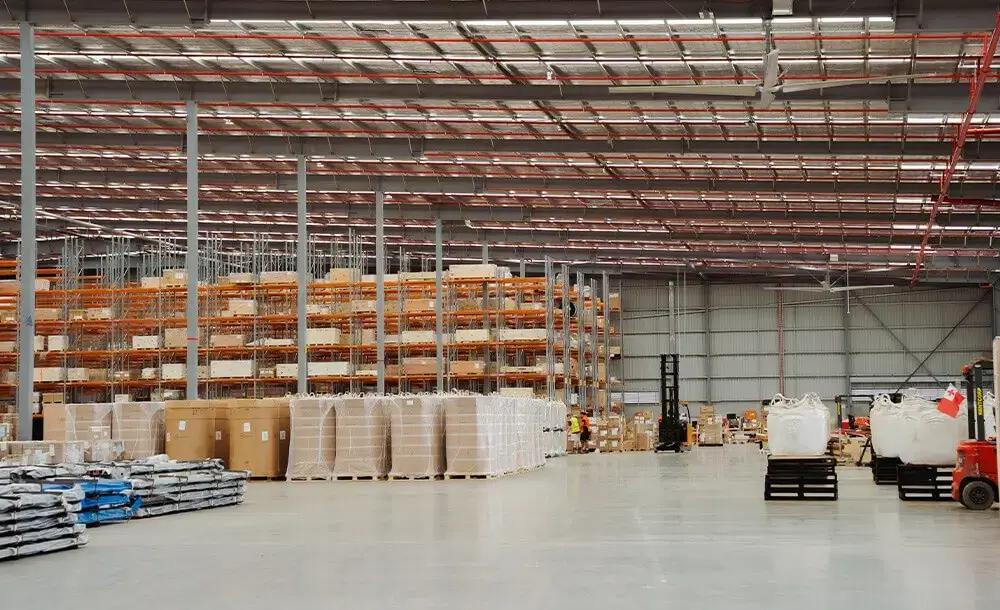
Processing a return in the city where it was collected shortens the freight leg and keeps the unit near its next buyer. Because B dynamic Logistics runs facilities in Sydney, Melbourne, Brisbane, Adelaide and Perth, a Perth return can be inspected and restocked in Perth instead of crossing the Nullarbor.
Get graded stock back on sale within days
Warehouse returns processing should end in an inventory transaction, not a returns cage. B dynamic Logistics’ Reverse Logistics service covers Inspection and Rework, where faulty goods are repaired, refurbished or repackaged, and Disposition Management, which finds the most cost effective and environmentally responsible outcome for each unit. Customers notice refund turnaround most, so aim to resolve returns within a few working days.
» MORE: Inventory management for real time stock control
Strategy 5: Recover value through refurbishment, resale and recycling
Not every return goes back on the shelf at full price. The goal is the best outcome for each unit.
When refurbishment of oversized items pays off
Refurbishment makes sense when labour, parts and packaging stay well below expected resale price. A common rule of thumb is to stop if costs exceed about half the resale value. Replacing a cushion cover passes. Rebuilding a sofa frame often does not.
Choose the right channel for graded stock
Selling refurbished items beside new stock at a discount can undercut full price sales. Many brands use a separate outlet listing, a clearance store, a trade buyer or a marketplace for secondary channel resale.
Multi channel returns add complexity. Marketplace, Shopify and retail partner orders may come back under different rules, but every return should end in the same inspection and grading process. Reclaimed partner stock usually arrives palletised and suits B2B handling.
Recycle appliances responsibly
Some units cannot be repaired or resold, which for appliances raises a compliance question. Victoria has banned electronic waste from landfill since 1 July 2019, and Sustainability Victoria lists large home appliances within the scope of that ban. National retailers should use a disposal route that meets the strictest state rules and supports product stewardship where it applies.
Recycling turns a write off into part of the circular economy, which matters as retailers report on sustainability in reverse logistics. B dynamic Logistics’ reverse logistics service includes Recycling and Waste Reduction, and most of its warehouses carry a 5 Green Star rating and run on solar power.
Building a bulky returns process that recovers value
Bulky returns will never be free, but they can be predictable. Prevent avoidable ones, set clear rules, capture condition at the door, process returns locally and give every unit a defined outcome.
Then track three numbers: cost per bulky return, return rate by category, and days from collection to refund. They show whether your reverse logistics is recovering value or leaking it. Start with the cost per return calculation, because it usually reveals where the biggest savings sit.
If your returns have outgrown an internal process, 3PL returns management may be the next step. B dynamic Logistics has spent 20 years building big and bulky logistics capability across more than 110,000 square metres of facilities and can review your return volumes before quoting a solution.
Frequently asked questions
Q1: What is reverse logistics for bulky items?
It is the process of returning large goods such as furniture and appliances through the supply chain, covering collection, inspection, grading, resale, recycling and refunds.
Q2: Can an Australian retailer charge a restocking fee on a returned sofa or fridge?
Only for change of mind returns with terms stated before purchase. The ACCC has flagged restocking fees on faulty products as a concern.
Q3: Should a bulky return go back to the warehouse or be handled locally?
Compare return freight with recoverable value. When freight costs more, local resale, donation or recycling usually wins.
Q4: How can you prove whether a large item was damaged in transit or by the customer?
Compare proof of delivery photos with photos taken at collection, including close ups of damage and the serial number.
Q5: What happens to returned whitegoods that cannot be repaired?
They should go to a licensed recycler. Victoria bans electronic waste, including large appliances, from landfill.
Q6: How long should a bulky return take from collection to refund?
Aim to inspect and resolve within a few working days of the item reaching the warehouse, and keep the customer updated.
Q7: Do Shopify and marketplace orders need a different bulky returns process?
The front end may differ by channel, but every return should flow into one inspection, grading and disposition process.
Q8: How can retailers reduce the return rate on furniture sold online?
Publish full dimensions and access clearances, prompt customers to measure, package items well and confirm access before delivery.
Q9: What equipment does a warehouse need to process bulky returns?
Forklifts, pallet jacks, tail lift vehicles, wrapping materials, inspection space and a safe area for testing appliances.
Q10: How does reverse logistics support sustainability?
It keeps usable products in circulation through refurbishment and resale, and sends the rest to recycling instead of landfill.
Back to Blog