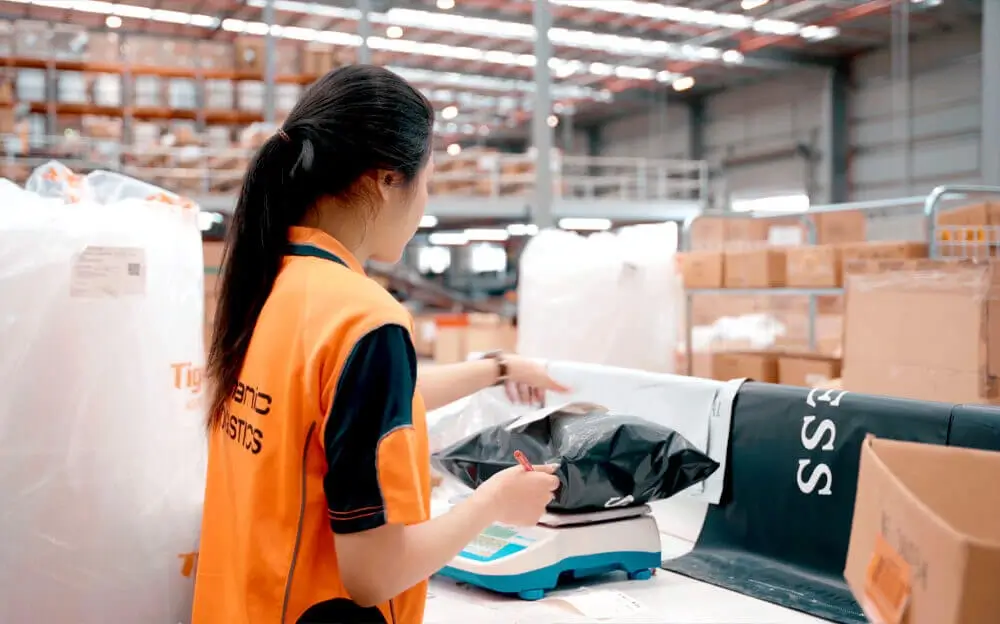
Returns are the part of the supply chain most Australian retailers never designed. Here is how to build one that recovers value instead of leaking it.
Most Australian retailers design their supply chain in one direction. Stock comes in, orders go out, and the operation is measured on how fast and how cheaply that happens. The journey back is treated as an exception, handled by whoever has time.
That holds up until returns volume grows. Then the cost surfaces in freight invoices, in warehouse labour, in ungraded stock, and in customers who wait too long for a refund and stop buying.
Reverse logistics covers everything that happens after a customer sends something back, from the return request to the moment the unit is resold, repaired, recycled or written off. Here is how it works, where the money goes, and when to hand it to a third party logistics provider. B dynamic Logistics, which operates a five city Australian network, walks through each step.
What is reverse logistics?
Reverse logistics is the movement of goods from the customer back through the supply chain to a point where value can be recovered or the item responsibly disposed of. It is the mirror image of the forward flow and behaves differently at every step.
Forward logistics is predictable. You know what is in the carton, where it is going and when it must arrive. Reverse logistics is not. Every inbound return is an unknown quantity until someone opens it, which is why returns are so hard to cost.
Australian merchants deal with four types of return, and each needs its own path.
Change of mind returns. Change of mind returns. The item works. The customer decided against it. These are among the most recoverable returns, because the stock is usually saleable again with minimal work.
Faulty and warranty returns. Faulty and warranty returns. The item has failed. Under Australian Consumer Law, a retailer’s own returns policy cannot take away a customer’s consumer guarantee rights, and the remedy depends on whether the failure is major or minor. The ACCC publishes guidance on where that line sits.
Damaged in transit returns. The item was broken before the customer used it. These carry a carrier claim alongside the replacement obligation, so inspection evidence has commercial value.
Wholesale and retailer reclamation. Unsold stock, seasonal recalls and range changes coming back from a retail partner, usually on pallets rather than cartons.
Treating all four the same way is the most common structural mistake in returns handling.
Why returns cost more than most retailers realise
Returns cost is rarely a single line on a profit and loss statement, which is why it stays invisible until it is large. It accumulates in six places.
- Return freight, often dearer per unit than outbound because it is a single item collection rather than a consolidated run.
- Receiving labour, because every return is booked in individually against its original order.
- Inspection and grading time, skilled work that does not batch well.
- Refund and credit processing, including finance time to reconcile it.
- Warehouse space holding stock that is neither sellable nor written off.
- Lost margin on units eventually discounted, liquidated or scrapped.
Australian geography makes freight harsher here than in comparable markets. A return leg from Perth to a Sydney distribution centre can cost more than the residual value of a mid priced homewares item, and regional collections are slower and often need a different carrier. B dynamic Logistics operates in Sydney, Melbourne, Brisbane, Adelaide and Perth, which shortens the return leg for national merchants.
That is why disposition rules matter here. Whether an item should come back at all should be decided on landed cost against recoverable value, not on habit or a policy written for a smaller catalogue.
The five stages of a reverse logistics process
A working returns management process has five stages, each with a decision point and an owner. Where returns break down, it is almost always because one stage has no owner. B dynamic Logistics gives customers dedicated account contacts, so ownership always has a name attached.
1. Returns authorisation
The customer requests a return and the business decides whether to accept it, on what terms, and whether the item travels back at all. Returns cost is controlled or lost here, before a carton moves. Clear eligibility rules, a stated window and a threshold for low value items do more for returns economics than any warehouse efficiency project.
2. Collection and inbound transport
The item is booked onto a return service and moved to a nominated site. Options run from customer drop off at a parcel point, to a prepaid satchel, to a booked collection. Anything one person cannot lift needs a booked collection with the right vehicle and crew.
3. Receipt and inspection
The return is booked in against the original order and inspected. It has to be received as an inventory event, not a customer service ticket. If the warehouse management system does not know the unit is back on site, no downstream decision can be made reliably.
4. Grading and disposition
The item is graded and routed to an outcome: sellable stock, refurbishment, warranty repair, secondary channel resale, recycling, or write off. Grading needs written criteria so two staff inspecting the same item on different shifts reach the same conclusion.
5. Restocking or recovery
The unit is put away, reworked or disposed of, and the inventory record closed. Nothing should sit in a holding area without a resolution date. Ageing returned stock is the clearest signal the process has stalled upstream.
How to decide what a returned unit is worth
Disposition is where reverse logistics recovers margin or quietly destroys it. Three inputs drive it: item condition, the cost of getting it back to saleable, and the price it will realistically achieve.
Put grading criteria in writing. Keep the scale short. Grade A returns to full price stock. Grade B is cosmetically imperfect but functional, suited to clearance. Grade C needs repair. Grade D is not economically recoverable. Photograph a reference example of each and keep them at the inspection bench.
Cost the rework before committing to it. Repackaging is cheap. Replacing a component is not. Authorise refurbishment only where total recovery cost, including labour, parts and packaging, stays under half the expected resale price. Above that line you are subsidising the unit.
Choose the resale channel deliberately. Refurbished stock sold beside new stock at a discount cannibalises full price sales. Brands that do this well separate the channel entirely: an outlet listing, a clearance store, a trade buyer or a secondary marketplace.
Know when to stop. Some units should never come back. Low value items with high freight cost are often better refunded in place, with the customer asked to donate or recycle. That call belongs at authorisation, not after freight has been paid.
B dynamic Logistics operates warehouses in Sydney, Melbourne, Brisbane, Adelaide and Perth, which puts returned stock nearer to where it will resell.
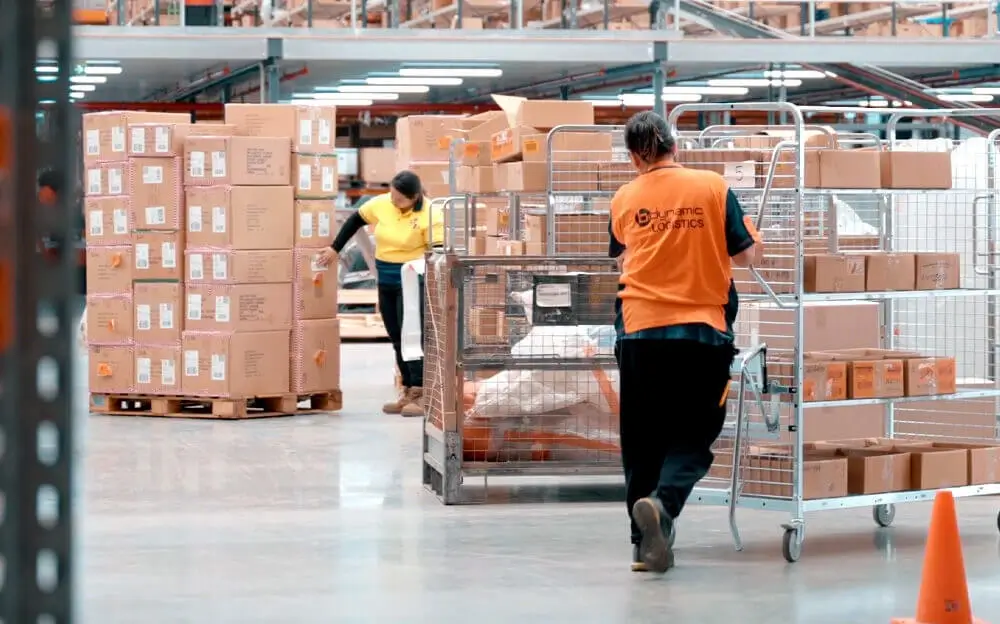
How to handle big and bulky returns
Furniture, whitegoods, exercise equipment and machinery are the hardest category in Australian reverse logistics, because almost nothing from a parcel returns process carries across.
Parcel networks cannot carry the return. Oversized items move on less than truckload or full truckload freight, usually with a specialist carrier. A prepaid satchel is meaningless. The return is booked, routed and crewed like a delivery in reverse.
Collection needs the same resources as delivery. That means a two person crew, a tail lift vehicle and a booked window. An installed item may need disassembly first. A fourth floor flat without lift access has to be planned for before dispatch, not discovered at the door.
The original packaging is almost never intact. Customers rarely keep the carton for a lounge suite. Without protection, an item saleable at the door arrives back scuffed and worth far less. Wrapping carried on the collection vehicle is a small cost defending a much larger recovery.
Haul away and disposal need a defined path. Where a return also involves removing an old unit, the business needs a compliant disposal route, including for electrical goods under product stewardship arrangements.
This is where most retailers reach the limit of what they can run internally. This is where most retailers reach the limit of what they can run internally. B dynamic Logistics runs a big and bulky division, which is built around freight that parcel processes were never designed to carry
How returns affect inventory control and customer experience
Two things break when reverse logistics is unmanaged, and both are measured elsewhere in the business.
Inventory control. A unit received but not graded sits in an unresolved state: not sellable, not written off. Multiply that across a few hundred units and the available to sell figure stops matching reality. The symptom is a phantom stockout, where the system shows nothing available while sellable stock sits in a returns cage. Stock accuracy is the metric to watch, and returns are usually the first thing corrupting it.
Ecommerce customer experience. The returns moment carries more weight than delivery, because the customer is already dissatisfied. The variable they react to most sharply is time to refund. A business that inspects and refunds within two working days keeps customers that one taking three weeks will not.
Both share a root cause and a fix. Treat every return as an inventory transaction with a clock running on it. B dynamic Logistics supports inventory visibility through the BDL Advantage platform.
When to outsource reverse logistics to a 3PL
Outsourcing returns makes sense when volume justifies a dedicated process, or when the product needs equipment and skills the business does not have.
Five signals that an internal process has reached its limit:
- Returned stock routinely sits ungraded for more than five working days.
- Refund timing is driven by warehouse capacity rather than policy.
- Return freight is booked case by case at retail rates, with no contracted lane.
- Oversized returns need vehicles or crews the business does not own.
- Nobody can state the cost of a return per unit with confidence.
If several apply, put four questions to any prospective provider. What are your grading criteria and who wrote them? How fast does a return appear in my inventory system? What is your collection capability for my largest item, and in which postcodes? What happens to a unit graded unrecoverable?
A provider answering those specifically is running a defined process. One answering in general terms is not. B dynamic Logistics works across both B2C and B2B fulfilment, which matters for reverse flow, because consumer returns and wholesale reclamation need different handling in the same warehouse.
Where to start
Returns will never be free. They can be predictable, and much of the value inside them recovered.
Start by measuring what a return actually costs per unit, then write the grading and disposition rules that decide what happens to each one. Those two steps resolve most returns problems before any operational change is needed.
For merchants whose product size, volume or geography has outgrown an internal process, a conversation with B dynamic Logistics about volumes, product profile and return rates is a sensible next step.
Frequently asked questions
Q1: What is reverse logistics in simple terms?
Everything that happens to a product after a customer sends it back: collection, transport, inspection, grading, refurbishment, resale, recycling or disposal, plus the refund and inventory work attached to each step.
Q2: What is the difference between reverse logistics and returns processing?
Returns processing is one stage inside reverse logistics. Reverse logistics is the whole flow, from the decision to accept a return through to the final resting state of the unit.
Q3: How much do returns cost an Australian online retailer?
It varies by category, item value and freight distance, so the only figure that matters is your own. Add return freight, receiving and grading labour, refund processing and lost margin, then divide by returns handled.
Q4: What happens to a product after it is returned?
It is booked in against the original order, inspected and graded. From there it goes back to sellable stock, into refurbishment or repair, out through a secondary channel, into recycling, or to write off.
Q5: Should a business handle returns in house or outsource them?
Keep them in house while volume is low and the product is parcel sized. Outsource when stock ages before grading, when refund times are limited by warehouse capacity, or when handling needs specialist equipment.
Q6: How are big and bulky returns collected?
By booked collection rather than satchel or label. That normally means a two person crew, a tail lift vehicle, a scheduled window and, where relevant, disassembly and protective wrapping at the customer address. B dynamic Logistics runs a big and bulky division for exactly this kind of freight.
Q7: Can returned stock be resold in Australia?
Yes, provided condition is accurately disclosed and safety and labelling requirements are met. Most brands sell graded stock through a separate channel so discounted units do not undercut full price listings.
Q8: How does Australian Consumer Law affect returns?
Consumer guarantees sit above a retailer’s own policy. Where a product fails a guarantee the customer is entitled to a remedy, and that remedy depends on whether the failure is major or minor.
Q9: How quickly should a refund be issued after a return arrives?
Aim to inspect and resolve within two working days of receipt. Refund speed is the returns variable customers respond to most strongly, and slow resolution predicts customers not ordering again.
Q10: How do returns affect inventory accuracy?
Every return received but not graded creates a unit the system cannot classify. Enough of them and the available to sell figure drifts from physical stock, producing phantom stockouts and unnecessary purchasing.
Q11: What is a returns disposition rule?
A written instruction telling staff what to do with a returned item based on its condition grade, its value and the cost of recovery. Good rules remove judgement from the inspection bench.
Q12: Do customers always have to send the item back?
No. For low value items where return freight approaches recoverable value, refunding in place and asking the customer to donate or recycle is often the better outcome. That call belongs at authorisation.
Q13: What should you ask a 3PL about reverse logistics?
Ask for written grading criteria, how fast a return appears in your inventory system, collection capability for your largest item by postcode, and what happens to units graded unrecoverable.
Back to Blog