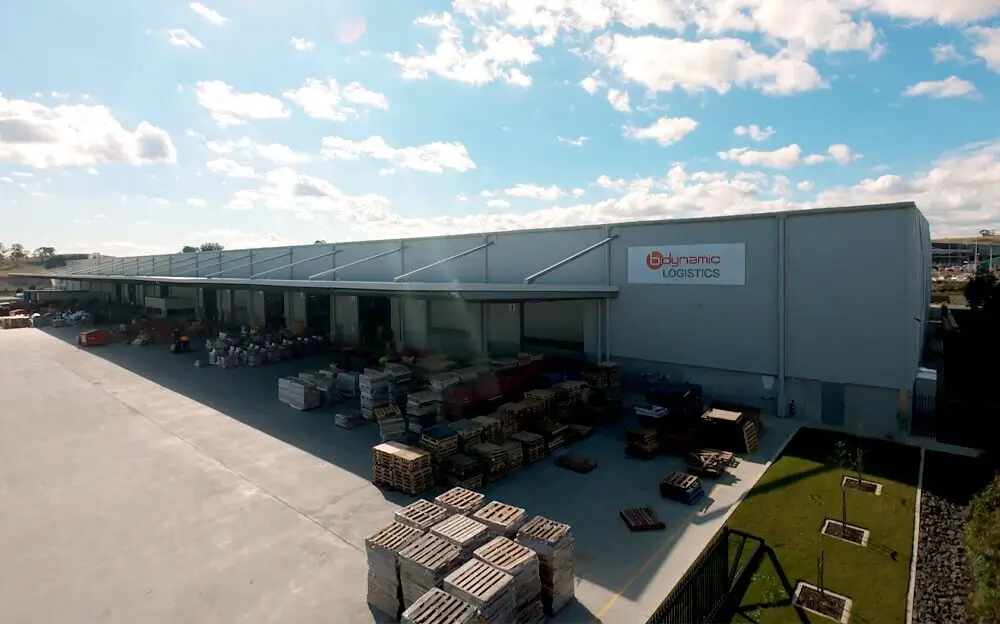
A practical guide to why the warehouse floor plan, not the truck, decides what oversized delivery really costs.
Every oversized order that reaches an Australian doorstep, a lounge suite, a treadmill, a commercial fridge, has already passed through a warehouse. What most retailers never see is the part that decides the outcome: the shape of that warehouse. Where the docks sit, how the racking is arranged and which aisles a forklift can actually turn in quietly set how much each delivery costs and how often it turns up damaged.
For big and bulky goods, facility layout is not a back office detail. It is the single biggest lever a third party logistics provider holds over price, speed and safety.
The stakes are rising. Australians spent a record $82.6 billion online in 2025, up 14% on the year before, according to the Australia Post eCommerce Report 2026. As more of that spend flows into furniture, appliances and fitness gear, the retailers that win are the ones whose fulfilment partner designed the floor around large freight from day one.
Here is how facility layout governs big and bulky 3PL services, and what to look for when you pick a provider.
MORE: See how B dynamic Logistics structures big and bulky fulfilment
What are big and bulky 3PL services?
Big and bulky 3PL services are outsourced logistics for products that are too large, heavy or awkward for a standard parcel network. Think sofas, mattresses, whitegoods, gym equipment, spas and commercial machinery. A specialist provider stores these items, picks and packs them, arranges freight and manages returns on your behalf.
The difference from ordinary fulfilment is physical. A carton of books rides an automated conveyor. A three seater sofa needs a forklift, a wide aisle, a reinforced pallet bay and often two people to carry it into a customer’s living room. Every one of those needs traces back to how the warehouse is built and arranged.
At B dynamic Logistics, big and bulky handling sits alongside B2C and B2B logistics as a separate discipline, because the floor plan, the plant and the processes are genuinely different from parcel work.
Why facility layout governs performance
A warehouse floor is a fixed, expensive asset, and oversized stock consumes it quickly. That makes layout the first cost centre in any big and bulky operation. It shows up in three ways.
Space. How densely you can store large items without blocking access sets your storage cost per unit. Waste space and the bill climbs. Cram the racking and pickers cannot reach anything.
Movement. Heavy goods cannot weave around a badly planned floor. Every extra metre a forklift travels, and every point where paths cross, adds labour and risk.
Damage. The more times a heavy item is lifted, turned or shuffled, the more likely it is to be dropped or scuffed. Product damage is one of the most expensive faults in big and bulky logistics, because a single replacement can wipe out the margin on several clean orders.
A well designed facility tackles all three at once. It gives heavy stock the right bays, the shortest sensible travel paths and the fewest touches between the truck and the customer. The stages below follow the goods on that journey. B dynamic Logistics applies this thinking through its dedicated big and bulky division.
Figure 1: How big and bulky goods move through a well planned facility, with reverse logistics feeding returns back into storage.
Inbound flow: receiving docks and LTL freight
Big and bulky goods usually arrive as palletised loads or partial truckloads, not tidy parcels. That makes the receiving zone the first test of a facility’s design. Dock doors need the height and width to clear tall or wide freight, level access for pallet jacks and forklifts, and enough marshalling space so a delivery can be checked and put away without clogging the floor.
Much of this stock moves as less than truckload (LTL) freight, where several shippers share a trailer rather than pay for empty space. A provider that consolidates inbound LTL freight well cuts both cost and handling.
Where goods are already sold, cross docking lets them move straight from the inbound dock to an outbound vehicle, skipping storage and reducing the number of times each item is touched. That is only possible if the docks and staging lanes were laid out to allow it. B dynamic Logistics runs multi carrier transportation across road, rail, air and sea, so inbound and outbound freight can be matched to the most sensible mode for each load.
MORE: Explore B dynamic Logistics warehousing and distribution
Storage architecture: slotting, racking and cubic weight
Once goods are inside, the racking layout decides how much you can hold and how fast you can retrieve it. Heavy items need wide span or cantilever racking rated for the load, floor bays for the largest pieces, and clear rules about what sits where. Store too loosely and costs rise. Store too tightly and a picker has to move three items to reach a fourth.
This is where cubic weight matters. Freight for large goods is rarely priced on actual weight alone. Carriers charge on cubic weight, also called dimensional weight, which turns the space a shipment occupies into a chargeable figure. A light but bulky item, a foam mattress for instance, can cost far more to ship than the scales suggest. Storing and packing those goods efficiently is one of the few real levers you have on that cost.
| Item | Dimensions (L x W x H) | Volume | Cubic weight | Actual weight | Charged on |
| Foam mattress | 2.0 x 1.2 x 0.3 m | 0.72 m³ | 180 kg | ~30 kg | Cubic weight (180 kg) |
| Flat pack wardrobe | 1.0 x 0.6 x 0.25 m | 0.15 m³ | 37.5 kg | ~45 kg | Actual weight (45 kg) |
| Bar fridge | 0.5 x 0.55 x 0.85 m | 0.23 m³ | 58 kg | ~28 kg | Cubic weight (58 kg) |
Table 1: Illustrative cubic weight example. Based on a common Australian road freight conversion of 250 kg per cubic metre; actual conversion factors vary by carrier and mode.
Smart slotting, placing fast movers near dispatch and grouping items that ship together, shortens picking routes. Paired with real time inventory management, it keeps stock accurate and stops pickers being sent to empty bays. B dynamic Logistics combines warehousing designed for large stock with inventory management, so oversized goods stay visible and within reach.
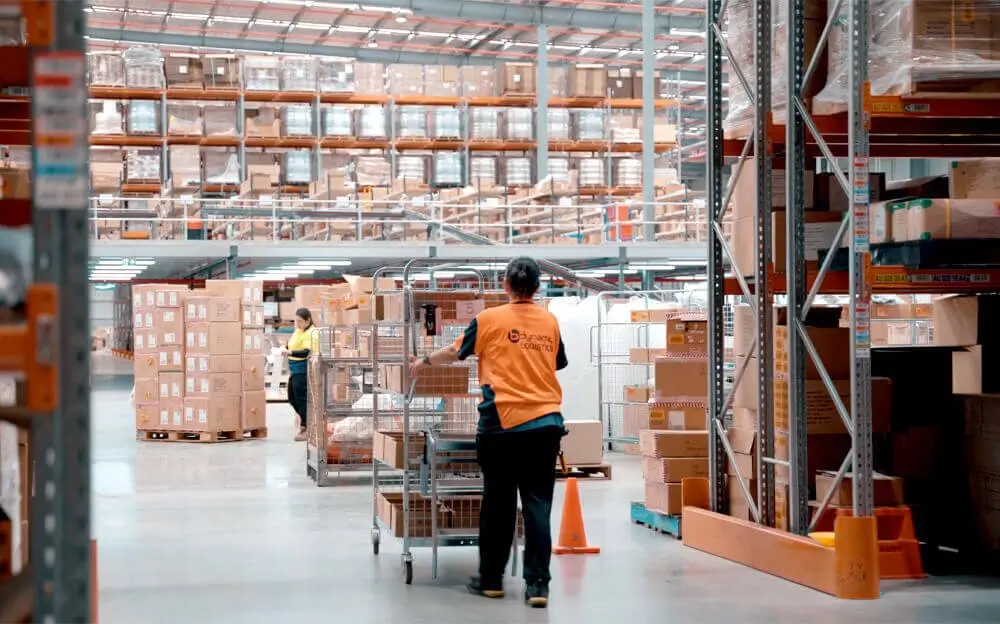
Material handling equipment and safe movement
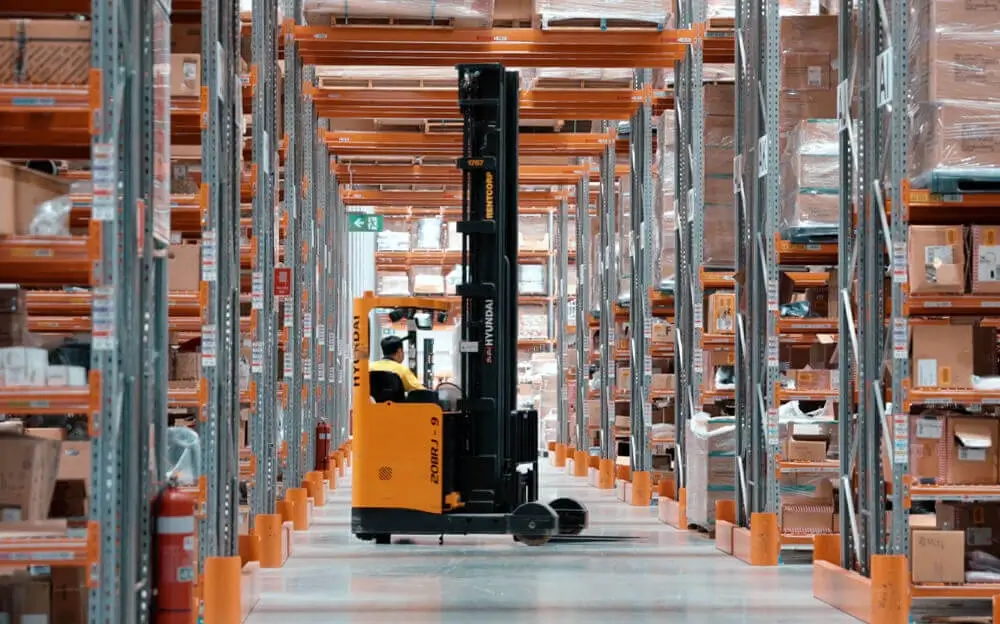
No large item moves by hand alone. Big and bulky operations run on material handling equipment matched to the freight: counterbalance and reach forklifts, cranes for the heaviest loads, and specialised trucks and trailers for outsized pieces. B dynamic Logistics operates specialised machinery and equipment for exactly this, so oversized goods are moved by the right tool rather than improvised effort.
Layout and equipment are inseparable. A forklift carrying a wide load needs a defined turning radius and aisle width, or it cannot work safely. Cross traffic between people and machines has to be designed out with marked lanes and separated zones. Get this wrong and you get near misses, blocked aisles and slower throughput.
The safety payoff is also a cost payoff. Every unnecessary lift or turn is a chance to damage stock or hurt a worker. A facility built around clean, short movement paths reduces both, which is why the strongest providers treat floor design and equipment choice as one decision, not two.
Zone by zone: what the floor plan is really doing
Each zone in a big and bulky facility carries its own design factors and its own commercial payoff. The table below summarises how they connect. B dynamic Logistics supports these zones with multi-state stock positioning, so large stock sits closer to the customers who order it.
| Warehouse zone | What good design gets right | Commercial payoff |
| Receiving and docks | Door height and width, level access, marshalling space, LTL consolidation | Faster put away, fewer bottlenecks on arrival |
| Storage and slotting | Cantilever or wide span racking, storage density, slotting logic | Lower storage cost per unit, quicker picking |
| Material handling | Forklifts, cranes, aisle width, turning radius, marked lanes | Safe movement, fewer damaged items |
| Outbound staging | Assembly space, wrapping, correct load sequencing | Protected goods, accurate and complete loads |
| Last mile and returns | Room for two person delivery loads and reverse logistics | Better customer experience, faster restock |
Table 2: Warehouse zones, the design factors that matter most, and the commercial result of getting each one right.
Outbound flow: two person delivery and reverse logistics
The final metres shape the customer’s experience. Outbound staging needs room to assemble large orders, protect them and load them in the right sequence. For oversized goods, pick and pack is less about cartons and more about securing, wrapping and palletising items so they survive the trip.
Then comes delivery. A washing machine or a wardrobe cannot be left at the front gate. Big and bulky fulfilment often depends on last mile delivery with two person delivery teams who carry items inside, place them in the right room and take the packaging away. That is a service standard, and it relies on goods being staged and loaded correctly at the warehouse.
Large categories are also where online growth has been steadier rather than spectacular. Homewares and appliances were among the slower growing online retail categories in the year to September 2025, according to the NAB Online Retail Sales Index. Delivery friction is part of the reason people still hesitate over big ticket items online, which is exactly what a strong facility and delivery model removes.
Returns close the loop. Reverse logistics for large items is harder than for parcels, because a returned sofa or treadmill must be collected, inspected, repaired or repackaged, and then returned to stock or written off. A facility that has planned space and process for returns absorbs them without disrupting outbound flow. B dynamic Logistics builds reverse logistics into its big and bulky operation so returns do not become a bottleneck.
How to assess a big and bulky 3PL facility
Before you sign with a provider, look past the sales deck and ask about the floor. These five checks reveal whether a facility was actually built for large freight.
- Check the dock and door dimensions. Ask about door heights, level access and marshalling space. Undersized docks slow every inbound and outbound load.
- Confirm the racking type and load ratings. Cantilever or wide span racking rated for your heaviest items signals a facility designed for bulk, not adapted for it.
- Review the material handling equipment on site. Forklifts, cranes and specialised trailers should match your product profile, with trained operators.
- Test the movement and safety design. Marked lanes, sensible aisle widths and separated pedestrian zones point to lower damage and fewer delays.
- Walk through the returns process. Ask how reverse logistics is staged and resourced. A vague answer usually means returns will clog the operation.
Frequently asked questions
Q1: What counts as a big and bulky item?
Any product too large, heavy or awkward for a standard parcel network. Common examples include furniture, mattresses, whitegoods, gym equipment, spas and commercial machinery.
Q2: How does warehouse layout affect big and bulky delivery costs?
Layout sets your storage density, travel distances and how many times each item is handled. Tighter, better planned floors mean lower storage cost per unit, faster dispatch and less damage, all of which feed into the final delivery price.
Q3: What is cubic weight and why does it matter?
Cubic weight, or dimensional weight, converts the space a shipment takes up into a chargeable figure. Large light items are often charged on cubic weight rather than actual weight, so efficient storage and packing directly affect freight cost.
Q4: What is the difference between big and bulky 3PL and standard fulfilment?
Standard fulfilment handles parcels on conveyors and in cartons. Big and bulky 3PL uses forklifts, cranes, heavy racking and often two-person delivery, with a facility laid out for large freight from the ground up.
Q5: What equipment is used to handle big and bulky goods safely?
Counterbalance and reach forklifts, cranes for the heaviest loads, and specialised trucks and trailers for outsized pieces, all operated within marked lanes and appropriate aisle widths.
Q6: Does big and bulky fulfilment include two person delivery?
Often, yes. Heavy items usually need two person delivery teams to carry goods into the home, place them in the right room and remove packaging, rather than leaving them at the door.
Q7: How are returns and reverse logistics managed for large items?
Returned goods are collected, inspected, then repaired, repackaged or written off before going back to stock. A facility with dedicated space and process for reverse logistics handles this without slowing outbound orders.
Q8: Can a 3PL handle both LTL freight and full truckloads?
Yes. A capable provider consolidates less than truckload (LTL) freight to save cost on smaller loads, and books full loads or multi carrier options when volume justifies it.
Q9: How do I choose a big and bulky 3PL provider in Australia?
Look for a national footprint across major cities, warehousing planned for large stock, the right handling equipment, a clear returns process and transparent pricing. Ask to see how the facility is laid out for large freight. B dynamic Logistics operates across Australia and New Zealand with dedicated account contacts for each customer.
The floor plan is your first delivery decision
For oversized goods, the warehouse is not a passive box. Its layout governs cost, speed and damage from the moment a truck backs into the dock to the moment a delivery team places an item in a customer’s home. The providers that get this right have thought about docks, racking, equipment and returns as one connected system.
If you sell large or heavy products in Australia, treat facility design as a core question, not a technicality. B dynamic Logistics can walk you through how its big and bulky operation is built, and where it can take cost and risk out of your supply chain.
MORE: Request a big and bulky logistics quote
Back to Blog