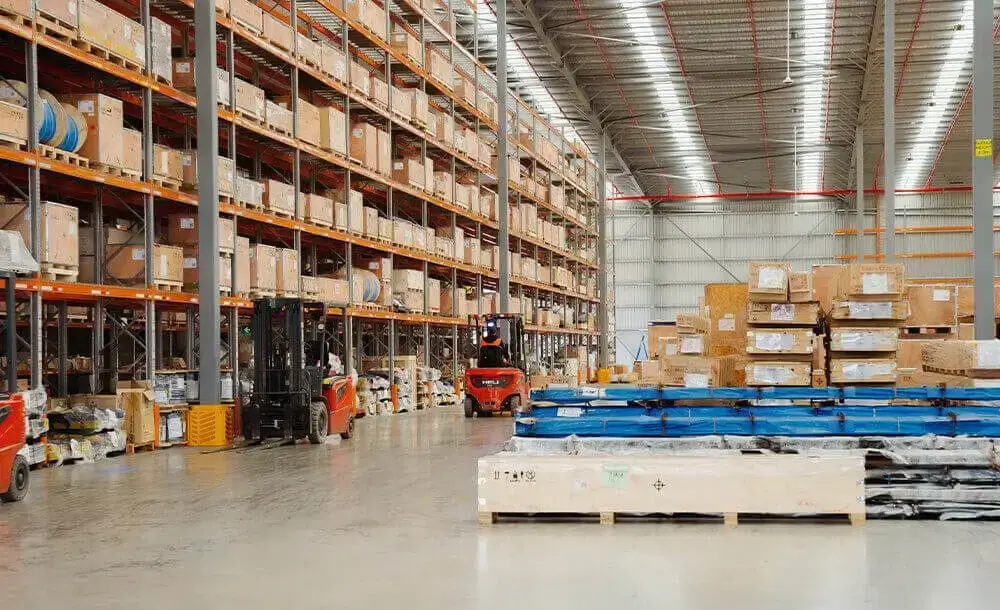
A three seater sofa does not move through a warehouse like a phone case. It arrives on a pallet, or in three cartons that must leave together. It needs two people and a forklift to pick, a truck with a tail lift to deliver, and a lot more floor space when it comes back.
The data behind that sofa has to work just as hard. A warehouse management system (WMS) built for small parcels will struggle to tell you where a 90 kg treadmill is sitting, which carrier can take it to Toowoomba, or whether the one returned last Tuesday can be sold again.
That gap matters more every year. Australians spent a record $82.6 billion online in 2025, up about 14% year on year, and 73% of online shoppers say a good delivery experience makes them more likely to buy online, according to the Australia Post eCommerce Report 2026. Shoppers bring the same expectations to a fridge or a dining table, where every mistake costs far more to fix.
Here’s what the right WMS for big and bulky logistics needs to do, how it should connect with your transport and finance systems, and why reverse logistics for bulky items is where weak technology shows first. This is how B dynamic Logistics runs oversized stock across more than 110,000 square metres of facilities and over 100 carrier integrations.
Why does a standard WMS struggle with big and bulky goods?
Dimensions, weight and handling units that break parcel logic
Parcel systems often treat a product as one unit with one barcode. A flat pack wardrobe might ship as four cartons. An escalator component might need a crane to lift. If the WMS doesn’t hold dimensions, weight and the number of pieces in each order, it can’t plan picks, book the right vehicle or warn a carrier that a delivery needs two people.
Floor stock, block stacking and the location accuracy problem
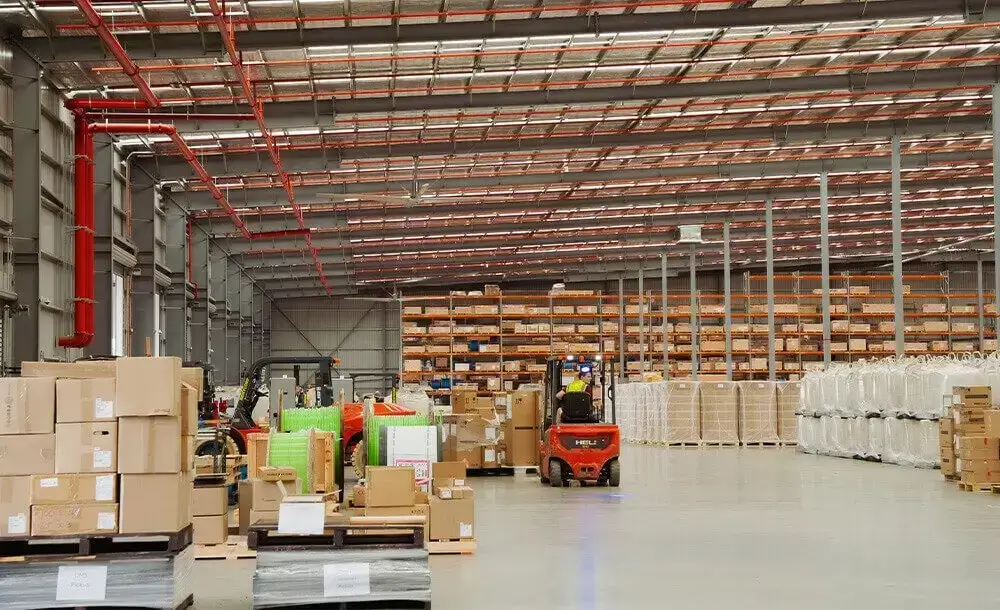
Oversized items rarely live in neat shelving. They sit in block stacks on the floor or in bulk bays, and they get moved to make room for inbound containers. Without clear location logic, staff spend hours searching. One misplaced pallet can make an entire order look short, even when the stock is in the building.
What one mispicked appliance really does to cost to serve
On a parcel, a picking error usually means a reshipment and a small courier fee. On a fridge, it means a failed delivery, a two person collection, linehaul back to the warehouse, inspection and a second attempt. That is why cost to serve climbs so quickly when systems guess instead of know. B dynamic Logistics operates a dedicated big and bulky division for exactly this kind of freight.
What should a warehouse management system for oversized goods do?
Cubic dimension capture and slotting for oversized stock
1. Capture dimensions and weight at receipt. Cubic dimension capture, whether by scanner or careful manual measurement, feeds every later decision, from storage location to freight quotes. Get it wrong at the dock and the error follows the item all the way to the customer.
2. Slot by size and movement. Slotting for oversized stock places fast moving bulky lines close to dispatch and keeps awkward items within reach of the right equipment. It also stops a slow seller from occupying a prime bay for months.
Barcode and RFID scanning for large items across the floor
3. Scan every piece, not only the order. A barcode on each carton of a multi piece item stops a bed frame leaving without its slats. RFID can add value for high value goods or assets that move often between locations, but disciplined barcode scanning covers most bulky ranges at a lower cost.
Real time inventory for bulky products you can actually trust
4. Keep inventory accuracy visible. A warehouse inventory tracking system should update with every scan, so the stock on hand matches what your website promises. When a customer orders the last outdoor setting, you need to know it’s genuinely there and in sellable condition.
At B dynamic Logistics, Big and Bulky Fulfilment covers items many providers turn away, from oversized furniture and motor spares to elevators, escalators and ATM machines, across sites in Sydney, Melbourne, Brisbane and Perth. The Specialised Machinery and Equipment team pairs that system data with forklifts, cranes and specialised trucks and trailers, so the plan on screen matches what actually happens on the dock.
How do WMS, TMS and ERP integration keep bulky orders moving?
WMS integration for eCommerce bulky orders, from Shopify to the warehouse floor
When a customer orders a dining table through Shopify or a marketplace, the order should drop straight into the WMS with item dimensions, delivery address and service level attached. Manual rekeying invites errors, and on large items each error is expensive. Ask whether delivery instructions, such as stairs or narrow access, pass through too.
TMS for LTL freight and carrier allocation for heavy goods
A TMS compares carriers and services for each consignment. For bulky goods, that often means less than truckload (LTL) freight for regional deliveries, full truckload (FTL) for retail replenishment, and specialist two person delivery for furniture and whitegoods going into homes. Good carrier allocation weighs cost, capability and service area together, not just the cheapest rate.
ERP integration and order orchestration across channels
Proof of delivery, stock adjustments and returns all need to flow back to the ERP. That closes the loop between what was sold, what was shipped and what was invoiced. Order orchestration, the logic that decides which site fills which order, depends on this shared data, especially for brands selling through their own store, marketplaces and retail partners at once.
B dynamic Logistics’ Integration Services connect its systems with major online platforms and customer ERP systems, while its Transportation (Multi Carrier Solutions) offering uses a transportation management system to plan express, FTL and LTL freight with real time tracking. The result is one data flow from checkout to doorstep, rather than three systems held together by spreadsheets.
How does reverse logistics for bulky items work in a 3PL WMS?
Returns authorisation (RMA) and collection booking for large items
1. Authorise the return. A returns authorisation (RMA) records the reason, the condition the customer reports and the original order. That record shapes everything that follows.
2. Book the collection. Unlike a parcel dropped at a post office, a returned couch needs a booked pickup, often with two people and the right vehicle. The TMS should treat it like any outbound job, with a time window and tracking.
Inspection, disposition and refurbishment tracked by the system
3. Receive and inspect. Staff check the item against the RMA and record what they find, ideally with photos. This protects you in carrier damage claims and supplier disputes.
4. Choose the disposition. Inspection and disposition decide whether the item is restocked, refurbished, sent for repair, returned to the supplier or recycled. Recording each decision in the system shows which products come back most often, and why.
Getting returned bulky stock back to sellable inventory faster
5. Update stock and finance. Once refurbishment and restocking are complete, the WMS should return the item to sellable inventory and the ERP should record the credit or write off. Every day a returned recliner sits in a holding bay is a day it can’t earn.
B dynamic Logistics’ Reverse Logistics service runs on automated returns workflows, with real time tracking through customer portals and integration with client ERP and WMS platforms. For big and bulky clients, its Value Added Services extend to repairs, replacements, custom crating and assembly.
How to assess a technology platform for 3PL in Australia: a 2026 checklist
Data visibility for heavy goods: portals, dashboards and analytics
1. Can I see real time stock by location and condition in a customer portal?
2. Can I track inbound, outbound and returned bulky items separately?
3. Which reports cover inventory accuracy, delivery performance and return reasons, and how often are they updated?
An Online Web Portal of the kind B dynamic Logistics provides should give you the same view of your stock you’d have in your own warehouse, on a desktop or a phone.
Exception management and scalability questions to ask before you sign
4. How are exceptions flagged, such as damaged freight, failed deliveries or short picks, and how quickly will I hear about them?
5. How long does a new Shopify, marketplace or ERP integration take, and who maintains it?
6. How does the platform cope with peak season volume or a move into a new state?
7. Who owns my data if I change providers?
Clear, specific answers usually signal a provider that runs on systems. Vague answers often mean spreadsheets behind the scenes. B dynamic Logistics backs its systems with the BDL Advantage platform and dedicated account contacts.
Choosing the right 3PL WMS for bulky stock and returns
The right WMS for big and bulky logistics knows how big each item is, where it sits and how it will travel. It shares data with your TMS, ERP and storefront, and it treats returns as a planned process rather than an afterthought. Get those foundations right and failed deliveries, missing stock and slow returns become the exception, not the routine.
If you’re reviewing how your oversized range is stored, shipped and returned, the team at B dynamic Logistics can walk you through its systems and big and bulky capabilities. Request a quote to start the conversation.
Frequently asked questions
Q1: What is a WMS in big and bulky logistics?
A WMS is the software that records what stock you hold, where it sits and how it moves. For big and bulky logistics, it also stores dimensions, weight and piece counts, and plans picks around handling equipment.
Q2: Can a 3PL WMS integrate with Shopify for oversized products?
Yes, most modern 3PL platforms connect with Shopify and other eCommerce platforms. Check that product dimensions and delivery service levels pass through with each order, not only the SKU and address.
Q3: How does reverse logistics for bulky items differ from parcel returns?
Bulky returns need a booked collection, often by two people, and more space for inspection. Each step costs more, so tracking and quick disposition decisions matter more than they do for parcels.
Q4: Is RFID worth it for bulky stock?
It depends on value and movement. Barcode scanning suits most bulky ranges. RFID can pay off for high value items or assets that move often between locations.
Q5: What is the difference between a WMS and a TMS?
A WMS manages stock inside the warehouse. A TMS plans freight outside it, comparing carriers, booking LTL or FTL services and tracking deliveries.
Q6: Will I lose stock visibility if I outsource bulky goods to a 3PL?
You shouldn’t. A good 3PL gives you a customer portal showing real time stock levels, orders and returns, ideally on mobile as well as desktop.
Q7: What is LTL freight and when is it used for bulky goods?
Less than truckload (LTL) freight shares truck space with other consignments. It suits palletised or bulky orders that are too large for parcel networks but don’t fill a whole truck.
Q8: How long does it take to integrate a 3PL with my ERP?
It varies with the ERP and how much data needs to flow. Ask your provider for a realistic timeline, and who manages testing, before you sign.
Q9: What items count as big and bulky?
Generally, anything too large, heavy or awkward for standard parcel networks, such as furniture, appliances, fitness equipment, machinery and building products.
Back to Blog