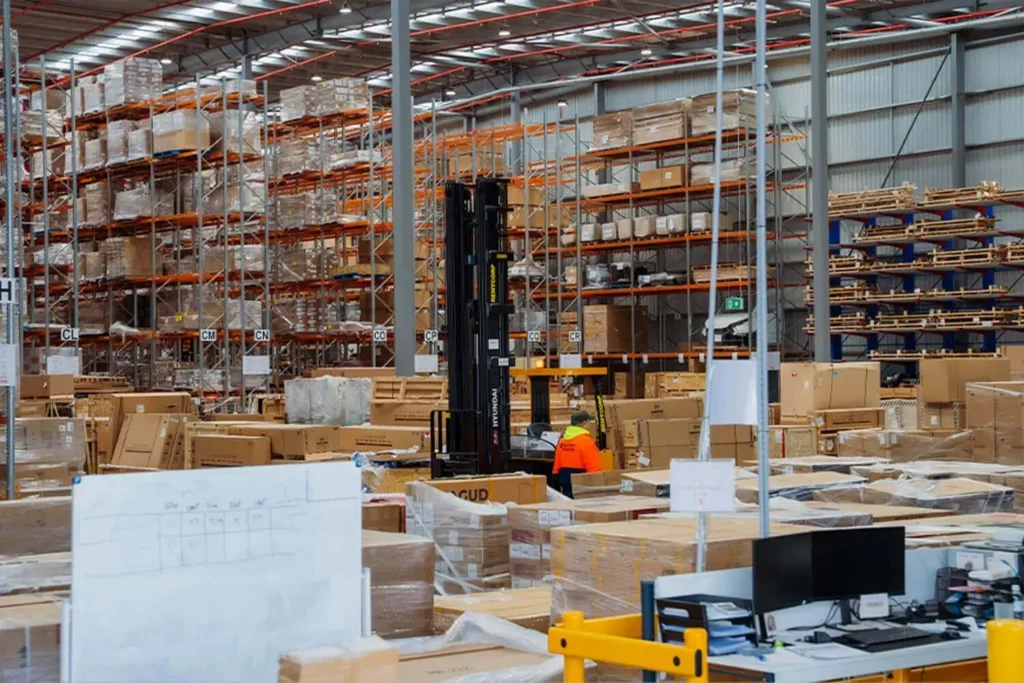
Cross docking overflow pairs immediate throughput with a controlled staging buffer. Here is how Australian importers use it to protect margin when inbound volume arrives faster than the warehouse can absorb it.
Most inbound problems do not start out looking like warehouse problems. They look like a truck idling at a gate. A container sitting at a depot two days longer than planned. A pallet that was supposed to ship on Tuesday and is still on the dock on Friday.
Then the invoices land. Detention. Demurrage. Storage charges on goods that were never meant to be stored.
For Australian importers the timing pressure is sharper than most operators assume. Shipping lines commonly allow between seven and ten calendar days of free time from the point a container becomes available at the wharf, with weekends and public holidays counted in that total. Terminals allow a tighter window again, with importers typically expected to clear and collect within roughly three days of discharge before wharf storage accrues. Free time is negotiable. It is never generous.
Cross docking overflow is the operational response to that squeeze. It is not a new idea, but few businesses run it deliberately, which is why so many pay for storage they did not want and detention they could have avoided.
What is cross docking overflow?
Cross docking overflow is a hybrid inbound model. The fast moving portion of a consignment is unloaded, sorted and reloaded for outbound despatch without entering storage, while the balance moves into a controlled short term staging area until outbound demand calls for it.
It sits between two models most businesses already know. Pure cross docking assumes you can ship everything straight back out, which demands forecasting accuracy almost nobody has. Conventional warehousing assumes everything needs putaway, which is expensive for stock that will move within 48 hours.
Cross docking overflow integration accepts the messy middle. Three components make it work.
- The cross dock lane. A flow through area where pre allocated stock is received, checked, sorted to outbound destination and loaded. Goods are handled twice rather than five times.
- The staging buffer. A defined footprint, measured in pallet positions rather than square metres, where unallocated stock waits under a fixed dwell limit. This is short term staging, not storage, and the distinction is commercial as well as operational.
- The overflow rule. A written trigger for what happens when the buffer fills. Without it, staging quietly becomes storage and the cost advantage disappears.
Why bulk inbound processing breaks conventional receiving
Conventional receiving follows a sequence: unload, check, putaway, pick, pack, despatch. It works well until arrival rate exceeds processing rate. Three pressures cause that.
1. Receiving is slower than arrival
A single 40 foot container of cartonised goods can occupy a team for most of a shift once unpacking, verification and putaway are done properly. Two containers landing on the same day against a fixed labour roster does not double throughput. It creates a queue, and the queue sits on the dock.
2. Free time does not wait for your labour plan
The detention clock runs on the shipping line schedule, not yours. Devanning quickly and returning the empty is the cheapest thing an importer can do, yet it is routinely delayed because there is nowhere to put the contents. Cross docking overflow fixes the sequencing by separating the unload decision from the putaway decision.
3. Peak volume arrives in clusters
Inbound freight does not arrive evenly. Vessel schedules, Lunar New Year production runs and pre peak restocking cluster arrivals into narrow windows. A facility sized for average inbound volume is underused for most of the year and overwhelmed for six weeks of it. Multi-state stock positioning, spreading inventory across facilities rather than concentrating it at one site, is one way businesses smooth this seasonal exposure; B dynamic Logistics runs this approach across its national network specifically to absorb clustering without any single site being overwhelmed.
How to decide what to cross dock and what to stage
This decision separates a working model from an expensive experiment. Five criteria do most of the work.
- Sales velocity. High velocity SKUs with predictable weekly movement are the natural cross dock candidates. Slow movers rarely justify the handling intensity.
- Order coverage on arrival. If open orders already exist against the inbound quantity, the stock is pre allocated and should flow straight through. Where coverage sits below roughly 60 percent of the consignment, the remainder belongs in staging.
- Product profile. Oversized and awkward freight benefits disproportionately from fewer handling touches, because most damage in oversized logistics happens during movement rather than in storage.
- Data quality. Cross docking depends on knowing what is inside the container before it arrives. Where advance shipping notice accuracy is poor, sort decisions get made on the dock, which is the most expensive place to make them. B dynamic Logistics’ BDL Advantage platform is built to close this gap, matching advance shipping notice data against open orders before a container arrives so cross dock and staging decisions are made ahead of the dock rather than on it.
- Outbound network fit. Flow through only works if there is an outbound service to flow into. Consolidated linehaul departing the same day, or the following morning, is what turns a cross dock lane into a saving.
Most mature Australian operations land between 20 and 40 percent of inbound volume moving through the cross dock lane. Claims of far higher rates usually mean a very narrow product range, or staged stock being counted as cross docked.
One pattern repeats across Australian operations. Businesses assume slow movers are the problem, when the real cost sits in fast moving lines that were put away and picked again within 72 hours. Running a simple report on stock that shipped within three days of receipt tends to identify the cross dock candidates faster than any forecasting exercise, and it uses data the business already holds. Start there before redesigning anything.
How short term staging works in practice
Staging is where implementations fail, because the discipline required is administrative rather than physical. A staging area with no dwell limit is a storage area with a friendlier name. A functioning process runs like this.
- The advance shipping notice is matched against open demand before the container is booked for collection.
- The consignment is split at unload into flow through and staged portions, using a rule agreed in advance rather than a judgement made on the dock.
- Staged pallets are assigned a system location and a dwell expiry date, so they stay visible in inventory rather than sitting in an operational blind spot.
- Outbound demand pulls from staged stock first, on a first in first out basis, before touching putaway inventory.
- Anything approaching dwell expiry is escalated into conventional racking, at which point it is correctly charged as storage.
Visibility is the objection clients raise most, and it is a fair one. Stock that bypasses putaway can easily vanish from the inventory picture. At B dynamic Logistics, staged consignments are recorded against system locations in the same way as racked inventory, which is why Supply Chain Integration and Inventory Management are treated as prerequisites for this model rather than optional extras.
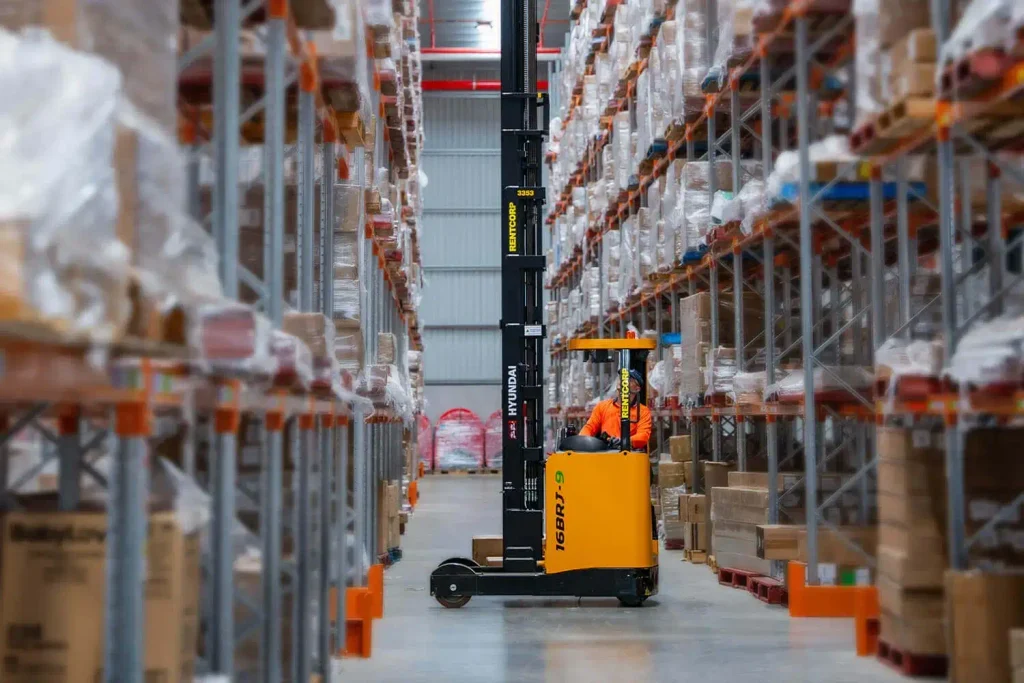
The numbers that tell you it is working
Cross docking either improves measurable throughput or it does not. Five metrics are worth holding a provider to.
- Dock to stock time. Elapsed hours from container arrival to stock being available for allocation. On cross docked lines this should be measured in hours, not days.
- Handling touches per unit. Conventional receiving typically runs at four to six. A well run cross dock lane runs at two.
- Average staging dwell. Tracked weekly. A steadily rising figure is the earliest sign the overflow rule is being ignored.
- Share of inbound cross docked. Useful as a trend rather than a target. Sudden drops usually point to an ASN accuracy problem upstream.
- Damage rate by handling method. Oversized freight tells the clearest story here, since fewer touches consistently produce fewer claims.
Throughput is also constrained by what happens after the dock. A cross dock lane feeding an unreliable outbound service simply relocates the bottleneck. Multi carrier flexibility matters, because the ability to switch carriers by lane and by day is often what protects a same day despatch commitment. B dynamic Logistics runs Warehousing, Transportation Multi Carrier Solutions and Big and Bulky Fulfilment through one national network for that reason.
What to ask a 3PL before you commit
Cross docking services are widely advertised and unevenly delivered. Six questions reveal most of what matters.
- How many dock doors does the site have, and what is the staging footprint in pallet positions? Vague answers here are a reliable warning sign.
- What is your average dock to stock time on cross docked lines, and can you show it by month?
- How is staged stock represented in your warehouse management system, and can I see it in my own reporting?
- What is the dwell limit, and what happens commercially when stock exceeds it?
- Can you devan containers on site? If unpacking happens elsewhere first, the extra movement erases much of the saving.
- Which outbound services depart daily, and what is the cutoff for same day despatch?
Geography matters too. An importer clearing containers through Port Botany needs staging capacity within economical drayage distance of the terminal, and a national brand needs that capability replicated in Melbourne, Brisbane, Adelaide and Perth. B dynamic Logistics operates across those markets from sites including Kemps Creek in western Sydney, with coverage extending into New Zealand.
The commercial case, in plain terms
Savings come from three places. Reduced handling lowers labour cost per unit. Reduced storage lowers occupancy cost on stock that was only passing through. But the largest number is usually avoided detention and demurrage, because those charges compound daily, per container, and are generally not covered by insurance. B dynamic Logistics’ shared freight rate model extends this saving into the freight line itself, giving cross docking clients access to consolidated linehaul rates negotiated across a shared volume base that an individual importer could not secure alone.
A business clearing 20 containers a month that consistently returns empties two days earlier is not making a marginal saving. On typical Australian detention rates that is a four figure monthly difference before any warehousing benefit is counted.
The model will not suit every product range and should not be sold as though it does. Slow moving inventory, long holding seasonal ranges and weak inbound data are better served by conventional warehousing with a modest staging allowance. Cross docking overflow earns its keep where velocity is high, arrivals are lumpy and outbound demand is reasonably visible.
Frequently asked questions
Q1: What is the difference between cross docking and drop shipping?
Cross docking means goods physically pass through a facility, where they are unloaded, sorted and reloaded for despatch without entering storage. Drop shipping means the goods never reach your facility at all, because the supplier ships direct to the end customer. Cross docking gives you quality control and consolidation that drop shipping cannot.
Q2: How long can stock stay in short term staging before it becomes storage?
Most operations set the dwell limit between 48 and 96 hours. Beyond that, the space cost outweighs the handling saving and the stock should move into racking and be charged as storage. Write the limit into your commercial agreement rather than leaving it to judgement.
Q3: Does cross docking require accurate demand forecasting?
It requires demand visibility, which is not quite the same. You need to know what orders already exist against inbound stock on arrival. That is why the model suits businesses with strong order books and predictable replenishment, and struggles where inbound quantities are speculative.
Q4: Can a 3PL unpack containers and cross dock at the same facility?
Yes, and it is worth insisting on. If containers are devanned at one location and the contents trucked to a second site for sorting, you have added a movement, a handling cycle and a cost. Ask whether the facility is container capable on site before anything else.
Q5: Is cross docking suitable for big and bulky freight?
It is often the best application of the model. Oversized items are expensive to store, awkward to handle repeatedly and vulnerable to damage in movement. Cutting touches from five to two has a larger proportional effect on oversized freight than on cartonised goods, provided the site has the right machinery and trained operators.
Q6: How much does cross docking cost compared with conventional storage?
Cross docking usually carries a higher per unit handling rate and a much lower or zero storage component. Whether it is cheaper overall depends on how long the stock would otherwise have sat. For goods moving within a week it generally wins. For goods held a month or more, conventional storage usually does.
Q7: What systems do I need in place on my side?
At minimum, the ability to send accurate advance shipping notices with line level detail, and a connection that lets your provider see open outbound orders. Integration usually runs through an API or EDI link between your commerce or ERP platform and the provider system. Poor inbound data is the most common reason cross docking underperforms.
Q8: Which Australian cities can support a cross docking overflow model?
The model needs proximity to a container terminal and a site with dock capacity, so Sydney, Melbourne, Brisbane, Adelaide, Perth and Fremantle are the realistic starting points. Sydney and Melbourne carry the highest import container volumes, which is where detention savings tend to be largest. B dynamic Logistics runs dedicated big and bulky and cross docking capacity across all five of these cities, with a dedicated account contact coordinating the model as a business scales beyond a single site.
Q9: How quickly can a cross docking overflow model be implemented?
Physical setup is rarely the constraint. Systems integration, ASN data cleanup and agreeing the overflow rules typically take four to eight weeks for a mid sized operation. Businesses already sending clean advance shipping notices move considerably faster.
Q10: Does cross docking reduce inventory accuracy?
Not if staged stock is system located and dwell tracked. Accuracy problems arise when goods bypass putaway without being recorded anywhere, which is a process failure rather than a limitation of the model. Ask any provider to demonstrate how staged inventory appears in your reporting before you sign.
Where to go from here
Start with two numbers you probably already hold: average container dwell before devanning, and the share of inbound stock that ships within seven days of arrival. If the first is above three days and the second above 30 percent, cross docking overflow is likely to pay for itself.
From there it becomes a conversation about facility capability, systems fit and outbound coverage rather than a leap of faith. B dynamic Logistics models inbound flow with importers and wholesalers across Australia and New Zealand before anything changes on the ground, which is the least expensive place to find out whether the numbers work.
Back to Blog