Introduction
Australian ecommerce return rates now average between 20% and 30% of all online purchases. For fashion retailers, that figure climbs even higher. Each returned item represents more than a refund, it triggers a cascade of operational costs that erode profit margins.
The financial impact is significant. Processing a single return costs most retailers between $10 and $20 when accounting for labour, transportation, inspection, and restocking. Multiply that across thousands of monthly returns, and the numbers become difficult to ignore.
This is where 3PL reverse logistics enters the conversation. Rather than treating returns as an unavoidable loss, forward-thinking businesses are partnering with specialist providers like B dynamic Logistics to transform returns management into a streamlined, cost-effective operation.
Here’s what you need to know about outsourcing reverse logistics and how it can benefit your business.
What Is 3PL Reverse Logistics and Why It Matters
Understanding the Reverse Supply Chain
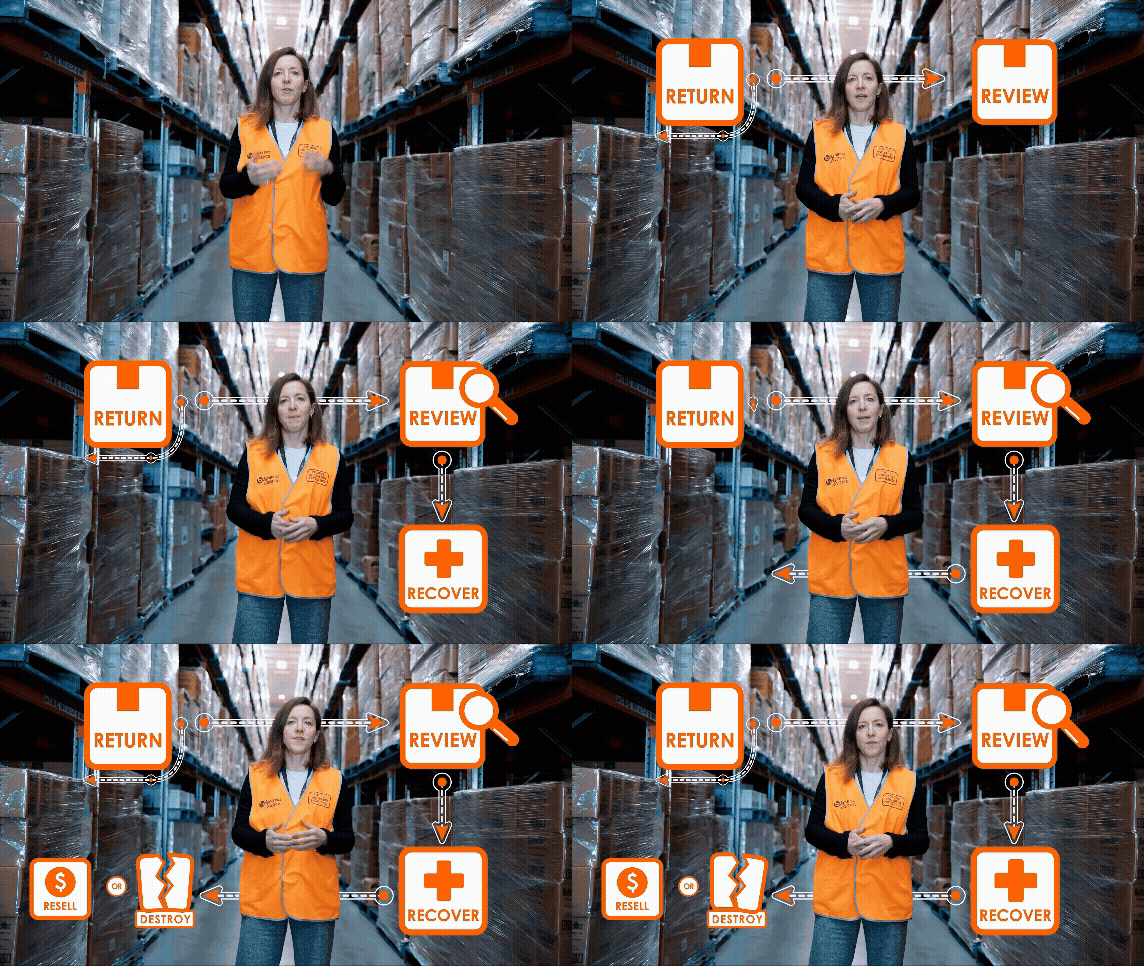
The process is more involved than simply putting an item back on a shelf. Effective reverse logistics involves several critical stages:
- Collection: Transporting the item from the customer back to a facility.
- Inspection: Checking the quality and grading the product’s condition.
- Disposition: Deciding if the item should be restocked, refurbished, liquidated, or recycled.
Each step needs careful management. Without the right infrastructure, businesses often struggle to process returns quickly, leading to lost value on stock that could have been resold.
The True Cost of Managing Returns In-House
Many businesses underestimate returns processing costs. The visible expenses, shipping labels and refunds, represent only part of the picture.
Hidden costs accumulate quickly. Warehousing space dedicated to returns sits apart from primary inventory. Staff members spend hours sorting, inspecting, and processing items that may never return to saleable stock. Customer service teams field enquiries about return status. Technology systems require configuration to track reverse inventory flows.
There’s also the opportunity cost. Every hour your team spends managing returns is an hour not spent on growth initiatives, customer acquisition, or product development. For scaling businesses, this trade-off becomes increasingly problematic.
How Third-Party Logistics Providers Transform Returns
3PL providers treat returns as a specialized science. They use purpose-built infrastructure to handle high volumes at speed. Because they process returns for multiple clients, they benefit from economies of scale that a single retailer simply cannot match.
Economies of scale play a crucial role. A provider processing returns for multiple clients can spread fixed costs across a larger base, reducing per-unit expenses. Dedicated inspection stations, sorting systems, and disposition channels operate continuously rather than sitting idle.
By partnering with a provider like B dynamic Logistics, you gain access to specialist teams and seamless tech integration. This turns a chaotic, expensive cost centre into a smooth, predictable operation.
Key Components of an Effective Returns Management System
Return Merchandise Authorisation (RMA) Processing
The RMA process serves as the gateway for returns. When a customer requests a return, the system generates a unique authorisation number that tracks the item through every subsequent stage.
Effective RMA processing captures essential data at initiation: reason for return, product condition as reported by the customer, and expected arrival timeframe. This information drives downstream decisions about inspection priorities and probable disposition.
Integration matters here. RMA systems that communicate with inventory management platforms prevent stock discrepancies and enable accurate forecasting. B dynamic Logistics configures these integrations during onboarding, ensuring data flows seamlessly between client systems and warehouse operations.
Quality Inspection and Product Grading
Not all returns are equal. Some items arrive in pristine condition, ready for immediate restocking. Others show signs of use, damage, or missing components that affect their resale potential.
Systematic inspection protocols categorise returns by condition. Grade A items return to primary inventory. Grade B products may suit secondary sales channels or outlet pricing. Grade C items might require refurbishment before resale. Items beyond recovery enter recycling or disposal streams.
Accurate grading maximises recovery value. Rushed or inconsistent inspections result in either restocking unsaleable items (creating future customer complaints) or writing off products that could have been recovered.
Disposition Strategies: Restock, Refurbish, or Recycle
Disposition decisions determine what happens after inspection. The goal is extracting maximum value from each returned item whilst maintaining brand standards.
Restocking represents the ideal outcome. Items in original condition return to inventory quickly, minimising carrying costs and stock-outs.
Refurbishment expands recovery options. Minor repairs, repackaging, or cleaning can restore items to saleable condition. Some businesses operate dedicated refurbishment programmes, selling restored items at reduced prices through secondary channels.
Responsible recycling addresses items beyond recovery. Circular economy principles increasingly influence consumer expectations. Demonstrating sustainable disposal practices supports brand reputation whilst reducing landfill contributions.
Benefits of Outsourcing Reverse Logistics to a 3PL Partner
Reduced Operational Costs and Improved Efficiency
Cost reduction drives many outsourcing decisions. Businesses typically report 15% to 30% savings on returns processing after transitioning to a 3PL partner, though results vary by industry and volume.
These savings emerge from multiple sources. Shared warehouse infrastructure eliminates the need for dedicated returns space. Trained processing teams work efficiently without the learning curve of internal staff. Established carrier relationships secure competitive transportation rates.
Processing speed improves alongside cost reduction. Items move through inspection and disposition faster, returning recoverable stock to inventory sooner and reducing carrying costs.
Enhanced Customer Experience and Retention
Returns experience directly influences repeat purchase behaviour. Research consistently shows that customers who experience hassle-free returns are more likely to buy again from the same retailer.
Fast refund processing matters most. Customers expect confirmation within days, not weeks. Delays trigger support enquiries, negative reviews, and lost future sales.
Communication throughout the returns journey builds trust. Automated status updates, item received, inspection complete, refund processed, reduce customer anxiety and support call volumes.
Scalability During Peak Periods
Return volumes fluctuate significantly throughout the year. Post-holiday periods generate return spikes that can overwhelm internal processing capacity.
3PL partnerships provide elastic capacity. Providers like B dynamic Logistics scale operations during high-volume periods, absorbing demand surges without forcing clients to maintain year-round excess capacity.
This flexibility proves particularly valuable for growing businesses. Scaling internal returns operations requires lead time for hiring, training, and infrastructure expansion. Outsourced arrangements flex immediately.
Implementing 3PL Reverse Logistics: What to Expect
Integration with Your Existing Systems
Technology integration forms the foundation of successful 3PL partnerships. Your inventory management system, ecommerce platform, and customer service tools need to communicate with the provider’s warehouse management system.
Most established providers offer standard integrations with major platforms. Custom connections require additional development but enable more sophisticated data sharing and automation.
Discuss integration requirements early in the evaluation process. Compatibility issues discovered after commitment create delays and unexpected costs.
Establishing Service Level Agreements
Service level agreements (SLAs) define performance expectations and accountability measures. Key metrics typically include processing time (receipt to disposition), inspection accuracy, inventory accuracy, and reporting frequency.
Clear SLAs protect both parties. Providers understand expectations. Clients have recourse when performance falls short. B dynamic Logistics structures transparent partnerships with documented benchmarks and regular performance reviews.
Measuring Success: Key Performance Indicators for Returns Management
Financial Metrics That Matter
Track cost per return as your primary financial indicator. This figure should decline over time as processes mature and volumes increase.
Recovery rate measures the percentage of returned value recaptured through restocking, refurbishment, or secondary sales. Higher recovery rates indicate effective disposition decisions and quality inspection processes.
Monitor inventory write-downs related to returns. Effective reverse logistics should reduce the volume of stock written off as unsaleable.
Operational and Customer Satisfaction Metrics
Processing time, from item receipt to final disposition, directly affects customer experience and inventory availability. Establish baseline measurements and track improvement over time.
Customer feedback scores related to returns provide qualitative insight. Survey customers after returns completion to identify pain points and improvement opportunities.
Frequently Asked Questions
What is the difference between reverse logistics and returns management?
Returns management focuses specifically on customer-initiated returns. Reverse logistics encompasses broader backward supply chain flows, including recalls, repairs, recycling, and end-of-life product handling.
How much does 3PL reverse logistics cost in Australia?
Pricing varies by volume, product type, and service requirements. Most providers offer per-item processing fees ranging from $3 to $15, depending on inspection complexity and disposition requirements.
What types of products are suitable for 3PL returns handling?
Most consumer goods suit outsourced returns processing. Electronics, apparel, homewares, and sporting goods represent common categories. Products requiring specialised handling or compliance certifications may need additional evaluation.
How long does returns processing typically take with a 3PL provider?
Standard processing times range from 24 to 72 hours after item receipt. Complex inspections or refurbishment requirements extend timelines.
Can 3PL reverse logistics help reduce environmental impact?
Yes. Specialist providers often maintain established recycling partnerships and refurbishment capabilities that maximise product recovery and minimise landfill disposal.
Turning Returns Into a Competitive Advantage
Returns are inevitable in modern retail. Poor returns management is not.
Strategic 3PL partnerships transform returns from a cost centre into an operational strength. Reduced processing costs, improved customer satisfaction, and scalable capacity create tangible competitive advantages.
The businesses that thrive treat returns as a strategic function deserving proper investment and expertise. Contact B dynamic Logistics to discuss how tailored reverse logistics solutions can support your growth objectives.
Back to Blog