Managing logistics in-house has become increasingly difficult for Australian businesses. Warehousing costs continue to rise. Customer expectations for fast delivery have never been higher. And the complexity of inventory management grows with every new sales channel.
Third-party logistics (3PL) services offer a strategic solution to these pressures. By outsourcing warehousing, fulfilment, and distribution to specialist providers, businesses can reduce costs, improve delivery performance, and focus resources on growth.
This guide explains how 3PL services work, the specific benefits they deliver, and what to consider when choosing a logistics partner. Whether you’re exploring outsourcing for the first time or evaluating your current arrangements, understanding these fundamentals will help you make informed decisions for your supply chain.
At B dynamic Logistics, we work with Australian businesses navigating this exact shift from single-channel operations to increasingly complex, multi-channel supply chains. Our 3PL services are designed to support growth by simplifying fulfilment, improving visibility, and allowing internal teams to focus on what matters most: serving customers and scaling sustainably.
What Are 3PL Services and How Do They Work?
Core Functions of Third-Party Logistics Providers
A 3PL provider manages logistics operations on behalf of other businesses. The scope typically includes warehousing, inventory management, order fulfilment, and freight coordination.
Rather than leasing warehouse space, hiring staff, and purchasing equipment, businesses contract these functions to specialists. The 3PL provider handles receiving stock, storing products, picking and packing orders, and arranging delivery to customers.
Modern 3PL partnerships involve technology integration. Providers connect their warehouse management systems (WMS) to clients’ sales platforms, enabling real-time inventory visibility and automated order processing. This integration ensures stock levels stay accurate across all channels.
The Difference Between 3PL, 4PL, and In-House Logistics
Understanding the distinctions between logistics models helps identify the right approach for your business.
In-house logistics means managing all warehousing and distribution internally. This offers maximum control but requires significant capital investment and operational expertise.
3PL involves outsourcing specific logistics functions while retaining strategic oversight. You maintain relationships with your 3PL provider and make decisions about inventory levels, shipping options, and service standards.
4PL takes outsourcing further. A fourth-party logistics provider manages your entire supply chain, including coordinating multiple 3PL providers on your behalf. This model suits large enterprises with complex, multi-region operations.
For most small to medium Australian businesses, 3PL represents the optimal balance. You gain specialist expertise and infrastructure without surrendering strategic control or committing to enterprise-level complexity.
Five Ways 3PL Services Transform Supply Chain Performance
Reduced Operational Costs and Capital Investment
Operating your own warehouse requires substantial capital. Lease agreements, racking systems, forklifts, packaging equipment, and staffing costs add up quickly. These fixed costs remain regardless of order volume.
3PL services convert these fixed costs into variable expenses. You pay for the space and services you actually use. During slower periods, costs decrease proportionally.
Providers also achieve economies of scale that individual businesses cannot match. They negotiate better carrier rates, purchase packaging materials in bulk, and spread technology investments across multiple clients. These savings flow through to competitive pricing.
For many businesses, outsourcing logistics to a 3PL results in lower overall operating costs, improved cost predictability, and greater flexibility as demand fluctuates.
Scalable Capacity for Seasonal and Growth Demands
Seasonal demand fluctuations create significant challenges for in-house operations. You either maintain excess capacity year-round or scramble to cope during peak periods.
3PL partnerships eliminate this constraint. Providers maintain flexible capacity across their client base, absorbing volume spikes without requiring you to invest in additional infrastructure.
B dynamic Logistics, for example, offers scalable warehousing solutions that expand and contract with client needs. This flexibility proves particularly valuable for ecommerce businesses experiencing rapid growth or those with pronounced seasonal patterns.
Faster Order Fulfilment and Improved Delivery Times
Strategic warehouse locations reduce the distance between inventory and customers. This translates directly into shorter delivery times and lower shipping costs.
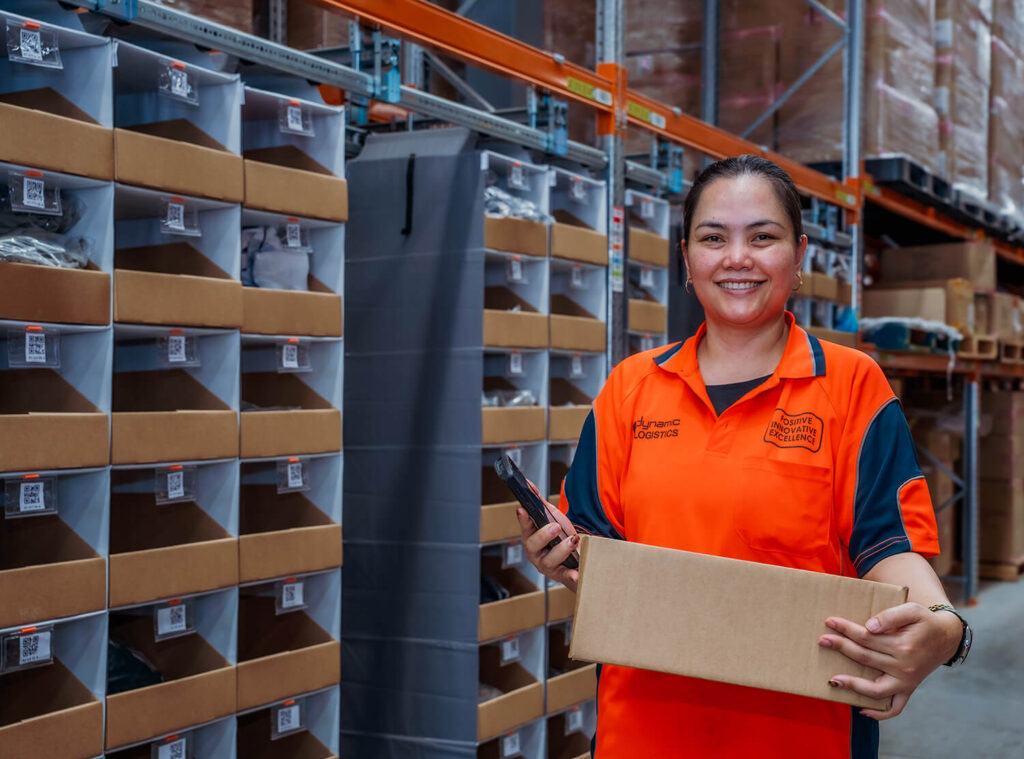
Established 3PL providers have refined their pick, pack, and dispatch processes over thousands of orders. They invest in barcode scanning, optimised warehouse layouts, and trained teams. The result is faster, more accurate order processing than most businesses achieve internally.
Delivery speed directly influences customer satisfaction and repeat purchase rates. Businesses that improve their fulfilment performance typically see measurable gains in customer reviews and retention metrics.
Essential 3PL Services for Australian Businesses
Warehousing and Inventory Management Solutions
Professional warehousing goes beyond storing products on shelves. Effective 3PL providers implement systematic approaches to stock management.
This includes goods receiving with quality checks, organised storage using location tracking, regular stock counts, and first-in-first-out (FIFO) rotation for perishable or date-sensitive products.
Real-time inventory visibility through WMS integration allows you to monitor stock levels, set reorder alerts, and forecast requirements. Some providers offer temperature-controlled storage for products requiring specific environmental conditions.
Order Fulfilment and Ecommerce Integration
B2C fulfilment for ecommerce requires different capabilities than traditional B2B distribution. 3PL providers serving online retailers offer platform integrations with Shopify, WooCommerce, Magento, and major marketplaces like Amazon and eBay.
When a customer places an order, it flows automatically to the warehouse for picking. Staff locate the items, pack them according to specified standards, generate shipping labels, and dispatch via the appropriate carrier.
Many providers also offer value-added services such as kitting (combining multiple products into sets), custom packaging with branded materials, and gift wrapping. These services help businesses deliver memorable unboxing experiences without managing the complexity internally.
Freight Management and Distribution Networks
3PL providers maintain relationships with multiple carriers, from major national networks to specialist regional operators. This carrier diversity ensures competitive rates and service options for different delivery requirements.
Freight management includes selecting optimal carriers for each shipment, generating documentation, tracking deliveries, and managing exceptions when issues arise.
For businesses shipping interstate or internationally, experienced 3PL partners navigate the complexities of customs documentation, quarantine requirements, and cross-border compliance.
How to Choose the Right 3PL Provider
Evaluating Experience and Industry Expertise
Not all 3PL providers suit every business. Industry experience matters significantly.
A provider experienced with fragile goods understands packaging requirements that prevent damage. One specialising in health products knows the compliance documentation required. Fashion and apparel specialists handle size and colour variants efficiently.
Request case studies from prospective providers. Ask for references from businesses similar to yours in size and product type. Speak directly with existing clients about their experience.
Technology Capabilities and System Integration
Modern logistics depends on accurate data flowing between systems. Evaluate prospective providers’ technology infrastructure carefully.
Key questions include: Does their WMS integrate with your sales platforms? Can you access real-time inventory and order status? What reporting and analytics do they provide? How do they handle system outages or data discrepancies?
Security and compliance also warrant attention. Ensure providers meet relevant data protection standards and can accommodate any industry-specific regulatory requirements.
Location, Capacity, and Scalability Assessment
Geographic positioning affects both shipping costs and delivery times. Consider where your customers are located and how a provider’s warehouse network aligns with that distribution.
Assess current capacity against your volume requirements, but also discuss growth projections. B dynamic Logistics works with Australian businesses at various stages, supporting companies as they scale from startup volumes through to enterprise operations.
Visit facilities where possible. Physical inspections reveal operational standards, cleanliness, security measures, and team professionalism in ways that sales presentations cannot.
Implementing 3PL Services: What to Expect
The Onboarding and Integration Process
Transitioning to a 3PL provider typically takes four to eight weeks, depending on complexity. The process begins with discovery sessions to understand your products, processes, and requirements.
System integration follows, connecting your sales channels to the provider’s WMS. This phase requires testing to ensure orders flow correctly and inventory syncs accurately.
Inventory transfer involves physically moving stock to the new facility, reconciling quantities, and establishing location assignments. Plan this carefully to minimise disruption to order fulfilment during the transition.
Measuring Success and Ongoing Partnership Management
Establish clear key performance indicators (KPIs) from the outset. Common metrics include order accuracy rates, dispatch timeliness, inventory accuracy, and cost per order.
Regular review meetings monthly or quarterly depending on volume provide opportunities to assess performance, address issues, and identify improvement opportunities.
The best 3PL relationships evolve into genuine partnerships. Providers who understand your business can suggest process improvements, flag potential issues before they escalate, and support strategic initiatives.

Frequently Asked Questions
Q1: What does 3PL stand for and what services are included?
3PL stands for third-party logistics. Services typically include warehousing, inventory management, order fulfilment, pick and pack operations, and freight coordination.
Q2: How much do 3PL services typically cost in Australia?
Pricing varies based on storage requirements, order volumes, and service complexity. Most providers charge a combination of storage fees (per pallet or cubic metre) and fulfilment fees (per order picked and packed). Request detailed quotes based on your specific requirements.
Q3: What size business benefits most from using a 3PL provider?
Businesses processing more than 100-150 orders monthly often reach the threshold where 3PL becomes cost-effective. However, the decision depends on growth trajectory, internal capabilities, and strategic priorities.
Q4: How long does it take to transition to a 3PL partner?
Most implementations take four to eight weeks from agreement to full operation. Complex integrations or large inventory transfers may require longer timelines.
Q5: Can 3PL providers integrate with my existing ecommerce platform?
Established providers offer integrations with major platforms including Shopify, WooCommerce, Magento, and marketplace channels. Confirm specific platform compatibility during provider evaluation.
Q6: What happens to my inventory during the onboarding process?
Inventory transfers are carefully planned to minimise fulfilment disruption. Many businesses maintain partial stock at both locations during transition, shifting fully once the new operation stabilises.
Q7: How does B Dynamic Logistics ensure order accuracy and quality?
B dynamic Logistics implements systematic quality controls including barcode verification at each pick, weight checks before dispatch, and regular accuracy audits. These processes maintain high accuracy rates across client operations.
Take the Next Step Toward Supply Chain Excellence
Partnering with a professional 3PL provider delivers measurable benefits: reduced costs, improved delivery performance, and the flexibility to scale operations efficiently. These advantages compound over time as you redirect resources from logistics management toward growth initiatives.
Choosing the right logistics partner requires careful evaluation of capabilities, technology, and cultural fit. The investment in thorough due diligence pays dividends through a productive long-term relationship.
B dynamic Logistics works with Australian businesses seeking reliable, scalable logistics solutions. Contact our team to discuss your requirements and explore how 3PL services can support your supply chain objectives.
Back to Blog