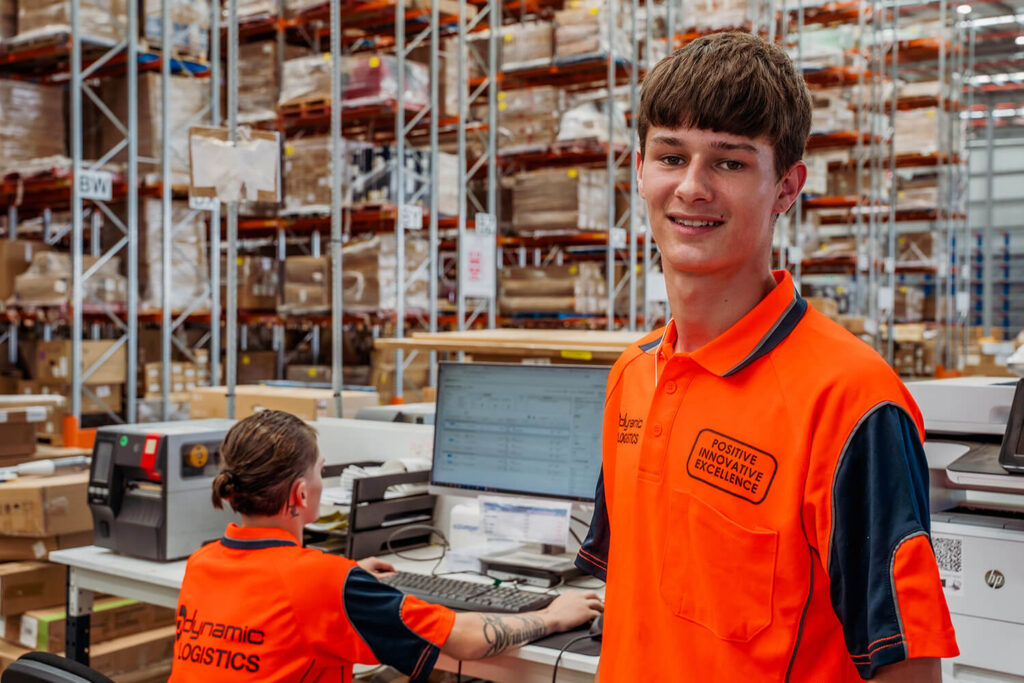
As supply chains become more complex and customer expectations continue to rise, logistics has moved from a supporting function to a core driver of business performance. For Australian businesses, the choice of a third party logistics provider directly influences delivery experience, inventory efficiency, and the ability to scale confidently across channels and geographies. Selecting the right 3PL partner requires a clear view of operational capability, technology maturity, and long term alignment.
Choosing the right 3PL services provider in Australia is one of the most consequential operational decisions a growing business can make. A well-matched third party logistics partner can accelerate fulfilment performance, reduce costs, and support expansion across domestic markets. The wrong choice does the opposite, disrupting stock flow, eroding customer trust, and creating escalating costs that are difficult to reverse once a relationship is embedded in your operations.
The Australian logistics market has matured considerably, with providers ranging from national freight operators to specialist ecommerce fulfilment houses. Yet not all of them offer the same breadth of capability, technological sophistication, or willingness to grow with their clients. Understanding what distinguishes a genuinely capable 3PL provider from a basic warehousing vendor is the first step in making an informed shortlist. This article outlines the core criteria that businesses across ecommerce, B2B distribution, and specialist freight categories should apply when evaluating their options with practical guidance for each.
What Core Operational Capabilities Should Your 3PL Provider Offer?
End-to-End Fulfilment: From Receiving to Despatch
A capable third party logistics provider should handle the full operational chain from inbound receiving and inventory storage through to pick and pack services, labelling, and outbound freight management. For ecommerce operators in particular, this end-to-end capability removes the need to manage multiple vendors across the despatch cycle, reducing administrative load and the risk of errors at each handover point.
B2C fulfilment requires particular rigour at the pick-and-pack stage, where order accuracy directly affects customer satisfaction and returns volumes. Ask any prospective provider what their documented order accuracy rate is and how errors are tracked and resolved. These figures should be readily available if they are not, that is itself revealing.
National Freight Network Coverage Across Metro and Regional Australia
Australia’s geography demands serious freight network depth. A provider with strong carrier relationships across metro and regional corridors can meaningfully reduce transit times and shipping costs relative to a provider whose carrier network Australia reach is limited to capital cities. Confirm that your prospective partner can service your actual customer base not just Sydney and Melbourne, but regional centres in Queensland, South Australia, and Western Australia if that is where your orders are going.
Order Accuracy, DIFOT Benchmarks, and Returns Management
DIFOT- Delivered In Full, On Time, is the standard performance benchmark in Australian logistics. A high-performing 3PL warehousing services provider should be able to produce documented DIFOT data across their client base. Pair this with returns management Australia processes that are clearly defined: how are returns received, inspected, restocked, or disposed of? The answers reveal how operationally mature the provider genuinely is.
What Technology and WMS Integration Should a 3PL Provider in Australia Offer?
Real-Time Inventory Tracking and Warehouse Management Systems
The quality of a provider’s 3PL warehouse management technology is a reliable proxy for the quality of their operations overall. A modern warehouse management system Australia should offer real-time inventory tracking at location level, cycle count tools, low-stock alerts, and reorder reporting. Without this visibility, businesses are operating with a blindfold unable to make timely purchasing decisions or respond to stock discrepancies before they become customer-facing problems.
eCommerce Platform Integrations: Shopify, WooCommerce, and ERP Connectivity
For direct-to-consumer brands, ecommerce Shopify 3PL integration is often the first technology question on the list and rightly so. A 3PL that cannot connect cleanly to your existing tech stack creates manual workarounds, data lag, and fulfilment delays. The best providers offer native integrations or well-documented API connections across major ecommerce platforms, ERP systems, and multi-carrier platforms. This is standard capability for a credible ecommerce fulfilment provider, not a premium add-on.
Reporting Dashboards and Automated Stock Alerts
Inventory management software capabilities extend beyond warehouse operations. Ask prospective providers what client-facing reporting looks like: can you access order-level data in real time? Are carrier performance reports automated? Can you export inventory snapshots for finance and planning purposes? The depth of reporting available is a meaningful indicator of how seriously a provider treats the client relationship and operational transparency. B dynamic Logistics, for example, provides clients with dedicated reporting tools as part of its warehouse management service offering.
For many brands, the real differentiator is consistency under pressure. Clear processes, measured performance, and accountable execution help protect customer experience as volumes grow and peak periods place increased demand on warehouse operations.
B dynamic Logistics supports clients with disciplined fulfilment processes and reporting that helps teams make informed decisions. This focus on visibility and operational consistency helps reduce avoidable friction across inbound receiving, storage, pick and pack, and despatch.
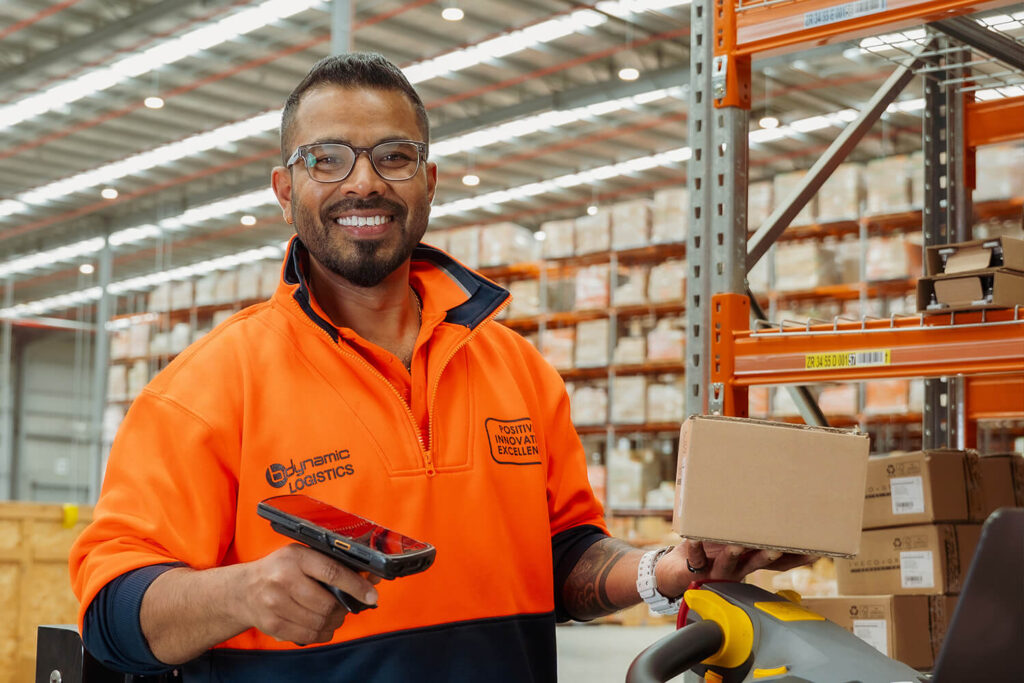
How Should a 3PL Provider Handle Scalability and Seasonal Demand Peaks?
Flexible Storage and Labour Models in Multi-User Facilities
Seasonal scalability 3PL is a genuine test of provider capability. The Christmas trading period, Black Friday, and end-of-financial-year promotions can multiply order volumes by three to five times in the space of a fortnight. Providers that operate shared, multi-user facilities are better positioned to absorb these surges by reallocating space and labour across their client base. Variable storage and handling pricing charging for what you use rather than locking you into fixed commitments is the commercial model that best reflects this flexibility.
B2B fulfilment requirements create their own scalability challenges, particularly for brands managing retail replenishment across multiple retail accounts simultaneously. Confirm that your provider has experience handling high-volume, tightly scheduled B2B despatch alongside their B2C operations, without one compromising the other.
Strategic Distribution Centres in Sydney, Melbourne, Brisbane, and Perth
The location of a provider’s distribution infrastructure has a direct impact on your shipping costs and transit times. Providers with 3PL distribution Australia nodes in the eastern seaboard cities can typically reach the majority of Australian consumers within two to three business days via standard road freight. Access to a Perth or Adelaide facility meaningfully reduces transit times and costs for brands with a nationally spread customer base.
Planning for Business Growth and Interstate Expansion
A provider worth selecting for the long term should have credible capacity plans not just for your current volumes, but for where your business is heading in two to three years. Ask whether they can support interstate expansion, additional product categories, or changes in your channel mix. For brands carrying oversized or weight-sensitive products, big and bulky fulfilment capability should be confirmed upfront, not retrofitted after the relationship is established.
What Should You Expect From 3PL Pricing Transparency and Commercial Terms?
Understanding Storage, Handling, and Fulfilment Fee Structures
3PL costs Australia can be surprisingly opaque if you do not know what to ask for upfront. A credible provider should be able to give you a clear breakdown of every cost component: pallet or cubic metre storage rates, inbound receiving charges, per-unit handling fees, pick and pack rates by order line, packaging material costs, and the freight margin applied to outbound shipments. Any provider that presents a single per-fulfilment figure without itemising these components deserves further scrutiny.
Freight Margins, Surcharges, and Hidden Costs to Watch For
Freight is typically where cost surprises emerge. Providers earn a margin on carrier rates this is standard practice but the size of that margin varies considerably, and surcharges for fuel, remote delivery, or oversized items can substantially change the landed cost of fulfilment. Request a worked example for a representative order: apply your average product weight and dimensions, your typical destination postcode mix, and any seasonal surcharges that apply. This exercise reveals the true cost of outsourced logistics Australia far more reliably than a rates card alone.
Contract Flexibility and Risk Allocation
Minimum commitment periods, exit provisions, and liability clauses for damaged or missing stock should all be reviewed carefully before signing. A provider that is genuinely confident in their service quality will offer reasonable exit terms rather than locking clients into long contracts. Understand clearly who bears financial responsibility when errors occur and what the claims process looks like in practice.
Why Customer Service and Account Management Define a Long-Term 3PL Partnership
Dedicated Account Managers and Response SLAs
The difference between a fulfilment vendor and a logistics partner frequently comes down to whether you have a dedicated point of contact who understands your business. A named account manager with defined response SLAs for both routine queries and urgent escalations is a baseline expectation, not a premium offering. Ask prospective providers how many clients each account manager carries and what their escalation path looks like when issues cannot be resolved at the first point of contact.
Escalation Processes and Proactive Issue Communication
Fulfilment issues are inevitable. Carrier delays, stock discrepancies, and system errors will occur across any significant volume of orders. What distinguishes high-performing third party logistics providers is how proactively they communicate when things go wrong. A provider that calls you before a problem becomes customer-facing is categorically different from one that waits for your complaint. Ask for examples of how they have managed disruptions in the past. References from existing clients in your product category are particularly valuable here.
Alignment With Your Brand’s Customer Experience Standards
Your 3PL is, in effect, the physical expression of your brand’s delivery promise. The speed, accuracy, and presentation of every outbound order reflects directly on your business not your provider’s. When evaluating service alignment, assess whether the provider genuinely understands what your customers expect: same-day despatch cut-off times, specific packaging requirements, returns experience standards. B dynamic Logistics approaches this as a partnership, working with clients to define SOPs that reflect brand standards rather than defaulting to a one-size-fits-all process.
How Important Is Industry Specialisation and Service Customisation in a 3PL Provider?
Product-Type Expertise: FMCG, Big and Bulky, and Temperature-Controlled Storage
Not all product categories can be handled in a standard fulfilment environment. Brands carrying FMCG lines with short shelf lives, temperature controlled storage requirements, or hazardous materials classifications need a provider with specific infrastructure, trained staff, and the relevant Australian regulatory compliance in place. Similarly, big and bulky fulfilment vehicle spare parts, covering furniture, outdoor equipment, white goods, and oversized items demands different racking systems, handling equipment, and carrier relationships than standard parcel fulfilment. Confirming category-specific expertise before signing avoids costly mismatches down the line.
Kitting, Bundling, and Value-Add Fulfilment Services
Kitting and bundling services represent a meaningful operational differentiator for brands running subscription boxes, promotional packs, or multi-SKU gift sets. The ability to assemble and label these configurations at the 3PL level rather than returning stock to the brand for manual assembly removes a significant bottleneck. Ask whether kitting workflows are handled on an ad-hoc basis or whether the provider has dedicated kitting lines with documented quality checks. Consistency at this level directly affects unboxing quality and customer perception.
Custom SOPs and Branded Packaging Options
The best 3PL relationships are built around written Standard Operating Procedures that reflect your specific requirements. Custom packaging, branded inserts, tissue paper, and sustainability requirements should all be specifiable in writing. Providers with the willingness and operational capacity to follow bespoke SOPs reliably at scale, under peak pressure are worth a premium over providers who offer only generic processes. This is one area where B dynamic Logistics’s approach to tailored client onboarding proves its commercial value.

Frequently Asked Questions
Q1: What is the difference between a 3PL and a 4PL provider in Australia?
A 3PL (third party logistics) provider manages physical logistics operations warehousing, fulfilment, and freight on behalf of a client. A 4PL (fourth party logistics) provider acts as an orchestrator, managing multiple 3PLs and supply chain partners on your behalf without necessarily operating physical infrastructure. For most ecommerce and B2B brands, a direct 3PL relationship is the more practical and commercially straightforward choice.
Q2: How do I evaluate 3PL costs Australia before signing a contract?
Request a fully itemised rate card covering storage, inbound receiving, per-unit handling, pick and pack fees, packaging materials, outbound freight margin, and applicable surcharges. Then model a representative monthly volume using your actual order profile average order lines, product weight, destination mix to produce a realistic landed cost per order.
Q3: What does DIFOT mean and why does it matter when choosing a 3PL?
DIFOT stands for Delivered In Full, On Time. It is the primary performance benchmark in Australian logistics and measures whether orders arrive complete and within the promised delivery window. A high DIFOT rate indicates a provider operates with consistent accuracy and carrier management. Ask for documented DIFOT data across their current client base before shortlisting.
Q4: Can a 3PL integrate with my Shopify store or ERP system?
Most credible 3PL providers in Australia offer native integrations or API connectivity with major ecommerce platforms including Shopify, WooCommerce, and Magento, as well as ERP systems such as MYOB, Xero, and NetSuite. Confirm integration depth before committing some connections are read-only, while others support bidirectional inventory and order data flow in real time.
Q5: How do I know if a 3PL provider can scale with my ecommerce business?
Ask about their facility capacity, labour model during peak periods, and how they have managed volume surges for comparable clients. Providers that operate multi-user warehouses with variable storage pricing are generally better positioned to scale quickly without passing fixed infrastructure costs on to individual clients.
Q6: What Australian cities should my 3PL provider have distribution centres in?
For most Australian ecommerce brands, distribution centre access in Sydney and Melbourne covers the majority of domestic orders. Brands with strong Queensland, South Australian, or West Australian customer bases should prioritise Brisbane and Perth nodes to reduce transit times and lower freight costs to those markets.
Q7: What happens if my 3PL provider makes a fulfilment error who is responsible?
Liability for fulfilment errors should be explicitly addressed in your service agreement. A credible provider will have a documented claims process, defined response timelines, and clear financial responsibility for stock damaged or lost under their care. Review this section of any contract carefully before signing and ask for examples of how past claims have been handled.
Q8: Is B dynamic Logistics suited to both B2B and B2C fulfilment requirements?
Yes. B dynamic Logistics offers dedicated B2B fulfilment and B2C fulfilment service streams, as well as specialist big and bulky capability. This means clients can consolidate multiple fulfilment requirements under a single provider relationship reducing administrative complexity and ensuring consistent service standards across different order types.
Choosing the Right 3PL Services Provider Is a Strategic Business Decision
Selecting a third party logistics partner in Australia involves far more than comparing storage rates. The six evaluation domains covered here operational capability, technology, scalability, pricing transparency, customer service, and specialisation form a practical framework for making a well-informed decision. A provider that performs credibly across all six is likely to be a genuine long-term partner rather than a short-term vendor.
If you are comparing providers, consider whether your 3PL partner can also support your customer experience goals. B dynamic Logistics works alongside clients to align fulfilment processes with brand standards and to build scalable solutions that support sustainable growth across ecommerce, B2B distribution, and big and bulky categories.
If you are currently assessing your outsourced logistics options, B dynamic Logistics offers a range of 3PL services designed for Australian businesses across ecommerce, B2B distribution, and big and bulky categories. Explore the full service offering at bdynamiclogistics.com.au/3pl-services or contact the team directly to discuss your specific requirements.
Back to Blog