Every growing brand reaches a point where the logistics question becomes unavoidable: do you continue managing warehousing, fulfilment and freight in house, or do you hand those operations to a specialist third party logistics provider?
It’s a decision that touches every corner of your business cash flow, customer experience, operational risk, and the bandwidth of your team. Get it right and you free up capital and focus to grow. Get it wrong, and you’re either locked into a warehouse you’ve outgrown or dependent on a 3PL that can’t match your service standards.
This guide sets out the genuine differences between 3PL services and in house logistics the cost realities, the control tradeoffs, the scalability dynamics and gives Australian eCommerce and product brands a practical framework for making the right call.
What Are 3PL Services and How Does In House Logistics Work?
Defining 3PL Services: Warehousing, Fulfilment and Freight Under One Roof
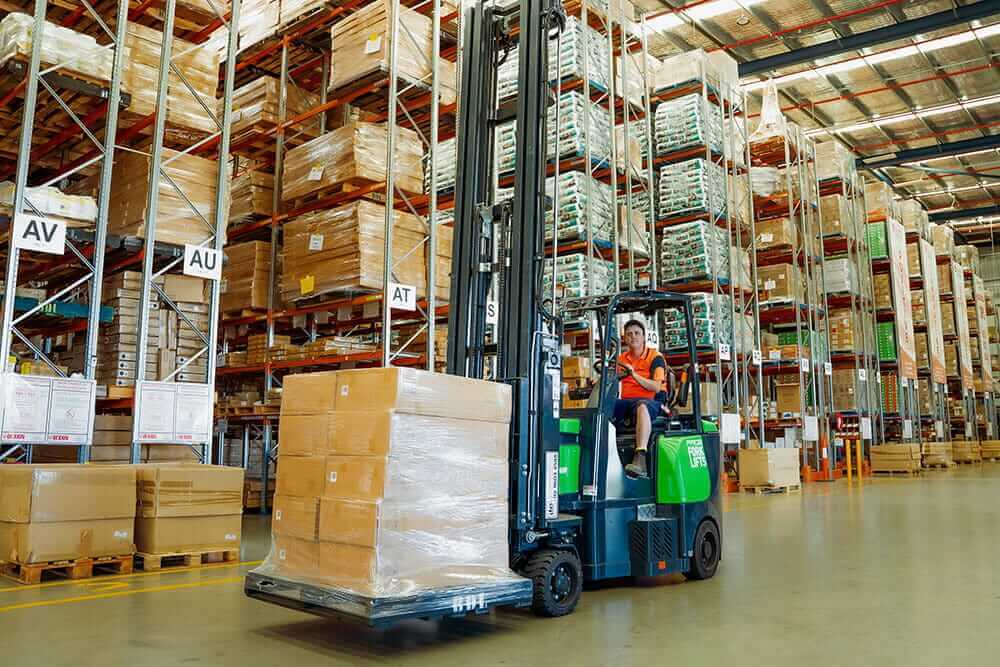
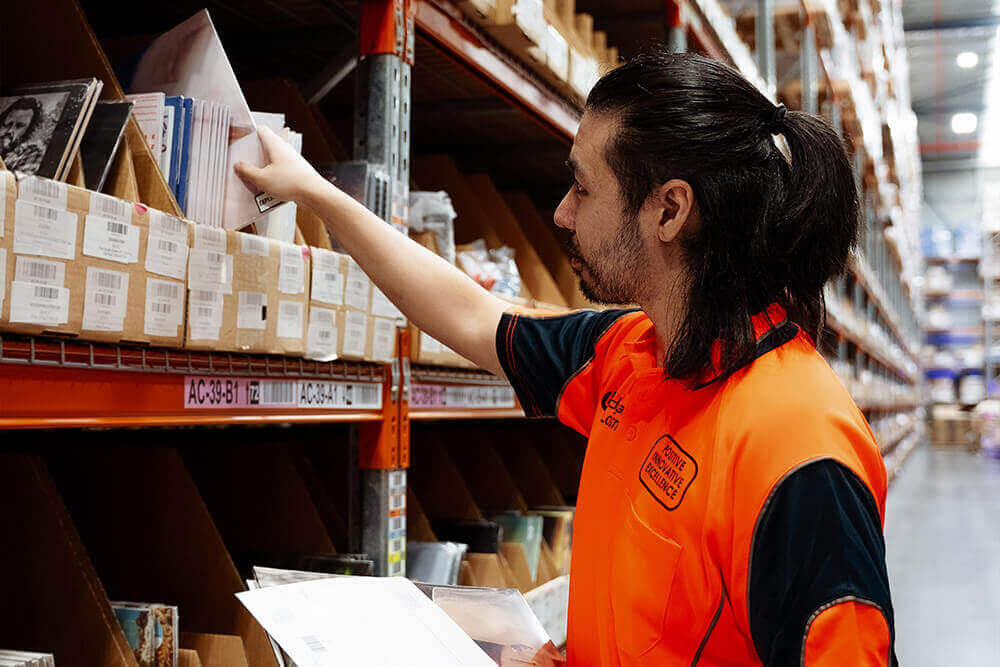
A 3PL third party logistics provider takes on the physical supply chain functions your brand would otherwise run itself. In practice, that means receiving stock into a fulfilment center, managing inventory, picking and packing orders, and despatching them via the provider’s carrier network.
The best providers, such as B dynamic Logistics, go further offering B2C Fulfilment for direct to consumer brands, B2B Distribution for wholesale and retail channels, and specialist services such as Big & Bulky Fulfilment for large or heavy freight. You access their warehouse management system (WMS), their carrier rate agreements and their operational expertise from day one, without building any of it yourself.
How In House Logistics Operates: Your Facility, Your Team, Your Systems
In house logistics means the brand owns the operation end to end: the warehouse lease, the racking and fit out, the WMS implementation, the picking team, the carrier relationships and the management overhead that sits above all of it. Every process is yours to design and every cost is yours to carry fixed, regardless of whether order volumes are up or down.
Where Each Model Fits Within Your Supply Chain
Neither model is inherently superior. The right answer depends on your order volumes, growth trajectory, operational complexity and capital position. The sections that follow break down how to assess each dimension honestly.
Cost, Control and Scalability: The Three Dimensions That Drive the Decision
Cost Structure – Fixed Overheads vs. Variable Logistics Spend
In house logistics carries a high fixed cost base. A warehouse lease in Sydney or Melbourne, combined with fitout, racking, a WMS license, picking staff and logistics management, represents a substantial ongoing commitment regardless of whether you despatch 500 orders a week or 5,000.
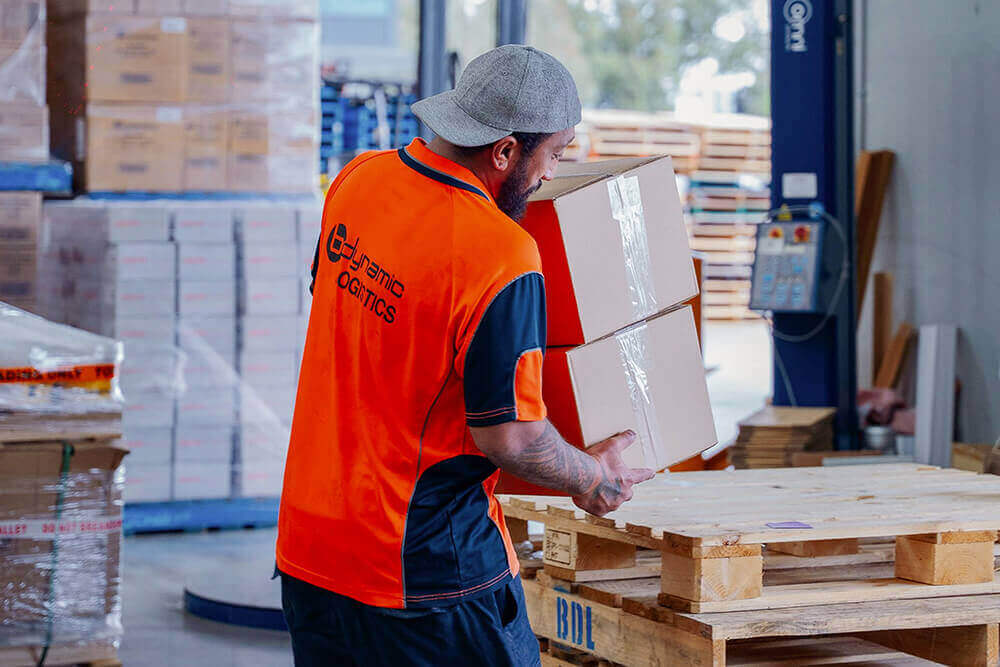
3PL costs, by contrast, are largely variable. You pay for the storage space you use, the handling labour your orders consume and the freight rates your volume attracts. In periods of low demand, your 3PL costs fall. When you’re running a peak season promotion, capacity scales up without you signing a new lease. For most eCommerce brands, this variable cost model materially reduces financial risk.
Operational Control – Brand Touchpoints, Processes and Service Rules
The control argument for in house logistics is real, and it’s worth taking seriously. When you run your own operation, you decide how every order is packed, what inserts go in the box, and how exceptions are handled. If brand presentation at the point of unboxing is a genuine commercial differentiator for you, that control has value.
What’s often overstated, though, is the assumption that 3PLs offer poor visibility. A capable provider gives you real time inventory data, SLA reporting and direct account management. The question isn’t whether you can see what’s happening it’s whether the 3PL’s standard processes are close enough to your requirements that the remaining gap doesn’t matter.
Scalability – Flexing Capacity Without Capital Expenditure
Scalable warehousing is one of the most compelling arguments for third party logistics. When your order volume doubles over peak season Black Friday, Boxing Day sales or a successful campaign a 3PL absorbs that demand within existing infrastructure. There’s no emergency labour hire, no scramble for additional storage, no overtime costs that erode your margin.
In house, that same demand spike either overwhelms your operation or forces you to carry excess capacity during quieter months. Neither outcome is cheap.
3PL Services vs. In House Logistics: At a Glance
| Factor | 3PL Services | In House Logistics |
| Cost structure | Variable — pay for storage, handling and freight used. Low upfront capex. | High fixed costs: lease, fitout, WMS, staffing. Significant upfront investment. |
| Control | Less direct control; reputable providers deliver strong visibility, KPIs and SLA management. | Full control over layout, processes, brand touchpoints and service rules. |
| Expertise & tech | Immediate access to logistics specialists, WMS/TMS, carrier network and best practice processes. | Must hire expertise and implement WMS/TMS independently. |
| Scalability | Add capacity, locations and value added services rapidly as you grow or peak. | Constrained by building size, labour market and capital. |
| Speed to market | Faster – plug into existing infrastructure from day one. | Slower – site search, design, fitout, hiring, system implementation. |
| Best for | Brands prioritising growth, flexibility and capital efficiency. | Brands with stable, predictable volume and highly bespoke operations. |
When 3PL Services Make More Sense for Australian eCommerce Brands
High Growth, Seasonal Spikes and Variable Order Volumes
If your brand is processing somewhere between 200 and 3,000 orders a day and that number is trending upward a 3PL almost always makes more sense than committing to a fixed warehouse. The variable cost model means your logistics spend tracks your revenue rather than running ahead of it, and you’re not betting on a five year lease based on projections that may or may not hold.
Australian eCommerce brands dealing with hard seasonal peaks think major sale events, product launches or influencer driven spikes benefit particularly from 3PL flexibility. The capacity is there when you need it and you’re not carrying it when you don’t.
Expanding Into Multi State or Cross Border Fulfilment
Australia’s geography makes multi state distribution expensive and complex. Shipping every order from a single state warehouse means higher freight costs and slower delivery windows for customers in other states. A 3PL with existing infrastructure across multiple Australian locations removes that problem immediately no new leases, no new teams, no new carrier negotiations required.
For brands with trans Tasman or broader international ambitions, a provider with established network reach makes expansion far less operationally risky. B dynamic Logistics’ eCommerce Fulfilment and B2B Distribution capabilities are designed precisely for brands navigating this kind of growth.
When Logistics Isn’t Your Core Differentiator
If your competitive advantage is in product quality, brand identity or customer acquisition rather than in logistics execution outsourcing fulfilment is a straightforward capital efficiency decision. The management attention, property commitment and working capital tied up in running a warehouse could instead fund product development, marketing or team growth. A capable 3PL handles the operational complexity while you focus on what actually moves the needle.
When In House Logistics Has the Edge
Tightly Controlled, Brand Led Fulfilment Operations
Some brands have fulfilment requirements that most 3PLs simply aren’t built for: complex kitting, bespoke packaging that requires skilled labour, white glove delivery for high value items, or service and repair workflows integrated into the post purchase experience. If your customer experience depends on a degree of operational bespoke ness that goes well beyond standard pick, pack and despatch, in house logistics may be the only way to deliver it consistently.
This is a genuine scenario not a theoretical one. Brands with premium positioning and highly specific service rules often find that the time spent managing a 3PL’s SLAs is greater than the time it would take to run the operation themselves.
Stable, High Volume Operations Where Fixed Costs Pay Off Long Term
If your order volumes are high, predictable and unlikely to vary significantly over a five to ten year horizon, the economics of in house logistics can eventually become attractive. Fixed costs spread across large, stable volumes produce low cost per order figures that a variable 3PL model may struggle to match at scale. This is the maths that drives large omnichannel retailers with mature, well understood demand patterns to maintain their own distribution centres.
Big and Bulky, Hazardous or Highly Specialised Product Handling
Brands dealing in large, heavy or high complexity freight outdoor furniture, fitness equipment, construction materials, temperature sensitive products face a narrower market of capable providers. While specialist 3PLs such as B dynamic Logistics do offer Big & Bulky Fulfilment services designed for oversized freight, brands with particularly unusual handling requirements (hazardous goods classifications, cold chain, unusually high damage sensitivity) should evaluate carefully whether a specialist 3PL or a purpose built in house operation is the safer long term choice.
How to Decide: A Practical Decision Framework for Australian Brands
Five Questions to Score Your Current Logistics Situation
Before committing either way, work through these questions honestly:
- What is your current order volume, and how fast is it growing? High growth or high volatility points strongly toward 3PL.
- How seasonal is your demand? If peak periods are 2–3x your average, variable 3PL capacity reduces your risk significantly.
- What is your appetite for fixed capital commitments? A warehouse lease is typically a five year obligation are you comfortable with that exposure?
- Do you have in house logistics leadership? Building a capable operation without experienced management is harder and slower than it looks.
- Is logistics a genuine source of competitive advantage for your brand, or primarily an operational necessity? If the latter, outsourcing is almost always the right answer.
The Hybrid Model – In House Core Operations with 3PL Overflow
For some brands typically those with established in house operations and growth pushing against capacity a hybrid model is the most pragmatic path. Run your core, brand critical fulfilment in house; use a 3PL for overflow during peak periods, for new regional distribution nodes, or for B2B distribution lanes that require different handling to your primary D2C operation.
This approach is more common than most published guides acknowledge. It avoids the binary choice and lets brands preserve control where it matters while accessing 3PL flexibility where volume or geography demands it.
When to Start the Conversation with a 3PL Provider
Clear signals that it’s time to speak to a 3PL include: consistent difficulty meeting despatch SLAs during peak periods; warehouse capacity running at or above 85% utilisation; logistics management consuming disproportionate leadership time; or a new market or channel that requires infrastructure you don’t have.
B dynamic Logistics works with Australian eCommerce and product brands across exactly these scenarios from single state fulfilment for growing D2C brands to multi channel B2B Distribution for established retailers. If any of the above sound familiar, it’s worth a conversation.
Frequently Asked Questions
Q1: What is the main difference between 3PL services and in house logistics?
In house logistics means your brand owns and operates its own warehousing, fulfilment and freight function. A 3PL third party logistics provider takes on those functions using its own facilities, systems and carrier network, typically charging on a variable cost basis per unit stored, handled and despatched.
Q2: How much do 3PL services typically cost for Australian eCommerce brands?
3PL costs vary by provider, volume, SKU complexity and service requirements. Most providers charge a combination of storage fees (per pallet or cubic metre), pick and pack fees (per order or per item), and outbound freight. Because costs are variable, they scale with your actual volume rather than running ahead of it.
Q3: At what order volume does it make sense to move to a 3PL?
There’s no single threshold, but brands processing upwards of 100–200 orders per day often find 3PL economics compelling particularly when growth is strong or demand is seasonal. Below that level, the cost structure may favour in house fulfilment, depending on your lease situation and team overheads.
Q4: Can a 3PL handle big and bulky products in Australia?
Yes specialist 3PLs such as B dynamic Logistics offer dedicated Big & Bulky Fulfilment services for large, heavy or oversized goods. Not all 3PLs are equipped for this, so it’s important to confirm the provider has appropriate racking, handling equipment and carrier partnerships before committing.
Q5: What is a hybrid logistics model?
A hybrid model combines in house core operations with 3PL capacity for overflow, peak periods or new distribution regions. It gives brands the control benefits of in house logistics alongside the flexibility of third party warehousing, and is a practical option for brands that have outgrown pure in house capacity but aren’t ready to outsource entirely.
Q6: How do I evaluate a 3PL provider in Australia?
Key criteria include: technology capability (WMS integration, real time inventory visibility), carrier network breadth and rate competitiveness, track record with brands of similar volume and complexity, SLA transparency, and geographic coverage relevant to your customer base. Reference checks with existing clients are always worthwhile.
Q7: Will moving to a 3PL mean losing control of my customer experience?
Not necessarily. A capable 3PL provider gives you real time visibility over inventory and despatch, clear SLA frameworks and dedicated account management. Where brands lose control is when they choose providers whose standard processes don’t match their service requirements which makes thorough evaluation before commitment essential.
Q8: What is eCommerce fulfilment and how does it differ from standard 3PL warehousing?
eCommerce fulfilment refers specifically to 3PL warehousing and despatch services designed for direct to consumer order flows individual orders, high frequency, consumer grade packaging and last mile delivery. Standard 3PL warehousing may also cover B2B distribution, pallet level despatch and retail replenishment. Many providers, including B dynamic Logistics, offer both under a single operation.
Choosing the Right Logistics Model for Where Your Brand Is Headed
The right logistics model isn’t determined by a rule of thumb. It’s determined by your brand’s specific combination of order volume, growth trajectory, operational complexity, capital appetite and the degree to which logistics is a genuine source of competitive advantage or simply a function that needs to work reliably.
For most growing eCommerce and product brands, the case for 3PL services is strong: variable cost exposure, immediate access to infrastructure and expertise, and the flexibility to scale without fixed capital commitments. For brands with stable, high volumes and genuinely bespoke operational requirements, in house logistics can still make sense and a hybrid model often bridges the two.
If you’re at the point where that question is becoming pressing, B dynamic Logistics offers a no obligation conversation to help you assess your options. Their 3PL services cover B2C Fulfilment, B2B Distribution and Big & Bulky Fulfilment across Australia designed for brands that are serious about growth and serious about getting logistics right.
Visit 3pl Services to learn more.
Back to Blog