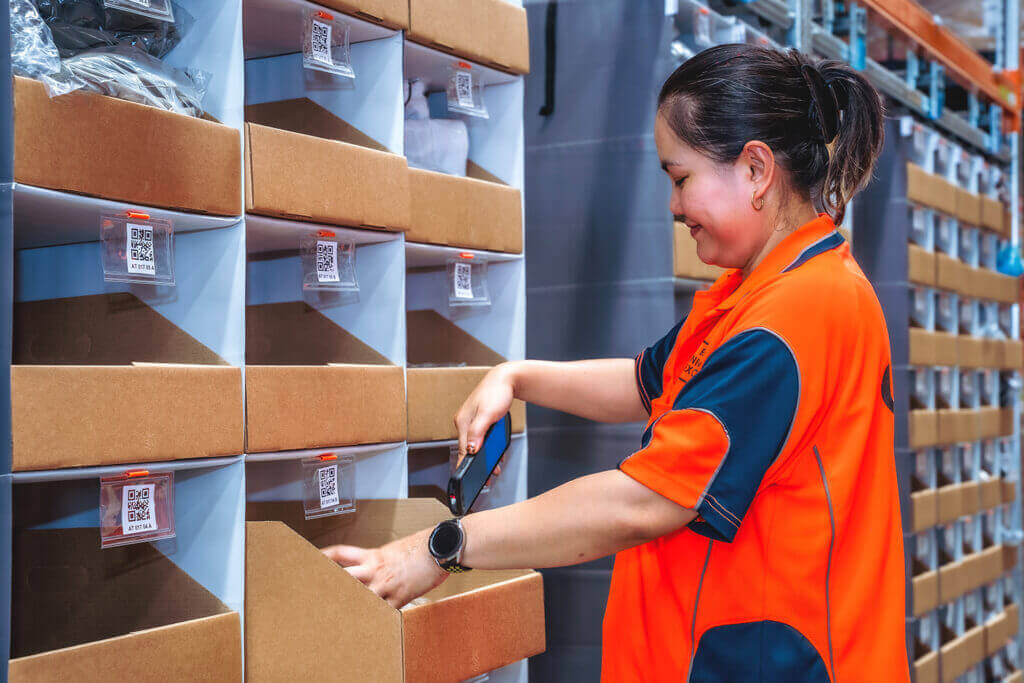
For many growing Australian businesses, logistics is no longer just an operational necessity. It is a financial lever that can either constrain growth or actively support it. Decisions around warehousing, freight, labour, and inventory management increasingly shape cash flow, margins, and customer experience. Understanding how third party logistics changes this cost structure is therefore essential for small and medium businesses looking to scale sustainably.
For many small and medium businesses in Australia, logistics is the budget line that never seems to shrink. Warehouse rent keeps climbing. Freight rates stay stubbornly high. Staffing the warehouse through peak season means carrying headcount you cannot afford in the quiet months. And yet, most of that cost is not inevitable it is structural.
The shift to third party logistics services offers a direct route out of that structure. Rather than locking capital into a fixed-cost model, businesses that partner with a specialist 3PL provider can convert the bulk of their logistics spend into a variable, usage-based cost one that tracks actual activity rather than theoretical capacity.
This guide covers five practical cost-saving levers available through 3PL services, with plain-language explanations of how each one works and what Australian SMEs can realistically expect to gain. Whether you run a direct-to-consumer eCommerce brand, a wholesale distribution business, or sell oversized goods that require specialist handling, the financial case for outsourced logistics is worth examining carefully.
How 3PL Warehousing Converts Fixed Costs into Flexible, Usage-Based Spend
The Hidden Cost of Running Your Own Warehouse
When businesses calculate the cost of self-managed warehousing, they tend to focus on the lease. But the full cost picture includes far more than rent. Insurance, utilities, racking and shelving, warehouse management technology, safety compliance, and the ongoing cost of maintaining unused floor space during slow periods all of these accumulate quietly in the background.
A business leasing a 500m² unit in a suburban industrial estate in Sydney or Melbourne is paying for that space twelve months a year. In practice, many SMEs use their full capacity only during the pre-Christmas surge or at the start of the financial year. The rest of the time, they are effectively paying a premium for empty floor space.
Shared Warehousing – Paying Only for What You Actually Use
The core financial logic of 3PL warehousing services is straightforward: you pay for the space and services you consume, not for a fixed footprint you may or may not fill. B dynamic Logistics, for example, operates on a shared warehousing model that charges clients by the pallet position or bin location actually occupied, combined with handling fees for inbound and outbound activity.
To illustrate the difference: a small eCommerce brand that shifts from a leased 500m² facility to a 3PL arrangement might find it is effectively paying for 200m² equivalent of storage plus handling and shipping rather than the full lease plus utilities and insurance year-round. The saving is not marginal. For many SMEs, it represents a meaningful improvement to operating margin without any reduction in service capability.
Key point: With 3PL warehousing, your logistics cost scales with your revenue not against it. You spend more when you sell more, and less when volumes are low.
Scaling Storage Costs to Match Seasonality and Growth
Perhaps the most underappreciated benefit is the ability to absorb seasonal peaks without long-term commitment. A 3PL provider structures agreements around volume bands, meaning storage and fulfilment pricing adjusts with your actual throughput. You are not locked into a capacity decision made twelve months in advance. That flexibility has genuine cash flow value, particularly for businesses with irregular or growing order volumes.
Reducing Freight and Shipping Costs Through Your 3PL Provider’s Carrier Network
Accessing Volume-Based Carrier Discounts You Cannot Negotiate Alone
Freight is typically the single largest line item in an SME’s logistics budget, and it is also the area where the gap between what a small business pays and what a large-volume operator pays is most pronounced. A business shipping 200 parcels per week cannot negotiate the same carrier rates as a 3PL provider consolidating the volume of dozens of clients across a national network.
That aggregated volume translates directly into pricing advantage. Small and medium businesses working through a 3PL provider typically gain access to more competitive carrier rates than they could secure independently, based on parcel size, delivery zones, and service levels. For businesses with a meaningful monthly freight spend, even modest rate improvements can return significant value over the course of a year without changing how products are packed, shipped, or delivered.
B dynamic Logistics provides B2C eCommerce fulfilment with access to multi-carrier rate structures, allowing each shipment to be routed through the most cost-effective option for its destination and size profile.
Cost reduction in logistics is rarely achieved through a single saving. It is the combined effect of structural efficiencies working together. When these efficiencies are managed consistently and measured accurately, they deliver long term financial benefits that extend well beyond short term freight or storage savings.
B Dynamic Logistics works with clients to apply these efficiencies as an integrated system rather than a series of isolated tactics. This approach allows businesses to control logistics spend while maintaining service quality as volumes increase and operating conditions change.
Multi-Node Warehousing to Cut Delivery Zones and Distance Costs
Carrier pricing in Australia is heavily influenced by delivery zones the further a parcel travels, the more it costs. A business storing all inventory in a single Sydney warehouse and shipping nationally will consistently pay higher freight rates to customers in Perth, Darwin, or regional Queensland than a competitor who distributes stock across multiple warehouse nodes closer to those customers.
A 3PL with a national or multi-city network allows clients to split inventory intelligently across locations, cutting zone costs and reducing transit times simultaneously. For eCommerce brands where same-day or next-day delivery is a competitive expectation, this is both a cost and a service quality lever.
Route Optimisation and Carrier Selection to Reduce Per-Order Shipping Spend
Beyond static carrier agreements, 3PL providers use transport management systems and route optimisation tools to reduce the cost of each individual shipment. Mode selection, carrier comparison, consolidation of linehaul movements, and surcharge avoidance are all managed systematically tasks that would require dedicated internal resources to replicate at equivalent quality.
Cutting Labour Costs and Reducing Fulfilment Errors with Outsourced Logistics
Transferring Warehouse Staffing and HR Risk to Your 3PL Partner
Warehouse labour is one of the most difficult costs to manage well. Hiring for peak demand means carrying underutilised headcount in quieter periods. Hiring lean means struggling to meet volume spikes without costly agency staffing or overtime. Either way, the business absorbs the risk.
When you outsource to a 3PL provider, the labour model changes entirely. The 3PL carries the staffing burden recruitment, onboarding, training, payroll, and HR compliance. You pay for throughput, not for people. B dynamic Logistics handles both B2B fulfilment for businesses supplying retailers and B2C fulfilment for direct-to-consumer brands, absorbing the staffing complexity that comes with each model.
How Optimised Pick and Pack Processes Reduce Mis-Picks and Returns
The downstream cost of warehouse errors is routinely underestimated. A mis-picked order creates a return, a replacement shipment, a customer service interaction, and over time a reputational cost. Specialist 3PL operations run at materially lower error rates than the average self-managed warehouse because they have invested in the process design, scanning technology, and quality control systems needed to catch mistakes before they leave the building.
We provides pick and pack services with barcode verification and order accuracy protocols that reduce the error rate against what most SMEs achieve in-house. Fewer mis-picks means fewer returns, lower reverse logistics costs, and a better customer experience all of which have a direct financial value.
Leveraging 3PL Automation Without Funding the Capital Expenditure
The capital cost of automating a warehouse conveyors, scanning systems, robotic picking is well beyond the reach of most small and medium businesses. But businesses using a 3PL provider benefit from that infrastructure without funding it. This is particularly relevant for categories requiring specialist handling: businesses with big and bulky fulfilment requirements, for instance, need purpose-built handling equipment and space configurations that a 3PL can provide as a service rather than a capital purchase.
Cost Comparison: Self-Managed vs 3PL
| Cost Area | Self-Managed | With a 3PL |
| Warehouse space | Fixed lease – full floor, full year | Pay per pallet/bin used only |
| Freight rates | Retail or SME-negotiated rates | Volume discounts: 5–30% lower |
| Labour & HR | Full payroll, recruitment, training | Absorbed by the 3PL provider |
| WMS / technology | Capital investment required | Included in service agreement |
Lowering Inventory Carrying Costs Through Smarter Stock Management
Using WMS Data to Avoid Costly Overstocking
Inventory is capital. Every unit sitting on a warehouse shelf represents money that is not available for marketing, product development, or debt reduction. Yet many SMEs overstock consistently not out of poor judgement, but because they lack reliable, real-time visibility into what they are holding, how it is moving, and what it is likely to cost per day to store.
A professional warehouse management system gives 3PL clients the data infrastructure to make genuinely informed replenishment decisions. Dwell time by SKU, storage cost per unit, inbound versus outbound velocity this information changes how businesses buy and what they hold. B dynamic Logistics provides WMS-enabled inventory visibility as part of its 3PL warehousing services, giving clients the tools to make stocking decisions based on evidence rather than instinct.
Just-in-Time Replenishment and Lean Inbound Models
Businesses that can align their inbound purchasing more tightly with outbound demand reduce carrying costs in two ways: less capital is tied up in stock, and the average time each unit spends in the warehouse and therefore the storage cost per unit falls. A 3PL with a well-integrated WMS makes lean replenishment models more practical by providing the supply chain visibility that makes smaller, more frequent inbound shipments manageable rather than operationally burdensome.
Reducing Dwell Time, Damage, and Obsolescence in the Warehouse
Stock that sits too long deteriorates. It gets damaged, becomes obsolete, or ties up bin locations that incoming, faster-moving stock needs. Reducing average dwell time the period between goods arriving and leaving directly reduces the rate at which these costs accumulate. Organised warehouse layouts, clear slotting strategies, and first-in-first-out pick protocols are all standard practice in professionally run 3PL environments, and all have a measurable effect on inventory shrinkage.
How to Negotiate a 3PL Contract That Keeps Costs Predictable and Fair
Understanding 3PL Fee Structures What You Are Actually Paying For
One of the most common concerns SMEs raise about outsourcing logistics is fee opacity: the worry that headline rates look attractive but the full cost of a 3PL relationship turns out to be substantially higher once all charges are added. That concern is legitimate. A well-structured 3PL agreement should make the full cost of each order clearly modelable before you sign.
The main fee components to understand are: receiving fees (for processing inbound stock), storage fees (per pallet or bin, typically charged weekly or monthly), pick and pack fees (per order and/or per item), value-added service fees (for labelling, kitting, gift wrapping, or repackaging), and returns handling fees. Mapping these against your typical order profile basket size, SKU count, return rate allows you to calculate a genuine cost per order rather than relying on quoted rates in isolation.
Choosing the Right Fulfilment Pricing Model for Your Order Profile
3PL providers typically offer three main pricing structures: per-order, per-item, or hybrid. The right model depends on your business profile. A brand with a high average order value and consistent basket size is likely best served by per-order pricing. A business with highly variable order complexity some orders containing one item, others containing twenty may find a per-item or hybrid model better reflects actual cost.
Before signing, it is worth modelling your cost under each pricing structure using three to six months of real order data. The difference between models can be significant, and the right choice is entirely business-specific.
Using Growth Transparency to Secure Better Long-Term Rates
3PL providers are in the business of long-term client relationships, and they price accordingly. Clients who share credible multi-year growth forecasts, provide detailed volume projections, and engage as strategic partners rather than purely transactional accounts typically secure meaningfully better pricing than businesses that negotiate solely on headline rates and provide no forward visibility.
Sharing your growth plans and forecast ranges with a provider like B Dynamic Logistics creates the basis for a contract that rewards volume growth and provides rate certainty in return. Transparent, growth-oriented clients often secure overall pricing 20%–30% better than purely transactional accounts a difference that compounds significantly over a multi-year agreement.
Practical tip: Before approaching any 3PL, prepare a data pack including your current monthly order volume, average basket size, SKU count, return rate, and current warehousing and freight spend. This enables the provider to model genuine savings rather than provide illustrative estimates.
Frequently Asked Questions
Q1: How long does it typically take to transition from in house logistics to a 3PL provider?
The transition timeline depends on the complexity of the operation, including SKU count, order volume, system integrations, and any value added services required. For most small to medium businesses, the onboarding process involves inventory transfer, system setup, process mapping, and testing to ensure orders flow accurately from day one. A well structured 3PL provider will manage this transition in stages, minimising disruption to customers while ensuring operational accuracy. B dynamic Logistics approaches onboarding as a collaborative process, working closely with clients to align systems, service standards, and fulfilment workflows before go live.
Q2: Is 3PL cheaper than managing my own warehouse as a small business?
For the majority of SMEs, yes once the full cost of self-managed warehousing is properly accounted for. Most businesses underestimate the cost of idle capacity, HR overhead, WMS investment, and the hidden cost of fulfilment errors. A thorough cost comparison should include all operational components, not just rent versus storage fees.
Q3: How do 3PL providers access lower freight rates than I can negotiate independently?
3PL providers consolidate freight volume across multiple clients, giving them the negotiating leverage to secure rates that individual SMEs cannot access at their own volumes. The aggregate parcel count across a 3PL’s client base is orders of magnitude larger than any single SME’s volume, which translates directly into carrier pricing and service-level access.
Q4: What fees should I expect in a typical 3PL services agreement?
A standard 3PL agreement will include receiving fees, storage fees (weekly or monthly per pallet or bin), pick and pack fees, outbound freight (either at cost or marked up), and potentially value-added service fees for activities such as labelling, kitting, or returns processing. Some providers also charge account management or minimum monthly spend fees. Always request a fully itemised schedule of fees before agreeing to terms.
Q5: Can a 3PL help my eCommerce business reduce shipping costs to customers?
Yes. This is one of the most tangible and immediate benefits for eCommerce brands. Access to volume-negotiated carrier rates, multi-carrier selection per shipment, and where relevant — multi-node inventory distribution all reduce per-order shipping cost. B Dynamic Logistics provides B2C eCommerce fulfilment specifically designed to optimise outbound freight cost for direct-to-consumer brands.
Q6: How does 3PL pricing work — per order, per item, or something else?
Most 3PL providers offer a choice of pricing models: per-order (a flat fee per shipment dispatched), per-item (a fee for each unit picked), or a hybrid of the two. The right model depends on your average order size and complexity. Businesses with simple, consistent orders often prefer per-order pricing. Businesses with variable basket sizes may find per-item or hybrid models more predictable and fair.
Q7: At what order volume does it make financial sense to switch to a 3PL?
There is no universal threshold, but a common rule of thumb is that the case for a 3PL becomes compelling once a business is dispatching 50–100 or more orders per day and warehousing space regularly exceeds 50–70% utilisation. At lower volumes, the management overhead of a 3PL relationship may outweigh the savings. At higher volumes, the efficiency gains typically outweigh the service costs by a meaningful margin.
Q8: Does B dynamic Logistics offer 3PL services for businesses with large or bulky products?
Yes. B dynamic Logistics provides specialist big and bulky fulfilment for businesses handling oversized or heavy goods including outdoor equipment, furniture, and industrial products that require purpose-built storage, handling equipment, and carrier arrangements. This is one of the more specialised service lines in the B dynamic Logistics offering and is designed specifically for businesses whose product dimensions make standard fulfilment services unsuitable.
Choosing the Right 3PL Partner Is a Cost Decision as Much as a Logistics One
The five areas covered in this guide warehousing structure, freight access, labour and error costs, inventory management, and contract strategy represent the practical toolkit available to any Australian SME that decides to move its logistics operations to a specialist third party provider. The savings are not hypothetical. They are structural, and they accumulate across every order dispatched, every pallet stored, and every carrier rate negotiated.
When evaluating outsourced logistics, the most important consideration is not just cost reduction but cost predictability. B dynamic Logistics partners with Australian businesses to create transparent, scalable logistics models that support sustainable growth and protect margins over the long term.
What makes the decision consequential is that the right 3PL relationship does more than reduce costs in isolation. It converts logistics from a fixed-cost liability into a variable-cost asset one that scales with the business rather than against it. For small and medium businesses managing tight margins in a competitive market, that structural shift has genuine strategic value.
If you are currently managing warehousing and fulfilment in-house and want to understand what a move to outsourced logistics could save your business specifically, We offers an initial cost assessment based on your actual order volumes, SKU profile, and current logistics spend. The starting point is a conversation and the numbers are usually clearer than most businesses expect.
Back to Blog